Throughout human history, intestinal parasites have been a near-universal health challenge, prompting diverse cultures to develop systematic approaches for their removal. These historical parasite cleanse methods were often embedded within broader medical frameworks that emphasized balance, elimination of toxins, and restoration of digestive vitality. While modern diagnostics can confirm specific infections, traditional systems relied on symptom patterns, pulse diagnosis, and observational wisdom to guide their protocols.
This article surveys the major traditional medicine systems — Ayurveda, Traditional Chinese Medicine, European and Mediterranean herbalism, and Indigenous practices of the Americas — to illustrate how different cultures conceptualized parasitic infestation and designed time-boxed regimens using locally available botanicals, mineral substances, and dietary modifications. Understanding these historical practices provides context for contemporary interest in herbal parasite cleanses, though it does not substitute for laboratory-confirmed diagnosis or medical treatment.
Key Takeaways
- Traditional medicine systems (Ayurveda, TCM, European herbalism, Indigenous American) developed structured, multi-phase parasite cleanse protocols using locally available herbs, minerals, and dietary modifications.
- Commonly used antiparasitic botanicals across cultures include wormwood (Artemisia spp.), black walnut hull (Juglans spp.), clove (Syzygium aromaticum), neem (Azadirachta indica), epazote (Dysphania ambrosioides), pumpkin seeds (Cucurbita spp.), and vidanga (Embelia ribes).
- Historical protocols consistently emphasize three phases: preparation (dietary restriction), active expulsion (anthelmintic herbs + purgatives), and post-cleanse restoration (tonic herbs, digestive support).
- Timing of cleanses was often synchronized with seasonal or lunar cycles believed to influence parasite activity and host elimination capacity.
- These practices were integrated into holistic health systems; isolating the expulsion phase from its traditional context of constitutional assessment and lifestyle regulation may limit effectiveness and safety.
Ayurvedic Approaches to Parasite Expulsion (Krimighna)
In Ayurveda, parasites are classified under the term krimi, which encompasses both visible worms (bahya krimi) and microscopic organisms (abhyantara krimi) believed to arise from imbalanced doshas — particularly kapha and pitta — and compromised digestive fire (agni). Classical texts such as the Charaka Samhita and Sushruta Samhita describe krimi as residing in the intestines, blood, and other tissues, producing symptoms like abdominal pain, malabsorption, fatigue, and skin eruptions. The therapeutic strategy, known as krimighna (anti-parasitic), follows a three-stage sequence: apakarshana (physical removal), prakriti vighata (disruption of the parasite’s habitat), and nidana parivarjana (avoidance of causative factors).
The apakarshana phase often employed strong purgatives (virechana) such as trivrit (Operculina turpethum) or danti (Baliospermum montanum) to mechanically expel worms from the gastrointestinal tract. This was followed by prakriti vighata, using bitter, pungent, and astringent herbs to create an inhospitable internal environment. Key botanicals included vidanga (Embelia ribes), palasha (Butea monosperma) seeds, nimba (Azadirachta indica, neem) leaf and bark, haridra (Curcuma longa, turmeric), and maricha (Piper nigrum, black pepper). These were frequently combined into formulations like Vidangadi Churna or Krimighna Kasaya, administered for defined periods — typically 7 to 21 days — aligned with lunar cycles believed to influence parasite activity. Dietary restrictions during the cleanse excluded sweet, heavy, fermented, and incompatible food combinations (viruddha ahara) thought to feed krimi.

Ayurvedic practitioners also utilized mineral preparations such as krimighna rasa (herbo-mineral compounds containing purified mercury, sulfur, and arsenic) under strict supervision, reflecting the rasa shastra tradition of potentiating herbal actions. However, these metallic preparations require specialized detoxification (shodhana) and are not used in modern self-care contexts. The emphasis on post-cleanse rejuvenation (rasayana) with herbs like amalaki (Phyllanthus emblica) and ashwagandha (Withania somnifera) highlights the system’s holistic view: parasite removal is incomplete without restoring agni and ojas (vital essence).
Traditional Chinese Medicine: Expelling Parasites (Qu Chong) and Restoring Harmony
Traditional Chinese Medicine (TCM) categorizes intestinal parasites (chong) as a manifestation of gu zheng (accumulation disorder) arising from spleen qi deficiency, damp-heat accumulation, or food stagnation. The spleen’s role in transformation and transportation makes it central to both the susceptibility to infestation and the capacity to expel parasites. TCM texts such as the Huangdi Neijing (Yellow Emperor’s Inner Canon) and later formularies like the Jin Kui Yao Lue (Essential Prescriptions of the Golden Coffer) describe symptoms including abdominal distension, intermittent pain, emaciation despite appetite, and a characteristic pale or sallow complexion.
The treatment principle qu chong (expel parasites) is paired with jian pi (strengthen the spleen) and qu shi re (clear damp-heat). Classic formulas include Wu Mei Wan (Mume Pill), which combines sour wu mei (Prunus mume) to calm roundworms, pungent herbs like chuan jiao (Zanthoxylum bungeanum) and xi xin (Asarum sieboldii) to expel them, and bitter-cold herbs like huang bai (Phellodendron chinense) and huang lian (Coptis chinensis) to clear heat. Another formula, Hua Chong Wan (Expel Parasites Pill), uses shi jun zi (Quisqualis indica), bing lang (Areca catechu), and nan gua zi (pumpkin seeds, Cucurbita moschata) to paralyze and purge tapeworms and roundworms. These formulas were typically taken on an empty stomach for 3 to 7 days, sometimes preceded by a day of light fasting to weaken the parasites.
TCM also recognizes the importance of the post-treatment regulation phase (shan hou tiao li), where tonifying formulas like Si Jun Zi Tang (Four Gentlemen Decoction) or Bu Zhong Yi Qi Tang (Tonify the Middle and Augment the Qi Decoction) rebuild spleen qi and prevent recurrence. Acupuncture points such as ST25 (Tianshu), SP6 (Sanyinjiao), and CV12 (Zhongwan) were used adjunctively to regulate intestinal motility and strengthen digestive function. The integration of expulsion with constitutional support reflects the TCM axiom that pathogenic factors thrive only where zheng qi (upright qi) is deficient.

European and Mediterranean Herbal Traditions: The Wormwood-Walnut-Clove Triad and Beyond
European herbalism, drawing from Greco-Arabic medicine (Unani) and monastic pharmacopeias, developed a rich repertoire of anthelmintic (worm-expelling) remedies. The Corpus Hippocraticum and later works by Dioscorides (De Materia Medica) and Avicenna (The Canon of Medicine) document the use of absinthium (Artemisia absinthium, wormwood), juglans regia (walnut) hulls, caryophyllus (Syzygium aromaticum, clove), tanacetum vulgare (tansy), chenopodium ambrosioides (epazote), and cucurbita pepo (pumpkin) seeds. These herbs were often combined into “vermifuge” formulas administered in spring or autumn — seasons traditionally associated with humoral cleansing.
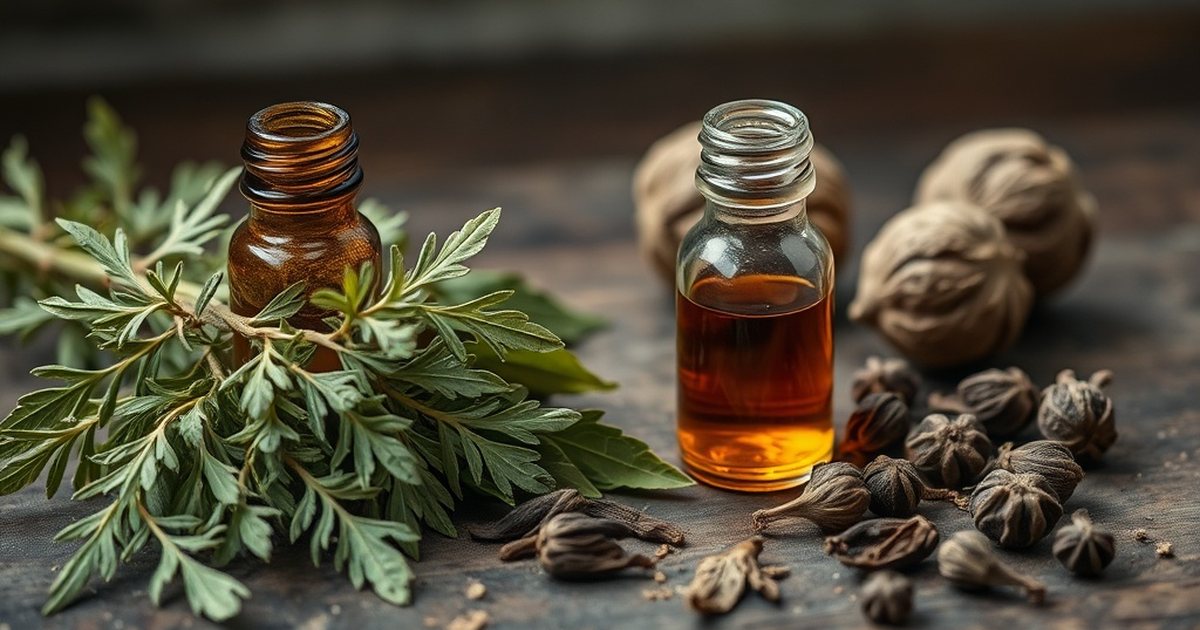
The now-familiar triad of wormwood, black walnut hull (Juglans nigra, a North American species adopted into Eclectic medicine), and clove gained prominence in 19th- and early 20th-century Eclectic and Physiomedical practice in the United States. Practitioners like John Uri Lloyd and Finley Ellingwood described protocols where wormwood’s sesquiterpene lactones (e.g., thujone) disrupted parasite neuromuscular function, juglone from green black walnut hulls acted as a broad-spectrum antimicrobial and laxative, and eugenol from clove targeted eggs and larvae. These regimens typically lasted 10 to 30 days, often with a week on, week off cycling to address hatch cycles. Binders such as diatomaceous earth or psyllium husk were sometimes added to adsorb toxins and facilitate elimination.
European folk medicine also employed enemas (clysters) of garlic (Allium sativum), wormwood tea, or tobacco (Nicotiana tabacum) for direct colonic action, alongside dietary prescriptions of raw garlic, onions, and fermented vegetables. The Salerno Regimen of Health (12th century) advised: “If worms you have, eat garlic and fast.” While many of these practices persisted into early modern pharmacy, the advent of synthetic anthelmintics (e.g., santonin from Artemisia maritima, later mebendazole) shifted clinical focus. Contemporary interest in the historical triad reflects a revival of Eclectic principles, though standardized dosing and safety data remain limited compared to pharmaceutical agents.
Indigenous American and Mesoamerican Practices: Epazote, Papaya, and Ritualized Purging
Across the Americas, Indigenous healing systems developed sophisticated parasite management strategies using native flora. In Mesoamerica, epazote (Dysphania ambrosioides, formerly Chenopodium ambrosioides) was a cornerstone anthelmintic, used by Aztec and Maya healers for lombrices (intestinal worms). The herb’s primary constituent, ascaridole, exhibits potent activity against roundworms and hookworms. Epazote was prepared as a strong decoction taken on an empty stomach, often followed by a purgative such as cascara sagrada (Frangula purshiana) or rhubarb (Rheum officinale) to ensure expulsion. Dosing was carefully calibrated to avoid neurotoxicity from ascaridole overdose.

In the Amazon basin, paico (same genus as epazote) and huasca (various Aristolochia species) were used, though the latter’s aristolochic acid content raises significant safety concerns. The Shipibo-Conibo and other groups employed para para (Jacaranda copaia) bark and chanca piedra (Phyllanthus niruri) in multi-herb purges (purga) conducted under shamanic supervision, often integrated with dietary restrictions (dieta) and ceremonial vomiting (vómito) induced by ayahuasca or tobacco (mapacho). These rituals addressed not only physical parasites but also spiritual mal aire or susto believed to create vulnerability to infestation.
North American tribes utilized wormseed (Chenopodium ambrosioides var. anthelminticum), pinkroot (Spigelia marilandica), and pumpkin seeds (Cucurbita pepo) — the latter’s cucurbitacin paralyzing tapeworms. The Eclectic physicians adopted many of these remedies from Indigenous knowledge, documenting them in the King’s American Dispensatory. A common protocol involved grinding fresh pumpkin seeds into an emulsion with water or milk, consuming it fasting, followed two hours later by a saline purge. This method, reported effective for Taenia species, exemplifies the mechanical-pharmacological synergy characteristic of traditional approaches.
Common Threads: Timing, Terrain, and Transition Across Systems
Despite geographic and theoretical differences, historical parasite cleanse methods share several structural features. First, timing: cleanses were frequently aligned with seasonal transitions (spring/autumn equinoxes) or lunar phases (full moon for expulsion, new moon for rebuilding), reflecting observations of parasite reproductive cycles and host physiology. Second, the concept of terrain: all major systems emphasize that parasites flourish in a specific internal environment — kapha/ama in Ayurveda, spleen qi deficiency with damp-heat in TCM, humoral imbalance in Greek medicine, dysbiosis in Eclectic theory — and that lasting resolution requires altering that terrain, not merely killing organisms.
Third, a phased approach: preparation (dietary simplification, pre-cleansing), active expulsion (antiparasitic herbs + purgatives), and post-cleanse restoration (tonics, probiotics in modern terms, rasayana or bu zhong formulas). This three-stage model mirrors the life cycle of many helminths (adult, egg, larva) and acknowledges that a single intervention rarely addresses all stages. Fourth, the use of binders or bulking agents — psyllium, flaxseed, diatomaceous earth, mimosa pudica seed (in contemporary Ayurvedic-influenced protocols) — to adsorb metabolic byproducts and prevent reabsorption of toxins released during die-off (Herxheimer-like reactions).
Finally, historical protocols were almost never standalone; they were embedded in comprehensive lifestyle systems that regulated sleep, stress, food combining, and seasonal routines. The modern “parasite cleanse” as a discrete 30-day supplement regimen often isolates the expulsion phase from its traditional context of constitutional assessment, dietary discipline, and follow-up care. This decontextualization may explain variable outcomes and underscores the importance of professional guidance when adapting historical practices for contemporary use.
🛒 Where to Buy Parasite Cleanse Protocol
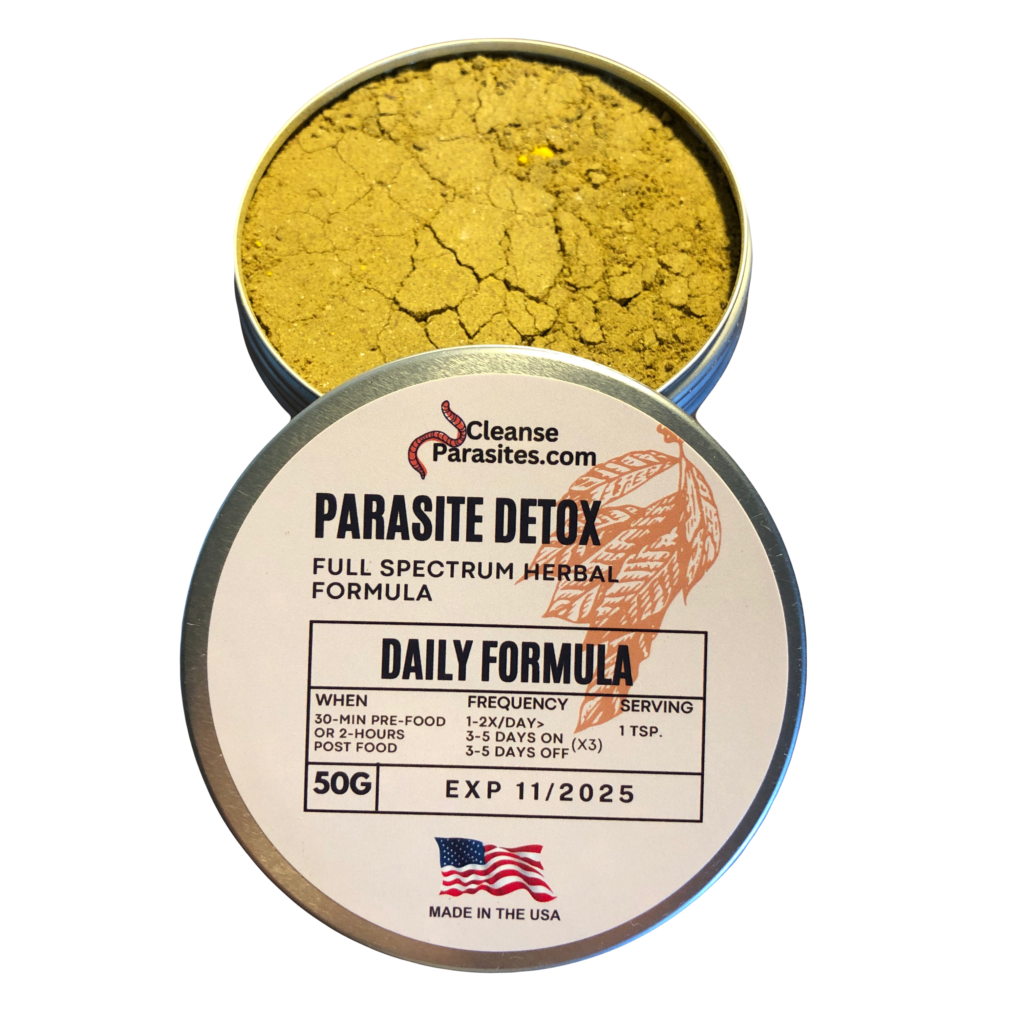
- CleanseParasites Herbal Parasite Cleanse Powder Editor’s Pick
The flagship product for this hub’s own protocol content — wormwood, black walnut hull, cloves, and more. - CleanseParasites Full Detox Bundle (all products) Editor’s Pick
The complete 11-week protocol bundle: parasite cleanse, metals binder, superfood, and more in one order. - Global Healing Paratrex I
oil-based liquid, 1 ml, 2x daily — Current MicroSomal formula is a pumpkin-seed and pomegranate-seed oil blend with essential oils; it no longer contains wormwood, clove or black walnut - Amazing Herbs Premium Black Walnut-Wormwood Complex
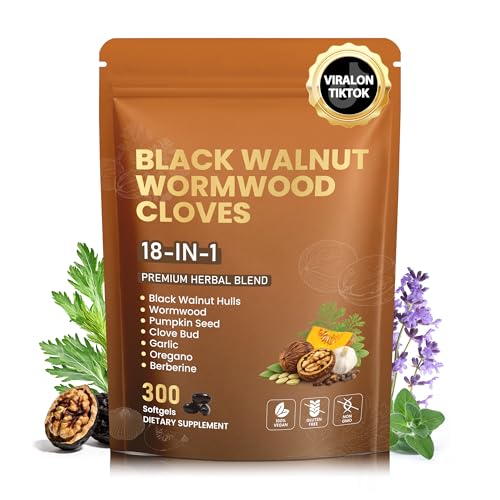
capsules, 2 capsules daily — Budget-friendly combination capsule pairing black walnut hull and wormwood, a common starter product - NOW Foods Wormwood
capsules, 1 capsule, 2x daily — Single-herb wormwood capsule from a widely trusted supplement manufacturer, good for readers wanting to build their own stack - Herb Pharm Black Walnut
liquid, 0.5-1 mL, 3x daily — Alcohol-based liquid extract from a respected small-batch herbal manufacturer, common alternative to capsule form
As an Amazon Associate we earn from qualifying purchases. Quality varies widely — always choose a product with a published third-party test (COA) before buying.

A Note on the Evidence
Historical parasite cleanse practices are informational and not medical advice; many herbs cited have potential toxicity (e.g., wormwood thujone, epazote ascaridole, Aristolochia aristolochic acid) and are contraindicated in pregnancy, nursing, children, and certain medical conditions. These protocols have not been evaluated by the FDA and are not intended to diagnose, treat, cure, or prevent any disease. Always consult a qualified healthcare provider before starting any herbal regimen, especially if you suspect a parasitic infection requiring lab-confirmed diagnosis and prescription treatment.
Frequently Asked Questions
What are the most commonly cited historical herbs for parasite cleansing?
Across major traditional systems, wormwood (Artemisia absinthium), black walnut hull (Juglans nigra), clove (Syzygium aromaticum), neem (Azadirachta indica), epazote (Dysphania ambrosioides), pumpkin seeds (Cucurbita pepo), and vidanga (Embelia ribes) appear repeatedly in historical texts and formularies for their anthelmintic properties.
Did traditional systems use binders during parasite cleanses?
Yes. Ayurveda used haritaki (Terminalia chebula) and psyllium (Plantago ovata) as mild laxatives and bulking agents; Eclectic physicians employed psyllium husk and flaxseed; contemporary protocols influenced by these traditions sometimes add diatomaceous earth or mimosa pudica seed to adsorb toxins and support elimination.
How long did historical parasite cleanses typically last?
Duration varied by system and severity: Ayurvedic krimighna protocols often ran 7–21 days; TCM formulas like Wu Mei Wan or Hua Chong Wan were taken for 3–7 days; Eclectic regimens using the wormwood-walnut-clove triad commonly spanned 10–30 days with cycling; Indigenous purge rituals could be single intense events or repeated over weeks.

Were historical parasite cleanses safe for everyone?
No. Classical texts explicitly contraindicate strong purgatives and toxic herbs (e.g., wormwood thujone, aristolochic acid in Aristolochia, ascaridole in epazote) in pregnancy, nursing, childhood, severe debility, and certain organ pathologies. Professional supervision was considered essential for dosing, monitoring, and managing adverse effects.
Can historical parasite cleanse methods replace modern medical treatment?
Historical methods are not substitutes for laboratory-confirmed diagnosis or prescription anthelmintics. They reflect observational wisdom and may support digestive health, but they lack the standardized efficacy, safety profiling, and targeted spectrum of modern antiparasitic drugs. Anyone suspecting a parasitic infection should consult a healthcare provider for testing and appropriate treatment.
What is the role of diet in traditional parasite cleansing?
Dietary modification is central: Ayurveda restricts sweet, heavy, fermented foods; TCM avoids raw, cold, greasy, and sugary foods that feed damp-heat; European traditions prescribed garlic, onions, fermented vegetables, and fasting; Indigenous dietas eliminated salt, sugar, alcohol, and specific proteins. The goal is to starve parasites while supporting host digestion and elimination.
These statements have not been evaluated by the Food and Drug Administration. This information is not intended to diagnose, treat, cure, or prevent any disease. Content is for informational purposes only and is not medical advice; consult a qualified healthcare provider before starting any supplement. As an Amazon Associate we earn from qualifying purchases.