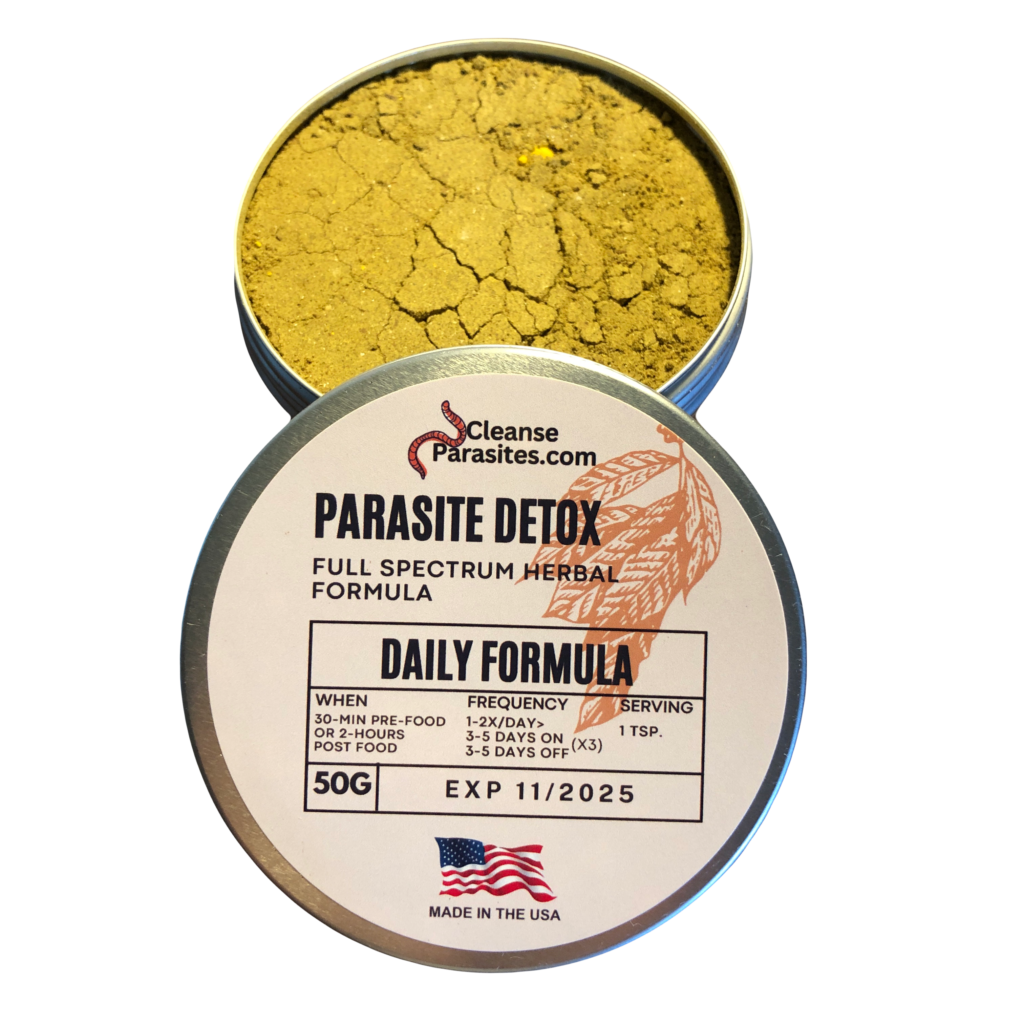
If you’ve started a parasite cleanse and felt worse before you felt better, chances are someone told you it’s a “die-off” or “Herxheimer” reaction, evidence that the herbs are working and killing off parasites or microbes. It’s a popular explanation in wellness circles, but it borrows a real, well-documented medical term from a very different context.
The Jarisch-Herxheimer reaction is a genuine, studied phenomenon, but almost all of the clinical evidence for it comes from antibiotic treatment of specific bacterial spirochete infections like syphilis and leptospirosis, not from herbal antiparasitic supplements. This article lays out what’s actually been documented about Herxheimer reactions, where the term applies with real evidence behind it, and where the connection to a parasite cleanse is more assumption than established science.
Key Takeaways
- The Jarisch-Herxheimer reaction is a documented, real phenomenon, but the evidence for it comes almost entirely from antibiotic treatment of confirmed bacterial infections like syphilis and leptospirosis.
- The proposed mechanism is an inflammatory response to sudden pathogen-debris release, not a general sign that any supplement is ‘working’ [1].
- There is no clinical research establishing that herbal parasite cleanse ingredients trigger a comparable, measurable Herxheimer-type reaction in humans.
- Feeling unwell during a cleanse is more plausibly explained by diet changes, herb-related GI irritation, or dehydration than by pathogen die-off.
- Severe, escalating, or persistent symptoms during any cleanse should prompt medical evaluation rather than being attributed to a die-off reaction.
What Is a Jarisch-Herxheimer Reaction, Medically?
The Jarisch-Herxheimer reaction (JHR) is a well-characterized acute febrile response that can occur within hours of starting antimicrobial treatment for certain bacterial infections, most notably syphilis, leptospirosis, and other spirochetal or related diseases [2] [3] [4]. It typically presents with fever, chills, headache, muscle aches, and a temporary worsening of existing symptoms or lesions, appearing within the first hours after treatment starts and resolving on its own within a day or so.
Historically, it was first described in patients with syphilis treated with mercury and later penicillin, and it has since been documented most rigorously in that population, as well as in leptospirosis and, less commonly, in some parasitic and other infections such as toxoplasmosis-related presentations [5]. The reaction has clinical staging and predictable laboratory changes that have been studied in detail, which is part of why it’s considered a real, reproducible clinical entity rather than a vague catch-all [6].

The Proposed Mechanism: Why Killing Pathogens Can Cause Symptoms
The leading explanation for JHR is that rapid antimicrobial killing of the causative organism releases pathogen components, such as lipopolysaccharides or other pro-inflammatory antigens, that trigger a burst of inflammatory cytokines, producing the fever and systemic symptoms seen in the reaction [1]. This is essentially an acute inflammatory response to a sudden load of dead-organism debris, not evidence of ongoing tissue damage from the treatment itself.
Supporting this inflammatory framework, research has found that baseline levels of C-reactive protein, a marker of systemic inflammation, can help predict which patients with active syphilis are more likely to experience a Herxheimer reaction after treatment, suggesting the reaction is tied to how much inflammatory potential exists before treatment begins [7]. This kind of biomarker research exists specifically for treated bacterial infections; it has not been established for herbal antiparasitic regimens.
Where the Evidence Actually Comes From
Virtually all of the modern clinical evidence on JHR involves antibiotic treatment of syphilis or leptospirosis. A 2025 secondary analysis of a randomized clinical trial examined Herxheimer reactions specifically after benzathine penicillin G treatment for early syphilis in adults, tracking incidence and clinical course under controlled conditions [8]. Similarly, a 2022 study looked at how changes in syphilis treatment protocols correlated with the frequency of Herxheimer reactions [9].

Leptospirosis research has also documented the reaction as a recognized complication of antibiotic therapy, including case reports and broader treatment-efficacy reviews that account for it as an expected, self-limited adverse event [10] [11]. Even in ophthalmology, paradoxical worsening after starting treatment for ocular tuberculosis has been described using Herxheimer-adjacent framing, again in the context of antimicrobial or anti-inflammatory drug treatment of a confirmed infection, not a supplement regimen [12].
Applying 'Herxheimer' to a Parasite Cleanse: Where the Analogy Breaks Down
The core evidence base for JHR involves prescription antibiotics killing specific, lab-confirmed bacterial infections, like Treponema pallidum in syphilis or Leptospira species, in controlled clinical settings where the infection and its clearance are verified. A parasite cleanse using wormwood, black walnut, or clove is a different scenario entirely: there is no equivalent body of clinical research measuring whether these herbs kill intestinal parasites in humans at the doses typically used, and no studies establishing that any resulting symptoms follow the same fever-and-inflammation pattern documented in JHR.
That doesn’t mean people don’t feel unwell during a cleanse. Digestive changes, shifts in diet, binder use, and normal detox-adjacent symptoms like fatigue, headache, or loose stools are common and plausible for other reasons entirely. But labeling those symptoms “die-off” or “Herxheimer” borrows the credibility of a documented antibiotic-treatment phenomenon without the same evidence connecting cause and effect. One case report has linked toxoplasmosis-related headaches and aseptic meningitis to a Herxheimer-type presentation, illustrating that a parasite connection to this reaction pattern isn’t impossible in principle, but this is a single, distinct clinical scenario involving a confirmed parasitic infection, not general supplement use [5].
What Symptoms During a Cleanse Might Actually Mean
Feeling worse a few days into a parasite cleanse protocol is far more likely to reflect ordinary responses: a change in fiber or diet affecting bowel habits, the direct GI-irritant effect of herbs like wormwood or black walnut hull, dehydration if binders like diatomaceous earth aren’t taken with adequate water, or unrelated illness that coincides with the timing of the cleanse. None of these require, or are explained by, the inflammatory-cytokine mechanism described for JHR.

If symptoms are severe, escalating rather than settling within a day or two, or accompanied by high fever, they warrant medical evaluation rather than being written off as an expected part of a cleanse. The clinical literature on JHR itself emphasizes that the reaction is typically short-lived and self-resolving; a prolonged or worsening illness during a cleanse is a signal to stop and seek care, not evidence of a deeper detox effect [6].
🛒 Where to Buy Parasite Cleanse Protocol
- CleanseParasites Herbal Parasite Cleanse Powder Editor’s Pick
The flagship product for this hub’s own protocol content — wormwood, black walnut hull, cloves, and more. - CleanseParasites Full Detox Bundle (all products) Editor’s Pick
The complete 11-week protocol bundle: parasite cleanse, metals binder, superfood, and more in one order. - Global Healing Paratrex I
oil-based liquid, 1 ml, 2x daily — Current MicroSomal formula is a pumpkin-seed and pomegranate-seed oil blend with essential oils; it no longer contains wormwood, clove or black walnut - Amazing Herbs Premium Black Walnut-Wormwood Complex
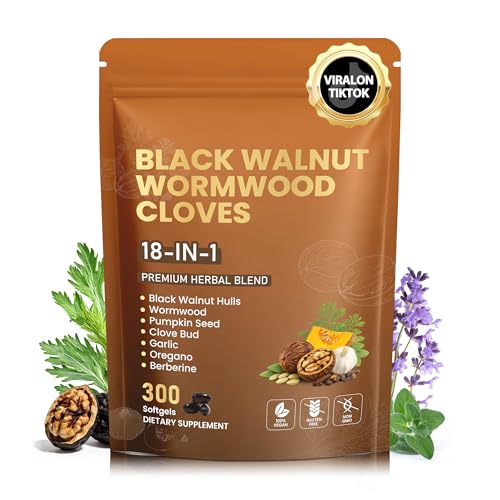
capsules, 2 capsules daily — Budget-friendly combination capsule pairing black walnut hull and wormwood, a common starter product - NOW Foods Wormwood
capsules, 1 capsule, 2x daily — Single-herb wormwood capsule from a widely trusted supplement manufacturer, good for readers wanting to build their own stack - Herb Pharm Black Walnut
liquid, 0.5-1 mL, 3x daily — Alcohol-based liquid extract from a respected small-batch herbal manufacturer, common alternative to capsule form
As an Amazon Associate we earn from qualifying purchases. Quality varies widely — always choose a product with a published third-party test (COA) before buying.
A Note on the Evidence
The clinical evidence cited here describes Herxheimer reactions in the context of antibiotic treatment for confirmed bacterial infections, not herbal parasite cleanses; applying this framework to supplement use is not supported by direct research. This is informational only, not medical advice, and these statements have not been evaluated by the FDA; parasite cleanse herbs are not intended to diagnose, treat, cure, or prevent any disease, and anyone with concerning, severe, or persistent symptoms, or who is pregnant, nursing, on medication, or suspects an actual parasitic infection, should consult a healthcare provider.
Frequently Asked Questions
Is 'die-off reaction' the same thing as the Jarisch-Herxheimer reaction?
In wellness marketing, ‘die-off’ is often used interchangeably with ‘Herxheimer,’ but the clinical term specifically refers to a documented reaction to antibiotic treatment of certain bacterial infections [2]. Applying it to herbal parasite cleanses is an extrapolation not supported by the same research.
What actually causes a true Jarisch-Herxheimer reaction?
The leading explanation is that antimicrobial killing releases inflammatory components from the pathogen, triggering a short-lived cytokine-driven fever response [1]. This has been studied mainly in syphilis and leptospirosis treatment.
Can doctors predict who will get a Herxheimer reaction?
In syphilis patients, higher baseline C-reactive protein levels have been associated with a greater likelihood of developing the reaction after starting antibiotics [7], though this predictive research hasn’t been done for parasite cleanse regimens.

How long does a genuine Herxheimer reaction last?
In documented cases, it typically develops within hours of starting treatment and resolves within about a day, following a recognized clinical course [6] [4].
Has a Herxheimer-type reaction ever been linked to a parasite specifically?
One case discussion connected toxoplasmosis-related headaches and aseptic meningitis to a Herxheimer-type presentation, but this involved a confirmed parasitic infection under treatment, not a general antiparasitic supplement [5].
Should I keep taking cleanse herbs if I feel worse?
This is not medical advice, but persistent or worsening symptoms are not confirmed by research to be an expected ‘good sign’ during a herbal cleanse; they warrant stopping and checking with a healthcare provider, especially if fever is high or symptoms escalate rather than settle.
References
- Pound MW et al. Proposed mechanisms and preventative options of Jarisch-Herxheimer reactions. Journal of clinical pharmacy and therapeutics (2005). PMID 15896248
- Belum GR et al. The Jarisch-Herxheimer reaction: revisited. Travel medicine and infectious disease (2013). PMID 23632012
- et al. Jarisch-Herxheimer reaction. British medical journal (1967). PMID 6017505
- et al. The Jarisch-Herxheimer reaction. Lancet (London, England) (1977). PMID 64863
- Prandota J et al. The importance of toxoplasma gondii infection in diseases presenting with headaches. Headaches and aseptic meningitis may be manifestations of the Jarisch-Herxheimer reaction. The International journal of neuroscience (2009). PMID 19916846
- Bryceson AD et al. Clinical pathology of the Jarisch-Herxheimer reaction. The Journal of infectious diseases (1976). PMID 932495
- Tseng YT et al. High Baseline C-Reactive Protein Level Can Predict the Occurrence of the Jarisch-Herxheimer Reaction in Patients with Active Syphilis. Infection and drug resistance (2021). PMID 34898992
- Dionne JA et al. Jarisch-Herxheimer Reaction After Benzathine Penicillin G Treatment in Adults With Early Syphilis: Secondary Analysis of a Randomized Clinical Trial. JAMA network open (2025). PMID 39946129
- Yang YM et al. Correlation Between Changes in Syphilis Treatment and Jarisch-Herxheimer Reaction. The Kobe journal of medical sciences (2022). PMID 35368000
- Graversen HV et al. Jarisch-Herxheimer reaction in a patient with leptospirosis. Ugeskrift for laeger (2024). PMID 39575909
- Ji Z et al. Efficacy and safety of antibiotics for treatment of leptospirosis: a systematic review and network meta-analysis. Systematic reviews (2024). PMID 38627798
- Ganesh SK et al. Paradoxical reactions in ocular tuberculosis. Journal of ophthalmic inflammation and infection (2019). PMID 31493128
These statements have not been evaluated by the Food and Drug Administration. This information is not intended to diagnose, treat, cure, or prevent any disease. Content is for informational purposes only and is not medical advice; consult a qualified healthcare provider before starting any supplement. As an Amazon Associate we earn from qualifying purchases.