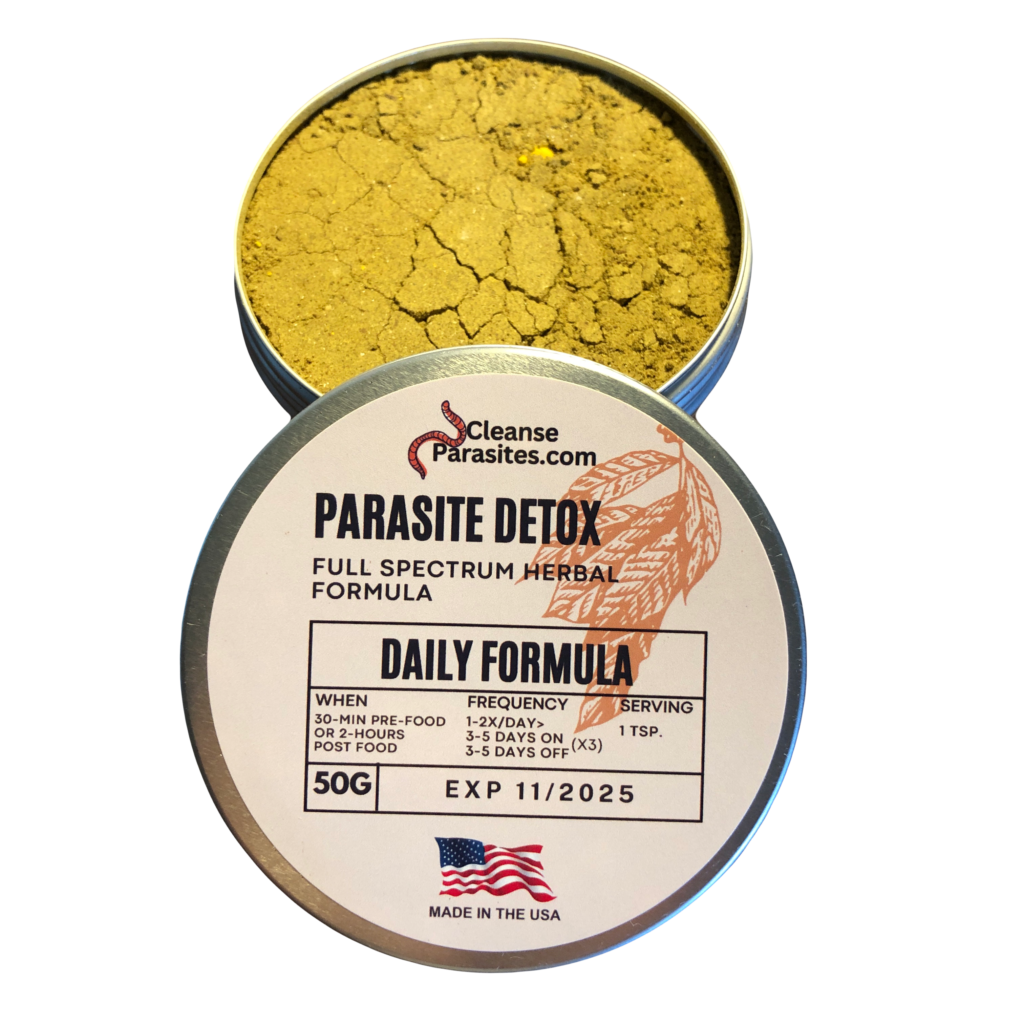
Parasite cleanse protocols are time-boxed regimens that combine antiparasitic and antimicrobial herbs with the goal of reducing intestinal parasite burden. Common botanical ingredients include wormwood (Artemisia absinthium), black walnut hull (Juglans nigra), and clove (Syzygium aromaticum), often paired with binders such as diatomaceous earth or mimosa pudica seed. The proposed mechanisms involve disrupting parasite membranes and reproductive cycles while binding and eliminating organisms from the gastrointestinal tract.
This article compares three widely referenced protocols — ParaGuard (by Zahler), Paratrex (by Global Healing), and the Dr. Clark Protocol — focusing on their ingredient profiles, formulation philosophies, and practical differences. These statements have not been evaluated by the FDA and these products are not intended to diagnose, treat, cure, or prevent any disease. Parasite cleanse herbs are not a substitute for lab-confirmed diagnosis or medical treatment of a parasitic infection, and pregnant or nursing individuals, children, and anyone on medication should talk to a healthcare provider before starting one.
Key Takeaways
- ParaGuard and the Dr. Clark Protocol are both built on the traditional triad of wormwood, black walnut hull, and clove. Global Healing’s current Paratrex I reformulation contains none of those three, so the three protocols no longer share a common botanical core.
- ParaGuard is an alcohol-free liquid sold as a single 77 mg proprietary blend of ten herbs; Paratrex is now sold by Global Healing only as MicroSomal Paratrex I, an oil-based liquid taken at 1 ml twice daily; the Dr. Clark Protocol requires three separate products and a strict 18–21 day schedule.
- The Dr. Clark Protocol is the most prescriptive and sourcing-dependent; ParaGuard and Paratrex are more accessible as single-product systems.
- None of these protocols are FDA-evaluated or intended to diagnose, treat, cure, or prevent disease. Lab-confirmed diagnosis and medical treatment remain the standard for parasitic infections [1].
- Pregnant or nursing individuals, children, and anyone on medication should consult a healthcare provider before using any parasite cleanse regimen.
ParaGuard (Zahler) — Ingredient Profile and Formulation Approach
ParaGuard is a liquid herbal formula that combines several traditionally used antiparasitic botanicals in a single blend. The label lists a single 77 mg proprietary blend of ten botanicals: fennel seed, marshmallow root, black walnut hull, pumpkin seed, slippery elm bark, wormwood herb, clove bud, garlic bulb, oregano leaf oil, and peppermint leaf oil. Vegetarian glycerin and water form the base, and the label carries a tree nut (walnut) allergen warning. The liquid delivery format is designed for adjustable dosing and rapid absorption.
Zahler positions ParaGuard as a broad-spectrum microbial balance formula rather than a single-target parasite cleanse. The inclusion of multiple herbs with overlapping traditional uses reflects a “shotgun” philosophy — covering a wide range of potential organisms simultaneously. The product is marketed for short-term use, typically 2–4 weeks, with a recommended break period before repeating if needed. Note that the ten herbs are disclosed only as a single 77 mg proprietary blend — the amount of each individual herb is not stated on the label.

Paratrex (Global Healing) — Ingredient Profile and Formulation Approach
Paratrex has been reformulated, and this is the single biggest difference between it and the other two protocols. Global Healing’s own store now lists Paratrex only as MicroSomal Paratrex I, a 2 fl oz oil-based liquid. Its 1 ml proprietary blend is organic pumpkin seed oil, organic pomegranate seed oil, organic black seed oil, organic fennel oil, coriander CO2 extract, papaya seed CO2 extract, organic neem oil, organic lemongrass oil, organic spearmint oil, organic thyme oil, and organic German chamomile CO2 extract, in a base of organic vegetable glycerin, olive oil and avocado oil. It contains no wormwood, no black walnut hull and no clove. The capsule bottles still listed by third-party retailers are a different, earlier formula: a 1,170 mg proprietary blend of wildcrafted wormwood, diatomaceous earth, organic neem, and organic clove.
Global Healing’s current philosophy emphasises absorption rather than binding: the MicroSomal delivery system is marketed as dispersing the oils into micelle-sized droplets, and the label simply directs one millilitre twice daily without specifying a fixed course length. The binder-and-mineral framing that older write-ups give Paratrex belonged to the earlier capsule formula, which carried diatomaceous earth alongside the herbs. Global Healing also sells a second-stage product, Paratrex II, on a different blend again — so check which bottle you are actually comparing.
Dr. Clark Protocol — Original Herbal Regimen and Philosophy
The Dr. Clark Protocol, popularized by Hulda Regehr Clark in her 1993 book “The Cure for All Diseases,” centers on three core herbs taken in a specific sequence: green black walnut hull tincture, wormwood capsules, and clove capsules. The protocol specifies that the black walnut hull must be from green (unripe) hulls harvested at a precise time, prepared as a tincture in grain alcohol. Wormwood is taken as dried herb in capsules, and clove is taken as freshly ground powder in capsules to preserve volatile oils.
Dr. Clark’s philosophy is highly specific: the three herbs must be taken together in a defined schedule over 18–21 days, with precise dosing increments. She argued that the combination targets adult parasites, larvae, and eggs simultaneously — black walnut hull and wormwood for adults and developmental stages, clove for eggs. The protocol also includes ancillary recommendations such as ozonated water, zapper devices, and dietary restrictions. Unlike commercial blends, the Dr. Clark Protocol requires sourcing individual components separately and following a strict timetable.

Comparative Ingredient Analysis — Overlap and Divergence
Two of the three protocols are built on the traditional triad of wormwood, black walnut hull, and clove — herbs with long histories of traditional use for intestinal parasites. Wormwood’s use as a vermifuge has been tested mainly in livestock, for example against gastrointestinal nematodes in sheep [2], rather than in human trials. ParaGuard carries all three among its ten herbs, and the Dr. Clark Protocol uses them exclusively as its primary antiparasitic agents. The current Paratrex I liquid carries none of the three: it shares only pumpkin seed and fennel with ParaGuard, and no botanical at all with the Dr. Clark Protocol. The key divergence lies in the supporting ingredients and delivery forms.
Around the triad, ParaGuard adds garlic bulb, pumpkin seed, fennel seed and oregano leaf oil for antimicrobial breadth, plus marshmallow root, slippery elm bark and peppermint leaf oil as demulcent and digestive-comfort herbs. Paratrex I takes a different route entirely, building on seed and CO2-extracted oils — pomegranate, black seed, papaya seed, coriander, lemongrass and German chamomile — with neem as its principal traditionally antiparasitic botanical. The Dr. Clark Protocol deliberately avoids additional herbs, arguing that the three-core combination is sufficient when properly prepared and timed.
Delivery Format and Practical Considerations
ParaGuard’s liquid tincture format allows flexible dosing — users can adjust drop amounts based on tolerance — but requires measuring and has a strong, bitter taste that some find difficult. The alcohol-free glycerin base makes it suitable for those avoiding alcohol. Paratrex I is also a liquid, measured at one millilitre twice daily, so the contrast between the two commercial products is now one of dosing units and taste rather than capsule versus liquid. The Dr. Clark Protocol requires managing three separate products with a complex escalating schedule, which demands high adherence and organization.
Cost structures differ: ParaGuard and Paratrex are single-product purchases (typically $30–50 per bottle), while the Dr. Clark Protocol requires buying three separate high-quality components (green black walnut hull tincture, wormwood capsules, clove capsules), often totaling $60–100+ for a full course. Sourcing authenticity is a particular concern for the Dr. Clark Protocol, as the green hull harvest timing and fresh clove grinding are critical to her specifications.

Philosophical Differences — Broad-Spectrum vs. Targeted vs. Prescriptive
ParaGuard embodies a broad-spectrum herbalism philosophy: combine multiple traditionally used antiparasitic herbs to cover diverse organisms, with supportive herbs for tolerability. It reflects modern commercial herbal formulation — broad, traditionally grounded, and designed for general microbial balance support — though the individual herb amounts sit behind a proprietary blend. Paratrex I takes a delivery-led approach instead, emphasising how well an oil-based blend is absorbed rather than how long the herb list is.
The Dr. Clark Protocol represents a prescriptive, protocol-driven philosophy: a specific three-herb combination, prepared in specific ways, taken on a specific schedule, based on a specific theoretical model of parasite life cycles. It rejects the “kitchen sink” approach in favor of precision and adherence to a defined method. This creates a higher barrier to entry but appeals to users who want a structured, historically documented regimen rather than a proprietary blend.
🛒 Where to Buy Parasite Cleanse Protocol
- CleanseParasites Herbal Parasite Cleanse Powder Editor’s Pick
The flagship product for this hub’s own protocol content — wormwood, black walnut hull, cloves, and more. - CleanseParasites Full Detox Bundle (all products) Editor’s Pick
The complete 11-week protocol bundle: parasite cleanse, metals binder, superfood, and more in one order. - Global Healing Paratrex I
oil-based liquid, 1 ml, 2x daily — Current MicroSomal formula is a pumpkin-seed and pomegranate-seed oil blend with essential oils; it no longer contains wormwood, clove or black walnut - Amazing Herbs Premium Black Walnut-Wormwood Complex
capsules, 2 capsules daily — Budget-friendly combination capsule pairing black walnut hull and wormwood, a common starter product - NOW Foods Wormwood
capsules, 1 capsule, 2x daily — Single-herb wormwood capsule from a widely trusted supplement manufacturer, good for readers wanting to build their own stack - Herb Pharm Black Walnut
liquid, 0.5-1 mL, 3x daily — Alcohol-based liquid extract from a respected small-batch herbal manufacturer, common alternative to capsule form
As an Amazon Associate we earn from qualifying purchases. Quality varies widely — always choose a product with a published third-party test (COA) before buying.
A Note on the Evidence
Parasite cleanse herbs are not a substitute for lab-confirmed diagnosis or medical treatment of a parasitic infection. Pregnant or nursing individuals, children, and anyone on medication should talk to a healthcare provider before starting any protocol. These statements have not been evaluated by the FDA and these products are not intended to diagnose, treat, cure, or prevent any disease.
Frequently Asked Questions
What are the main ingredient differences between ParaGuard, Paratrex, and the Dr. Clark Protocol?
ParaGuard and the Dr. Clark Protocol share wormwood, black walnut hull, and clove; the current Paratrex I liquid contains none of the three. ParaGuard’s 77 mg proprietary blend also carries fennel seed, marshmallow root, pumpkin seed, slippery elm bark, garlic bulb, oregano leaf oil and peppermint leaf oil in a glycerin base. Paratrex I is an oil blend built on pumpkin, pomegranate and black seed oils with neem, lemongrass, spearmint, thyme, fennel, coriander, papaya seed and German chamomile. The Dr. Clark Protocol uses only the three core herbs — green black walnut hull tincture, wormwood capsules, and freshly ground clove capsules — with no additional botanicals.
Which protocol is easiest to follow for a first-time user?
ParaGuard and Paratrex are single-product systems with straightforward dosing instructions, making them more accessible for beginners. The Dr. Clark Protocol requires sourcing three separate high-quality components and following a complex escalating schedule over 18–21 days, which demands more planning and adherence.
Do any of these protocols include binders to help eliminate parasites?
The current Paratrex I liquid does not contain binders; the earlier capsule formula included diatomaceous earth alongside the herbs. ParaGuard does not contain dedicated binder ingredients. The Dr. Clark Protocol does not include binders in its original three-herb regimen, though some practitioners add them separately.

Can I take these protocols if I'm on prescription medications?
These herbs may interact with medications — for example, wormwood contains thujone, a convulsant that blocks GABA-A receptors in the brain [3], and garlic has been linked to bleeding in case reports, although a direct interaction with warfarin is not established [4]. Anyone on medication should consult a healthcare provider before starting any parasite cleanse.
How long are these protocols typically used?
ParaGuard is typically used for 2–4 weeks. Global Healing’s label for Paratrex I directs one millilitre twice daily and does not state a fixed course length. The Dr. Clark Protocol follows a specific 18–21 day schedule. Duration should be individualized with professional guidance.
Are these protocols a substitute for medical testing and treatment?
No. These are dietary supplements not evaluated by the FDA. They are not intended to diagnose, treat, cure, or prevent any disease. Parasitic infections require lab-confirmed diagnosis and appropriate medical treatment. These herbs may support general microbial balance but do not replace standard of care.
References
- Jourdan PM et al. Soil-transmitted helminth infections. Lancet (2018). PMID 28882382
- Tariq KA et al. Anthelmintic activity of extracts of Artemisia absinthium against ovine nematodes. Vet Parasitol (2009). PMID 19070963
- Höld KM et al. Alpha-thujone (the active component of absinthe): gamma-aminobutyric acid type A receptor modulation and metabolic detoxification. Proc Natl Acad Sci U S A (2000). PMID 10725394
- Vaes LP, Chyka PA. Interactions of warfarin with garlic, ginger, ginkgo, or ginseng: nature of the evidence. Ann Pharmacother (2000). PMID 11144706
These statements have not been evaluated by the Food and Drug Administration. This information is not intended to diagnose, treat, cure, or prevent any disease. Content is for informational purposes only and is not medical advice; consult a qualified healthcare provider before starting any supplement. As an Amazon Associate we earn from qualifying purchases.