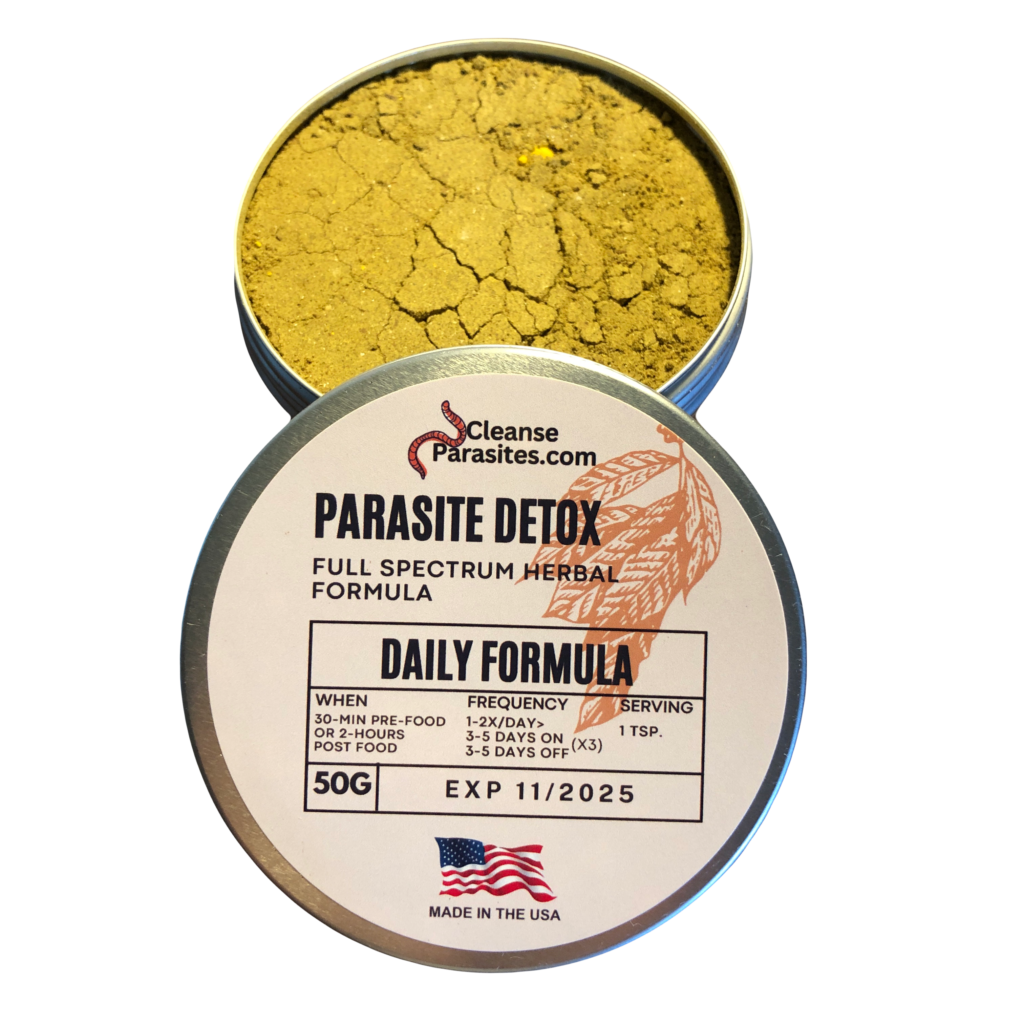
Wormwood shows up in nearly every commercial parasite cleanse, usually alongside black walnut hull and clove. The pairing has become so standard that it’s easy to assume the antiparasitic case for wormwood is settled. It isn’t, at least not for humans. Most of the direct evidence on wormwood killing parasites comes from veterinary and agricultural research: sheep, cats, pigs, and poultry.
That doesn’t make the plant irrelevant, veterinary parasitology is a legitimate research field, and results in animals are often the first step before anyone studies a compound in people. But it does mean the honest answer to ‘does wormwood kill parasites in humans’ is: we have some mechanistic and historical basis for it, decent animal data, and very little in the way of controlled human trials. This article lays out what’s actually been measured, in which species, and where the reasoning gets ahead of the data.
Key Takeaways
- The strongest antiparasitic evidence for the Artemisia genus (artemisinin against malaria) comes from a different species than the wormwood (Artemisia absinthium) used in cleanse products [1].
- Direct evidence for Artemisia absinthium against parasites exists in sheep, cats, pigs, and poultry, but not in controlled human trials [2] [3] [4] [5].
- Artemisia species also show activity against trypanosome parasites in lab and animal research, a different disease category than common intestinal worms [6].
- A 2004 clinical review and a 2020 pharmacology review both describe wormwood’s traditional use and chemistry without establishing human antiparasitic efficacy [7] [8].
- A lab-confirmed parasitic infection should be diagnosed and treated medically; a wormwood-based cleanse is not a substitute for that.
What's Actually in Wormwood, and Why It Might Matter for Parasites
Artemisia absinthium contains a mix of bitter sesquiterpene lactones (including absinthin and related compounds), essential oil constituents like thujone, and various phenolics and flavonoids. A 2020 review of wormwood’s bioactive compounds and pharmacology catalogued this chemistry and its documented antimicrobial, anti-inflammatory, and antioxidant actions, alongside its long history in traditional medicine as a digestive bitter and anthelmintic [8]. A separate review of the wider Artemisia genus reached a similar conclusion: the plants are chemically rich, with real pharmacological activity, but also carry toxicological considerations that deserve attention, not just enthusiasm [9].

The proposed mechanism against parasites is generally described as disruptive to parasite membranes and metabolic processes rather than a single ‘kill switch.’ This is consistent with how bitter, terpene-rich plants have historically been used against intestinal worms across many traditional medicine systems, well before the specific compounds were identified [7].
The Strongest Evidence: Artemisinin and Related Compounds Against Trypanosomiasis and Malaria
The best-documented antiparasitic story from the Artemisia genus doesn’t come from Artemisia absinthium directly, it comes from Artemisia annua, the source of artemisinin, the compound behind modern antimalarial therapy. Artemisinin’s development into a frontline treatment for Plasmodium infection is one of the most successful applications of a plant-derived compound in modern parasitology, with research and clinical use extending back decades [1].
A 2018 review looked specifically at Artemisia species and their constituents against Trypanosomiasis, the parasitic disease behind African sleeping sickness and Chagas disease, and found meaningful activity across several Artemisia-derived compounds in laboratory and animal models [6]. This matters for context: it shows the genus has real, studied antiparasitic pharmacology against protozoan parasites specifically, not just intestinal worms. It does not mean Artemisia absinthium itself, the wormwood species used in cleanse products, has been shown to treat trypanosomiasis or malaria in humans. The compound with the strongest evidence (artemisinin) is chemically distinct and comes primarily from a different Artemisia species.
Anthelmintic (Worm-Killing) Studies: Mostly in Livestock and Companion Animals
The most direct evidence for wormwood against intestinal parasites comes from veterinary studies, and it’s worth taking seriously precisely because it’s a controlled research setting, even though the species tested is not human. A 2009 study tested Artemisia absinthium extracts against ovine (sheep) nematodes and reported measurable anthelmintic activity [2].

A 2011 study looked at Artemisia absinthium’s antiparasitic efficiency against Toxocara cati (a common roundworm) in naturally infected cats, again finding a documented effect [3]. More recently, a 2024 study assessed Artemisia absinthium combined with garlic (Allium sativum) against gastrointestinal parasites in pigs on low-input farms, an applied agricultural setting rather than a lab, and reported in vivo antiparasitic effects [4]. Separately, a 2024 systematic review and meta-analysis evaluated Artemisia absinthium specifically for coccidiosis in broiler chickens, a protozoan intestinal infection, and synthesized findings across multiple studies [5].
Read together, these four studies span four different animal species and two different classes of parasite (nematode worms and protozoan coccidia), all suggesting biological activity. That consistency across species and parasite types is a genuinely interesting signal. What it isn’t is a human clinical trial, and the doses, extraction methods, and administration routes used in sheep, cats, pigs, and chickens don’t automatically translate to a human supplement dose.
Where the Evidence Gets Thinner: Wormwood in Humans Specifically
A 2004 clinical pharmacology review titled simply ‘Wormwood’ summarized what was known at the time about the plant’s traditional uses, active constituents, and safety profile in a human medical context, without reporting controlled human trials establishing antiparasitic efficacy [7]. That gap has not been closed by newer research specific to Artemisia absinthium’s use against human intestinal parasites; the newer work on the genus (reviewed above) largely continues to center on animal models, other Artemisia species, or non-parasitic applications.

This is a meaningful distinction for anyone considering a wormwood-based cleanse for a suspected parasite issue: the mechanistic case is plausible, the animal data across several species is reasonably consistent, but a lab-confirmed human parasitic infection should still be diagnosed and treated by a healthcare provider using established antiparasitic medications, not addressed solely with an herbal protocol whose efficacy in humans hasn’t been directly tested.
A Note on Artemisinin-Derived Compounds Beyond Parasites
Some of the more recent research on Artemisia-derived compounds isn’t about parasites at all, it’s about repurposing artemisinin derivatives like artesunate for other conditions. A 2024 study found artesunate induced ferroptosis (a form of cell death) in melanoma cells and enhanced antitumor immune activity by targeting the IDO1 pathway [10]. A 2025 study examined artesunate’s renoprotective effects against cisplatin-induced acute kidney injury [11], and a 2026 study investigated artesunate’s role in reducing oxidative stress and inflammation in non-alcoholic fatty liver disease via the Nrf2 pathway [12].
These studies are worth knowing about because they show active, ongoing research interest in Artemisia-derived compounds generally, but they say nothing about intestinal parasites and should not be cited as parasite-cleanse evidence. They’re included here for completeness and honesty about what the broader research landscape looks like, not because they support an antiparasitic claim.
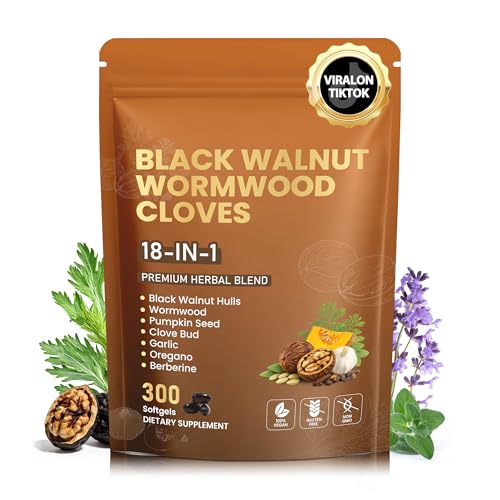
🛒 Where to Buy Parasite Cleanse Protocol
- CleanseParasites Herbal Parasite Cleanse Powder Editor’s Pick
The flagship product for this hub’s own protocol content — wormwood, black walnut hull, cloves, and more. - CleanseParasites Full Detox Bundle (all products) Editor’s Pick
The complete 11-week protocol bundle: parasite cleanse, metals binder, superfood, and more in one order. - Global Healing Paratrex I
oil-based liquid, 1 ml, 2x daily — Current MicroSomal formula is a pumpkin-seed and pomegranate-seed oil blend with essential oils; it no longer contains wormwood, clove or black walnut - Amazing Herbs Premium Black Walnut-Wormwood Complex
capsules, 2 capsules daily — Budget-friendly combination capsule pairing black walnut hull and wormwood, a common starter product - NOW Foods Wormwood
capsules, 1 capsule, 2x daily — Single-herb wormwood capsule from a widely trusted supplement manufacturer, good for readers wanting to build their own stack - Herb Pharm Black Walnut
liquid, 0.5-1 mL, 3x daily — Alcohol-based liquid extract from a respected small-batch herbal manufacturer, common alternative to capsule form
As an Amazon Associate we earn from qualifying purchases. Quality varies widely — always choose a product with a published third-party test (COA) before buying.
A Note on the Evidence
These statements have not been evaluated by the FDA and parasite cleanse herbs are not intended to diagnose, treat, cure, or prevent any disease; most of the direct antiparasitic evidence for wormwood comes from animal studies, not human trials, so anyone with a suspected parasitic infection, who is pregnant or nursing, on medication, or considering this for a child should talk to a healthcare provider first. This is informational, not medical advice.

Frequently Asked Questions
Has wormwood been proven to kill parasites in humans?
Not through controlled human trials. The direct anthelmintic evidence for Artemisia absinthium comes from studies in sheep, cats, and pigs [2] [3] [4], and a related coccidiosis meta-analysis in poultry [5]. Human data specific to this species and this use is limited.
Is wormwood the same as the compound used for malaria?
No. The malaria drug artemisinin comes primarily from Artemisia annua, a different species than the Artemisia absinthium used in cleanse products, though both belong to the same genus [1].
What's the proposed mechanism for wormwood against parasites?
Researchers point to its sesquiterpene lactones and other bitter compounds as disruptive to parasite membranes and metabolic function, consistent with wormwood’s long traditional use as an anthelmintic bitter [8] [7].
Do any studies show wormwood working against protozoan parasites, not just worms?
Yes. Artemisia species and their constituents showed activity against Trypanosomiasis-causing parasites in a 2018 review [6], and Artemisia absinthium specifically was evaluated for coccidiosis (a protozoan infection) in poultry [5].

Is wormwood safe to take on its own for suspected parasites?
Wormwood contains thujone and other compounds with documented toxicological considerations at high doses [9]. Anyone with a suspected parasitic infection should get it lab-confirmed and treated medically rather than self-treating with an herbal cleanse alone.
Why do cleanse products combine wormwood with black walnut and clove instead of using it alone?
That combination is a traditional and commercial convention rather than one tested as a specific three-herb protocol in the cited research; each herb has its own separately studied history. The evidence summarized here applies to wormwood specifically, not to the combination.
References
- White NJ et al. Artemisinin: current status. Transactions of the Royal Society of Tropical Medicine and Hygiene (1994). PMID 8053020
- Tariq KA et al. Anthelmintic activity of extracts of Artemisia absinthium against ovine nematodes. Veterinary parasitology (2009). PMID 19070963
- Yıldız K et al. Antiparasitic efficiency of Artemisia absinthium on Toxocara cati in naturally infected cats. Turkiye parazitolojii dergisi (2011). PMID 21618184
- Băieş MH et al. In vivo assessment of the antiparasitic effects of Allium sativum L. and Artemisia absinthium L. against gastrointestinal parasites in swine from low-input farms. BMC veterinary research (2024). PMID 38561770
- Hezil N et al. Effects of Artemisia absinthium on broiler chicken coccidiosis: a systematic review and meta-analysis. Avian pathology : journal of the W.V.P.A (2024). PMID 38616734
- Naß J et al. The activity of Artemisia spp. and their constituents against Trypanosomiasis. Phytomedicine : international journal of phytotherapy and phytopharmacology (2018). PMID 30166103
- Skyles AJ et al. Alternative therapies. Wormwood. American journal of health-system pharmacy : AJHP : official journal of the American Society of Health-System Pharmacists (2004). PMID 14986553
- Batiha GE et al. Bioactive Compounds, Pharmacological Actions, and Pharmacokinetics of Wormwood (Artemisia absinthium). Antibiotics (Basel, Switzerland) (2020). PMID 32585887
- Sharifi-Rad J et al. Artemisia spp.: An Update on Its Chemical Composition, Pharmacological and Toxicological Profiles. Oxidative medicine and cellular longevity (2022). PMID 36105486
- Liu W et al. Artesunate induces melanoma cell ferroptosis and augments antitumor immunity through targeting Ido1. Cell communication and signaling : CCS (2024). PMID 39061097
- Chen H et al. Mechanistic insights into the renoprotective effects of artesunate in cisplatin-induced acute kidney injury. Life sciences (2025). PMID 40578675
- Meng Q et al. Artesunate reduces oxidative stress and inflammation in NAFLD by activating the Nrf2 pathway. Biochemical pharmacology (2026). PMID 41412549
These statements have not been evaluated by the Food and Drug Administration. This information is not intended to diagnose, treat, cure, or prevent any disease. Content is for informational purposes only and is not medical advice; consult a qualified healthcare provider before starting any supplement. As an Amazon Associate we earn from qualifying purchases.