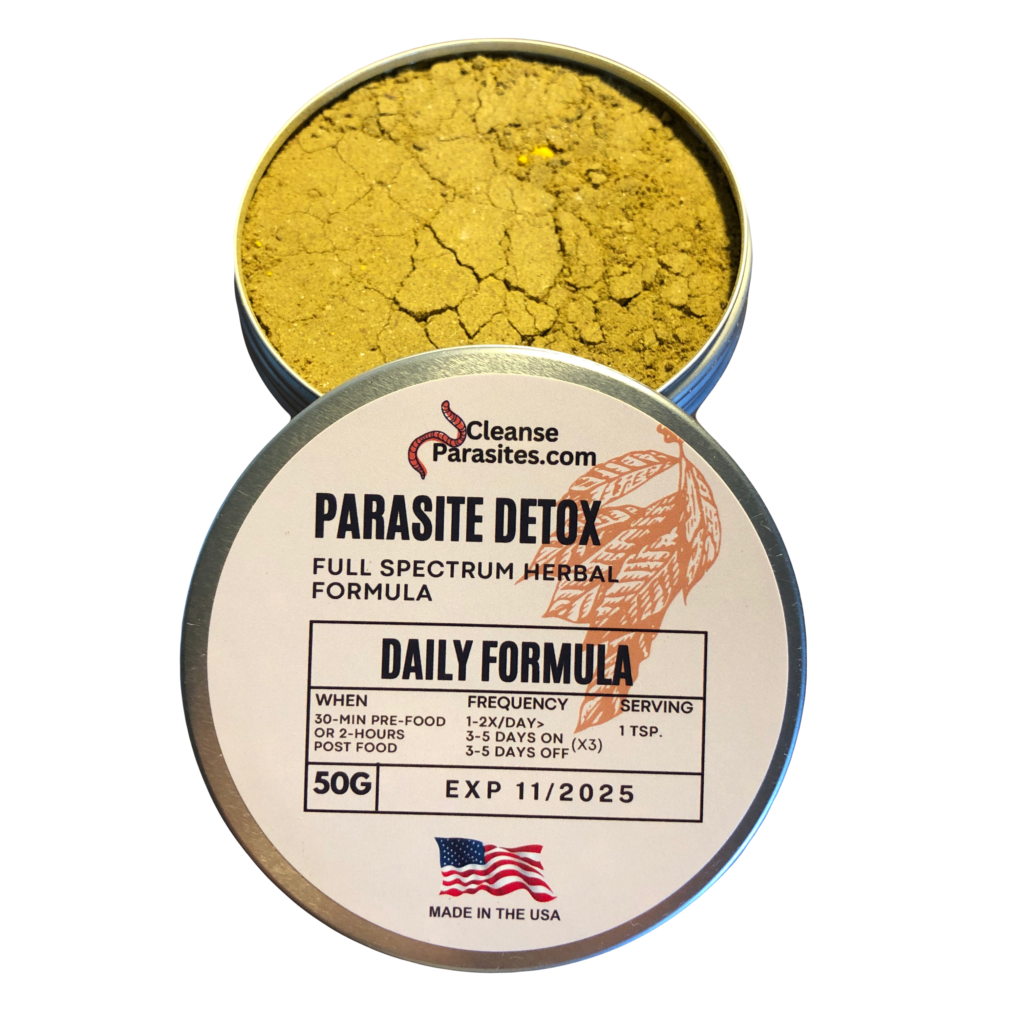
Most of what people read about parasite cleanse effectiveness comes from laboratory studies, animal models, and traditional use, not large human clinical trials on the combined commercial products themselves. This article looks at what actual human research does and does not support for the individual ingredients most commonly used.
Artemisinin (Wormwood’s Active Compound)
Artemisinin has the strongest clinical trial base of any ingredient in this category, because it is the foundation of frontline antimalarial combination therapy, studied extensively in human trials for malaria treatment. That research establishes artemisinin as effective against the malaria parasite.
Artemisinin derivatives have also been randomised against worms in humans, and those trials are the more relevant ones here. In a randomised open-label trial in 83 schoolchildren infected with Schistosoma haematobium, artesunate on its own cured 25% against 88% for the standard prescription drug praziquantel, and the same trial found no measurable effect at all against soil-transmitted helminths and intestinal protozoa[1] — which are the organism groups most people mean by “intestinal parasites”. A separate open-label randomised trial in 212 Kenyan children with Schistosoma mansoni found an artesunate-based combination cured 14% against 65% for praziquantel[2].
So the honest position is not that artemisinin is untested against worms. It is that where it has been tested against worms in humans, it has consistently underperformed the standard prescription drug. None of that research used whole wormwood herb at the doses found in commercial cleanse products, which is a further gap on top of that result rather than a reason to discount it.
Berberine
Berberine has a reasonably large human trial base, mostly focused on blood sugar and metabolic health rather than parasitic infection specifically. Its antimicrobial properties are well documented in laboratory settings.
Dedicated human trials against an intestinal parasite do exist, but there are very few and they are old. Berberine was studied in giardiasis in two clinical reports published in 1972[3] and 1975[4]. Both predate modern trial reporting standards, and neither is indexed with an abstract, so their methods and results cannot be checked from the public record without retrieving the original papers — which is a real limitation on how much weight they can carry.
A later laboratory comparison points the other way: testing berberine sulphate directly against Giardia intestinalis in a dish, it found no activity, while the standard nitroimidazole drugs were active[5]. Two old clinical reports and one negative laboratory result is roughly where berberine sits for parasitic infection today — unresolved rather than established.
Black Walnut and Clove
These two have the thinnest human clinical trial evidence in the group. Most of the support for their anti-parasitic activity comes from in vitro (laboratory dish) studies and long-standing traditional use rather than controlled human trials. This does not mean they are ineffective, but it does mean claims of proven human efficacy go beyond what the current research supports.
Why Combined Commercial Products Are Rarely Trial-Tested
Running a randomized controlled trial on a specific commercial blend is expensive, and supplement companies are not required to fund this level of research before selling a product, unlike pharmaceutical companies developing a new drug. This is a structural reason for the evidence gap, not necessarily a sign that the ingredients lack any biological activity.
The closest published exception is not a commercial product at all. A double-blind randomised trial in Thailand compared a traditional multi-herb antihelmintic formula against mebendazole and against a placebo in people with mixed worm infections, and reported a 93.7% reduction in worm eggs per gram of stool for the herbal formula against 87.5% for mebendazole[6].
That sounds decisive until you look at the size: fewer than 30 people in total across all arms, at a single primary healthcare centre, and the worm species were never identified. The authors’ own stated conclusion is that the study needs repeating with more patients and with the helminths identified to genus and species. It is a reason to want a proper trial, not a substitute for one [6].

How to Interpret This Evidence Gap Honestly
A plausible mechanism plus traditional use plus laboratory activity is meaningfully different from proven clinical efficacy in humans. The honest summary is that individual ingredients have real, documented biological activity against various organisms, but the specific claim that a commercial multi-herb cleanse product reliably clears a human intestinal parasitic infection has not been established through the kind of trial that would settle the question.
Frequently Asked Questions
Has any parasite cleanse product been through FDA drug trials?
No. Supplements are regulated differently than drugs and are not required to undergo the same clinical trial process before sale.
Does lack of trial data mean these herbs do not work?
Not necessarily. It means the specific claim of proven human efficacy for the combined commercial product remains unestablished, even though individual compounds show real activity in other research contexts.
Is artemisinin the same as taking wormwood tea or capsules?
No. Pharmaceutical artemisinin is a purified, precisely dosed compound. Whole wormwood herb contains a mix of compounds at variable concentrations, including thujone, which is not present in purified artemisinin.

Where can I find primary research on these ingredients?
The references at the end of this article link straight to the human trials discussed above on PubMed, so you can read what they actually reported rather than taking this summary for it. Beyond those, PubMed and Google Scholar let you search each ingredient by name alongside terms like ‘antiparasitic’, ‘randomized’ or ‘in vitro’ to see which study types genuinely exist for it.
References
- Keiser J et al. Efficacy and safety of mefloquine, artesunate, mefloquine-artesunate, and praziquantel against Schistosoma haematobium: randomized, exploratory open-label trial. Clin Infect Dis (2010). PMID 20350194
- Obonyo CO et al. Efficacy of artesunate with sulfalene plus pyrimethamine versus praziquantel for treatment of Schistosoma mansoni in Kenyan children: an open-label randomised controlled trial. Lancet Infect Dis (2010). PMID 20705516
- Choudhry VP et al. Berberine in giardiasis. Indian Pediatr (1972). PMID 4555485
- Gupte S. Use of berberine in treatment of giardiasis. Am J Dis Child (1975). PMID 1096596
- Boreham PF et al. A comparison of the in-vitro activity of some 5-nitroimidazoles and other compounds against Giardia intestinalis. J Antimicrob Chemother (1985). PMID 4077772
- Srichaikul B et al. The Comparative Double-Blind Clinical Study in Antihelmintic Efficacy Between Thai Traditional Herbal Formulae and Mebendazole. Am J Ther (2016). PMID 27115772
This article contains affiliate links. If you buy through them, we may earn a small commission at no extra cost to you. This helps support the independent research that goes into this site.
These statements have not been evaluated by the FDA. This product is not intended to diagnose, treat, cure, or prevent any disease. Parasite cleanse protocols are not a substitute for medical diagnosis or treatment. If you suspect a parasitic infection, talk to a doctor about stool testing and confirmed treatment options.
These statements have not been evaluated by the Food and Drug Administration. This information is not intended to diagnose, treat, cure, or prevent any disease. Content is for informational purposes only and is not medical advice; consult a qualified healthcare provider before starting any supplement. As an Amazon Associate we earn from qualifying purchases.