Berberine is a yellow isoquinoline alkaloid found in plants like goldenseal, barberry, and Oregon grape, and it shows up in a wide range of traditional preparations. It’s best known today for research into metabolic health and cancer biology [1], but it also has a long history of laboratory study against parasites and protozoa, which is the focus here.
This article looks specifically at what’s been tested in vitro (in lab dishes) and in animal models against parasites and protozoa, not what it does for humans with a parasitic infection, since that research base is much thinner. The goal is to separate what’s been shown from what’s assumed.
Key Takeaways
- Berberine has documented in vitro activity against Entamoeba histolytica, Giardia lamblia, and Trichomonas vaginalis [2][3]
- In Leishmania, it appears to act by disrupting the parasite’s mitochondria [4]
- The strongest live-animal evidence is against Eimeria (a poultry/rodent coccidian), not common human intestinal worms [5][6]
- No cited study is a human clinical trial for treating a diagnosed parasitic infection
- Berberine has other documented effects (anticonvulsant, anticancer research) worth knowing before combining it with medications [7][1]
What berberine has actually been tested against
Direct antiparasitic research on berberine is narrower than marketing claims often suggest. The clearest evidence comes from three areas: protozoan parasites relevant to human gut and reproductive health, Leishmania (a parasite spread by sandflies), and Eimeria (a coccidian parasite studied mostly in poultry and rodent models).
A 1991 in vitro study found that berberine sulphate inhibited the growth of Entamoeba histolytica, Giardia lamblia, and Trichomonas vaginalis, and altered their cell structure under lab conditions [2]. An earlier 1990 study similarly reported berberine’s effects on the growth of anaerobic protozoa grown in axenic (pure, single-organism) culture [3]. Both are lab-dish studies, not human trials.

Leishmania and the mitochondrial mechanism
One of the more mechanistically detailed studies looked at Leishmania, the parasite responsible for leishmaniasis. Researchers found that berberine chloride exerted its antileishmanial activity by disrupting the parasite’s mitochondria, the organelle responsible for its energy production [4].
This mitochondrial-disruption mechanism is a recurring theme in how berberine is thought to act against single-celled organisms broadly: it appears to interfere with energy metabolism inside the parasite or protozoan cell rather than acting like a conventional antibiotic. A broader review of isoquinoline alkaloids (the chemical family berberine belongs to) covering research from 2014-2018 catalogs this and related biological activities across the alkaloid class [8].
Eimeria: the best-studied animal parasite model
Eimeria species are coccidian parasites that infect the intestines of birds and rodents, and they’re the parasite berberine has been most rigorously tested against in living animals, not just lab dishes. In mice infected with Eimeria papillata, berberine showed anti-Eimeria activity, and the researchers also identified specific gene expression changes in the infected jejunum (a section of small intestine), suggesting it affects the host’s local response to infection, not just the parasite directly [5].

More recently, a 2025 study in chickens infected with Eimeria acervulina found that berberine had anticoccidial activity that appeared to work partly by influencing the host’s immune response, rather than purely killing the parasite outright [6]. Together these two studies are the strongest animal-model evidence available, but Eimeria is a livestock and rodent parasite, it is not one of the parasites typically discussed in human parasite cleanse contexts (like pinworms, roundworms, or hookworms), so this data doesn’t transfer directly to those claims.
What this research does not show
None of the cited studies are human clinical trials of berberine for treating a diagnosed parasitic infection. The protozoa work [2][3] is in vitro, meaning it shows an effect on organisms in a dish under controlled lab conditions, not what happens in a living gut, with its immune system, other microbes, and drug metabolism.
The Leishmania [4] and Eimeria [5][6] studies involve real infections, but in animals, and Eimeria specifically is not a human parasite. There is no cited evidence here for berberine’s effect on common human intestinal worms (helminths) like roundworm or pinworm, and no evidence it can replace a lab-confirmed diagnosis or prescribed antiparasitic treatment.
Why berberine shows up in cleanse protocols anyway
Given the mitochondrial and antimicrobial mechanisms described above [4][8], berberine is often grouped with herbs like wormwood, black walnut hull, and clove in parasite cleanse protocols, on the theory that disrupting a parasite’s or protozoan’s energy metabolism could reduce its viability in the gut. That’s a reasonable extrapolation from the mechanism, but it’s an extrapolation, not a demonstrated outcome in humans with parasites.

Berberine also has other well-documented biological activities worth knowing if you’re considering it, including anticonvulsant effects in mice [7] and investigated anticancer mechanisms [1], which is relevant context for anyone weighing it against other medications, since anticonvulsant activity in particular hints it can affect the central nervous system.
🛒 Where to Buy Parasite Cleanse Protocol
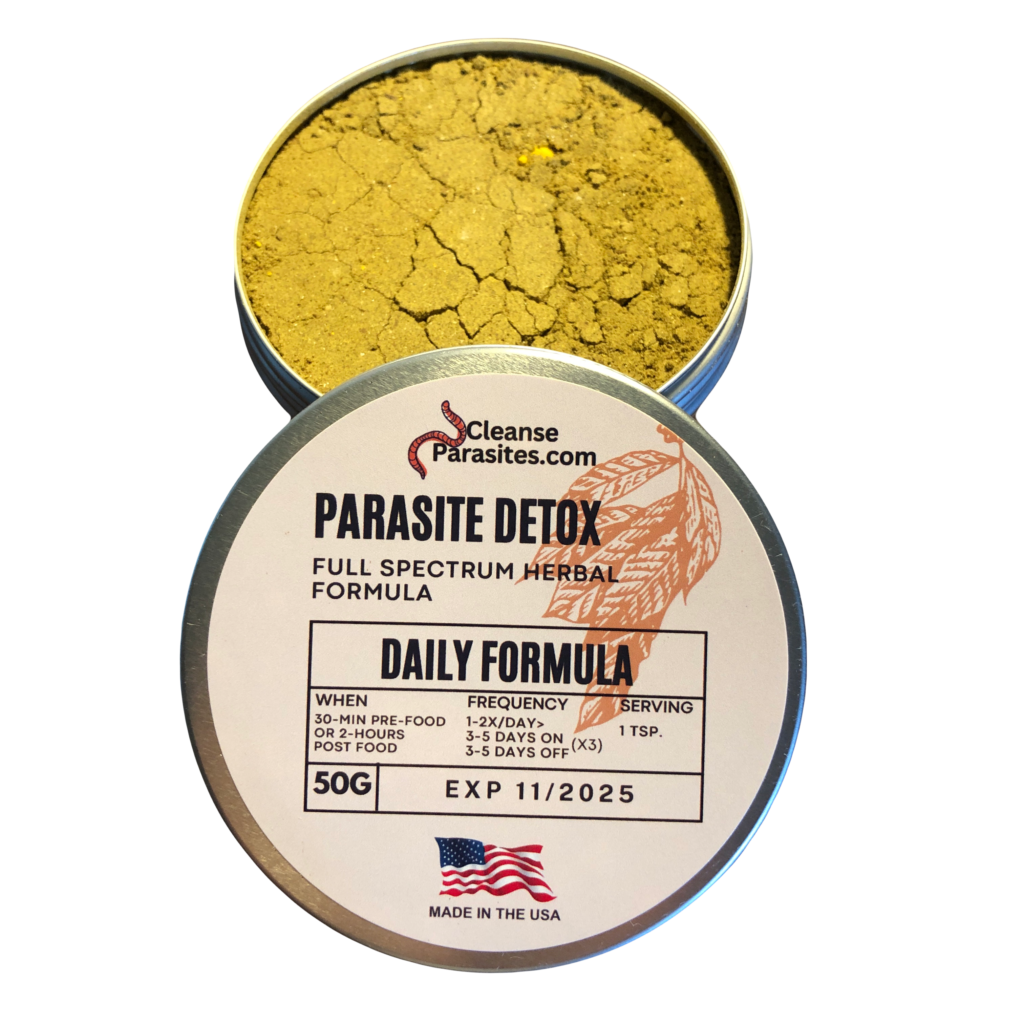
- CleanseParasites Herbal Parasite Cleanse Powder Editor’s Pick
The flagship product for this hub’s own protocol content — wormwood, black walnut hull, cloves, and more. - CleanseParasites Full Detox Bundle (all products) Editor’s Pick
The complete 11-week protocol bundle: parasite cleanse, metals binder, superfood, and more in one order. - Global Healing Paratrex I
oil-based liquid, 1 ml, 2x daily — Current MicroSomal formula is a pumpkin-seed and pomegranate-seed oil blend with essential oils; it no longer contains wormwood, clove or black walnut - Amazing Herbs Premium Black Walnut-Wormwood Complex
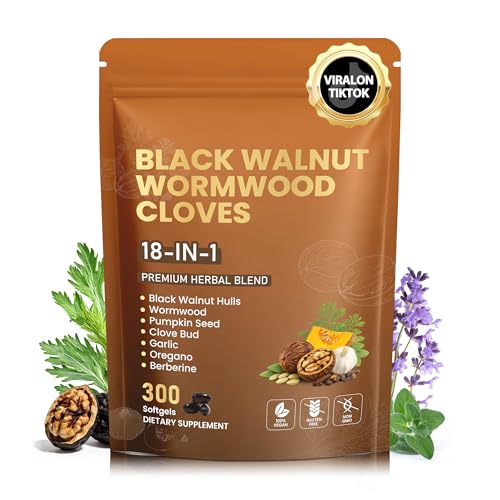
capsules, 2 capsules daily — Budget-friendly combination capsule pairing black walnut hull and wormwood, a common starter product - NOW Foods Wormwood
capsules, 1 capsule, 2x daily — Single-herb wormwood capsule from a widely trusted supplement manufacturer, good for readers wanting to build their own stack - Herb Pharm Black Walnut
liquid, 0.5-1 mL, 3x daily — Alcohol-based liquid extract from a respected small-batch herbal manufacturer, common alternative to capsule form
As an Amazon Associate we earn from qualifying purchases. Quality varies widely — always choose a product with a published third-party test (COA) before buying.
A Note on the Evidence
This research is almost entirely in vitro and animal-model work, not human clinical trials, and none of it demonstrates that berberine treats a diagnosed human parasitic infection; these statements have not been evaluated by the FDA, these products are not intended to diagnose, treat, cure, or prevent any disease, and anyone pregnant, nursing, medicated, or with a suspected infection should consult a healthcare provider rather than self-treat. This is informational, not medical advice.
Frequently Asked Questions
Does berberine kill parasites in humans?
The cited research shows antiparasitic and antiprotozoal effects in lab dishes and in animal models [2][3][5][6], but there is no cited human clinical trial demonstrating it clears a parasitic infection in people. It should not replace lab-confirmed diagnosis or prescribed treatment.
What parasites has berberine actually been tested against?
Cited research covers Entamoeba histolytica, Giardia lamblia, and Trichomonas vaginalis in vitro [2][3], Leishmania [4], and Eimeria species in mice and chickens [5][6]. Common human worms like pinworm or roundworm are not covered by this evidence.
How does berberine work against parasites?
The best-described mechanism is disruption of the parasite’s mitochondria, interfering with its energy production, shown specifically in Leishmania [4]. In Eimeria models, part of the effect also involves changes in the host’s immune response and gene expression rather than the parasite alone [5][6].

Is berberine the same as the other herbs in a parasite cleanse?
No. Wormwood, black walnut hull, and clove have their own separate evidence bases and mechanisms; berberine is grouped with them by rationale (antimicrobial, mitochondria-disrupting activity) rather than by shared clinical proof. Each herb should be evaluated on its own evidence.
Are there safety concerns with berberine?
Berberine has documented anticonvulsant activity in animal studies [7], which suggests central nervous system effects, and it has been studied for cancer-related mechanisms [1]. It can also interact with medications. Anyone pregnant, nursing, on medication, or with a diagnosed condition should talk to a healthcare provider before use.
Can berberine replace medical treatment for a parasitic infection?
No. None of the cited research is a human treatment trial, and a suspected parasitic infection should be diagnosed and treated by a healthcare provider. Herbal protocols are not a substitute for that.
References
- Samadi P et al. Berberine: A novel therapeutic strategy for cancer. IUBMB life (2020). PMID 32735398
- Kaneda Y et al. In vitro effects of berberine sulphate on the growth and structure of Entamoeba histolytica, Giardia lamblia and Trichomonas vaginalis. Annals of tropical medicine and parasitology (1991). PMID 1796883
- Kaneda Y et al. Effects of berberine, a plant alkaloid, on the growth of anaerobic protozoa in axenic culture. The Tokai journal of experimental and clinical medicine (1990). PMID 2131648
- De Sarkar S et al. Berberine chloride mediates its antileishmanial activity by inhibiting Leishmania mitochondria. Parasitology research (2019). PMID 30470927
- Dkhil MA et al. Anti-Eimeria activity of berberine and identification of associated gene expression changes in the mouse jejunum infected with Eimeria papillata. Parasitology research (2015). PMID 25663104
- Nguyen BT et al. Berberine Reveals Anticoccidial Activity by Influencing Immune Responses in Eimeria acervulina-Infected Chickens. Biomolecules (2025). PMID 40723856
- Bhutada P et al. Anticonvulsant activity of berberine, an isoquinoline alkaloid in mice. Epilepsy & behavior : E&B (2010). PMID 20638957
- Shang XF et al. Biologically active isoquinoline alkaloids covering 2014-2018. Medicinal research reviews (2020). PMID 32729169
These statements have not been evaluated by the Food and Drug Administration. This information is not intended to diagnose, treat, cure, or prevent any disease. Content is for informational purposes only and is not medical advice; consult a qualified healthcare provider before starting any supplement. As an Amazon Associate we earn from qualifying purchases.