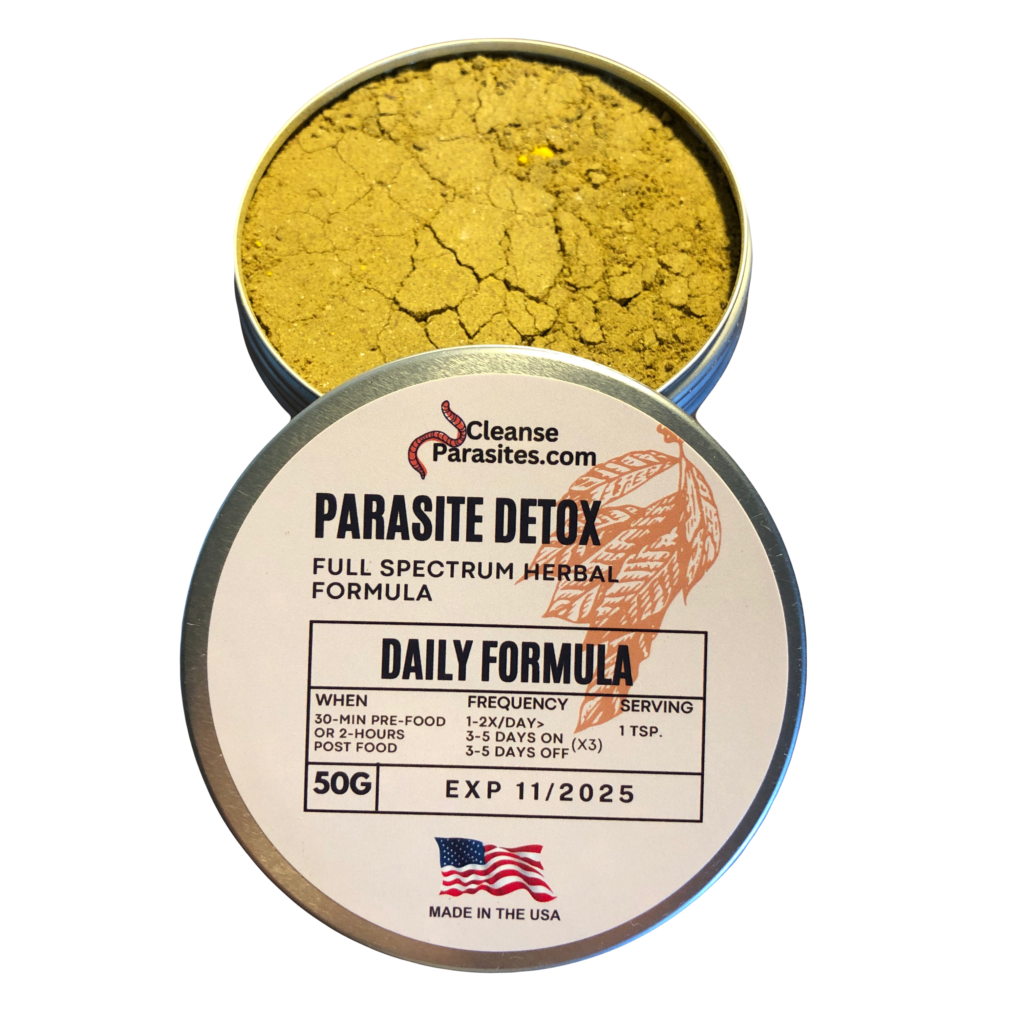
Wormwood (Artemisia absinthium) has a long history of use in traditional medicine and as the defining ingredient in absinthe, but its safety profile centers on the neurotoxic constituent thujone. This monoterpene ketone acts as a GABA-A receptor antagonist and can cause seizures and neurotoxicity at sufficient doses, making quantitative risk assessment essential for any protocol involving wormwood preparations.
Modern regulatory frameworks establish thujone limits in food and beverages, yet herbal supplements and “parasite cleanse” protocols often lack standardized thujone content labeling. This article examines the pharmacokinetics, established toxicity thresholds, species variation, and practical safety margins relevant to wormwood dosing decisions.
Key Takeaways
- Wormwood neurotoxicity is mediated by thujone, a GABA-A antagonist with established convulsant effects at high doses; regulatory limits (EFSA TDI 0.01 mg/kg/day) are conservative for chronic daily exposure.
- Thujone content in wormwood varies 10-20 fold by chemotype and preparation; teas deliver far less than tinctures or essential oils, making “wormwood dose” meaningless without thujone quantification.
- Typical parasite cleanse herb doses (600-1500 mg/day dried herb) may exceed the EFSA TDI but remain well below acute human seizure thresholds — though high-thujone chemotypes narrow this margin considerably.
- Pregnancy, lactation, childhood, seizure disorders, and CYP2A6/3A4 drug interactions are clear contraindications or high-risk scenarios requiring avoidance.
- No standardized thujone labeling exists for herbal supplements; consumers cannot reliably assess exposure without third-party certificates of analysis.
Thujone Chemistry and Neurotoxic Mechanism
Thujone exists as two stereoisomers: alpha-thujone and beta-thujone, with alpha-thujone being the more potent neurotoxin. Both isomers are monoterpene ketones that competitively antagonize the GABA-A receptor, the primary inhibitory neurotransmitter receptor in the mammalian central nervous system [1]. By blocking GABAergic signaling, thujone lowers the seizure threshold and can produce tonic-clonic convulsions at high exposures [1] [2].
The convulsant dose in animal models varies by species and route of administration. In rodents, the acute oral LD50 for alpha-thujone ranges approximately 190-300 mg/kg, while the no-observed-adverse-effect level (NOAEL) for neurobehavioral effects in subchronic studies is substantially lower. Human case reports of wormwood oil ingestion describe tonic-clonic seizures, rhabdomyolysis, and acute kidney injury at estimated thujone doses of 10 mg/kg or higher [3], though exact exposures are often uncertain.
Regulatory Thujone Limits and Their Basis
The European Union and Codex Alimentarius set maximum thujone levels in foods and beverages: 35 mg/kg in alcoholic beverages over 25% ABV (such as absinthe), 10 mg/kg in other alcoholic drinks, and 0.5-25 mg/kg in certain flavorings depending on category. Canada and Australia apply similar limits. These thresholds derive from applying safety factors to animal NOAELs and accounting for estimated human consumption patterns [2].

The U.S. FDA permits wormwood as a flavoring only if thujone-free (below detectable limits, typically <10 ppm). The European Food Safety Authority (EFSA) established an acute reference dose (ARfD) of 0.01 mg thujone/kg body weight and a tolerable daily intake (TDI) of 0.01 mg/kg bw/day based on a NOAEL of 1 mg/kg bw/day from a 90-day rat study with a 100-fold safety factor. These values represent conservative estimates for lifetime daily exposure.
Thujone Content Variability in Wormwood Preparations
Thujone concentration in Artemisia absinthium varies dramatically by chemotype, geographic origin, harvest time, plant part used, and extraction method. Reported values in dried herb range from 0.1% to over 1.5% of dry weight (1-15 mg/g), with some chemotypes exceeding 2% [4] [5]. Essential oil concentrations are far higher, typically 20-60% thujone by weight [5] [6].
Aqueous extracts (teas) extract thujone poorly due to its low water solubility (~2.5 g/L), yielding perhaps 10-30% of the herb’s thujone content. Ethanolic tinctures extract thujone efficiently, while steam-distilled essential oils concentrate it. This means a “wormwood” dose in a parasite cleanse protocol could deliver anywhere from sub-milligram to hundreds of milligrams of thujone depending entirely on preparation method — a critical and often overlooked variable.
Pharmacokinetics and Metabolic Considerations
Thujone is rapidly absorbed orally, with peak plasma concentrations in humans occurring within 1-2 hours [7] [8]. It undergoes extensive hepatic metabolism primarily via CYP2A6 and CYP3A4 to 7-hydroxy-thujone and other metabolites, some of which retain GABAergic activity. The elimination half-life in humans is approximately 3-5 hours for alpha-thujone.
Genetic polymorphisms in CYP2A6 create significant interindividual variation in clearance rates [9]. Poor metabolizers may achieve 2-3 fold higher systemic exposure from the same dose. Concurrent use of CYP2A6 inhibitors (e.g., certain SSRIs, antifungals) or inducers (e.g., rifampin, St. John’s wort) can further alter thujone pharmacokinetics unpredictably. Age-related decline in hepatic function and renal impairment may also affect clearance.

Risk Assessment for Common Dosing Scenarios
A typical parasite cleanse protocol might suggest 200-500 mg dried wormwood herb three times daily (600-1500 mg/day). At a median thujone content of 0.5% (5 mg/g), this delivers 3-7.5 mg thujone/day. For a 70 kg adult, this equals 0.04-0.11 mg/kg/day — 4-11 times the EFSA TDI of 0.01 mg/kg/day, but well below single-dose seizure thresholds reported in humans (~10 mg/kg).
However, if the herb is a high-thujone chemotype (1.5%), the same dose delivers 9-22.5 mg/day (0.13-0.32 mg/kg/day). Tincture protocols using 1-2 mL of 1:5 extract three times daily could deliver comparable or higher amounts depending on extraction efficiency. Essential oil use — sometimes advocated in alternative protocols — is unequivocally dangerous: 0.1 mL of 40% thujone oil contains 40 mg thujone (0.57 mg/kg for 70 kg), approaching the lower end of human seizure reports.
Vulnerable Populations and Contraindications
Pregnancy is an absolute contraindication: thujone crosses the placenta, and wormwood has documented emmenagogue and abortifacient effects in traditional use and animal studies. Lactation safety is unknown; thujone likely enters breast milk given its lipophilicity. Children have lower seizure thresholds and immature metabolic pathways, making them especially vulnerable.
Individuals with seizure disorders, history of traumatic brain injury, or neurodegenerative conditions should avoid thujone exposure. Patients on medications that lower seizure threshold (bupropion, tramadol, certain antibiotics, antipsychotics) or that interact with CYP2A6/CYP3A4 require careful evaluation. Porphyria patients should also avoid wormwood due to potential porphyrinogenic effects of thujone and other constituents.

🛒 Where to Buy Parasite Cleanse Protocol
- CleanseParasites Herbal Parasite Cleanse Powder Editor’s Pick
The flagship product for this hub’s own protocol content — wormwood, black walnut hull, cloves, and more. - CleanseParasites Full Detox Bundle (all products) Editor’s Pick
The complete 11-week protocol bundle: parasite cleanse, metals binder, superfood, and more in one order. - Global Healing Paratrex I
oil-based liquid, 1 ml, 2x daily — Current MicroSomal formula is a pumpkin-seed and pomegranate-seed oil blend with essential oils; it no longer contains wormwood, clove or black walnut - Amazing Herbs Premium Black Walnut-Wormwood Complex
capsules, 2 capsules daily — Budget-friendly combination capsule pairing black walnut hull and wormwood, a common starter product - NOW Foods Wormwood
capsules, 1 capsule, 2x daily — Single-herb wormwood capsule from a widely trusted supplement manufacturer, good for readers wanting to build their own stack - Herb Pharm Black Walnut
liquid, 0.5-1 mL, 3x daily — Alcohol-based liquid extract from a respected small-batch herbal manufacturer, common alternative to capsule form
As an Amazon Associate we earn from qualifying purchases. Quality varies widely — always choose a product with a published third-party test (COA) before buying.
A Note on the Evidence
This review summarizes toxicological principles and regulatory thresholds; it does not establish safe dosing for any individual. Wormwood supplements lack standardization, and human clinical safety data for parasite cleanse protocols are absent. Pregnant/nursing individuals, children, those with seizure history, and anyone on medication must consult a healthcare provider before use. These statements have not been evaluated by the FDA; these products are not intended to diagnose, treat, cure, or prevent any disease.
Frequently Asked Questions
What is the lowest thujone dose known to cause seizures in humans?
Case reports describe seizures after ingestion of approximately 10 mg/kg thujone (as wormwood essential oil), though exact doses are estimates. The EFSA acute reference dose (ARfD) of 0.01 mg/kg/day incorporates a 100-fold safety factor from animal NOAELs.
Is wormwood tea safer than tincture or essential oil?
Yes. Thujone’s low water solubility limits extraction into tea (roughly 10-30% of herb content), while ethanol and steam distillation concentrate it. Essential oil is the highest risk form by orders of magnitude.
Can I calculate my thujone exposure from a supplement label?
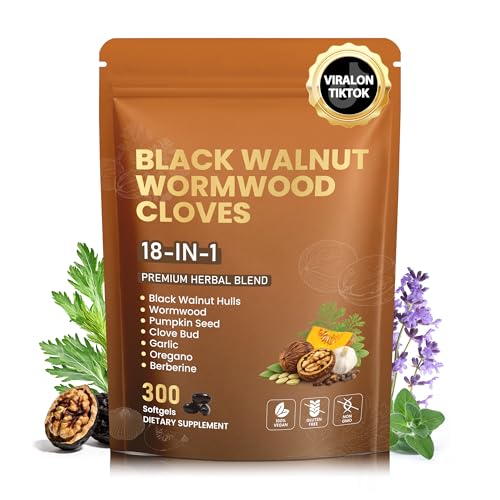
Not reliably. Most wormwood supplements do not disclose thujone content or chemotype. Without a certificate of analysis from the manufacturer, actual thujone delivery is unknown.
Does the 'Wormwood, Black Walnut, Clove' protocol have established safety data?
No controlled human safety studies exist for this specific combination protocol. Safety inferences rely on single-herb toxicology data and regulatory thujone limits, not protocol-specific evidence.
How long does thujone stay in the body?
The elimination half-life of alpha-thujone in humans is approximately 3-5 hours. Steady-state would be reached in roughly 15-25 hours with repeated dosing, but accumulation is minimal at typical exposures due to rapid hepatic clearance.
Are there any medications that dangerously interact with wormwood?
Yes. CYP2A6 inhibitors (some SSRIs, antifungals like ketoconazole) can increase thujone levels. Drugs lowering seizure threshold (bupropion, tramadol, certain antibiotics) may synergize with thujone’s GABAergic antagonism. Consult a pharmacist or physician for specific medication reviews.
References
- Höld KM et al. Alpha-thujone (the active component of absinthe): gamma-aminobutyric acid type A receptor modulation and metabolic detoxification. Proc Natl Acad Sci U S A (2000). PMID 10725394
- Pelkonen O et al. Thujone and thujone-containing herbal medicinal and botanical products: toxicological assessment. Regul Toxicol Pharmacol (2013). PMID 23201408
- Weisbord SD et al. Poison on line–acute renal failure caused by oil of wormwood purchased through the Internet. N Engl J Med (1997). PMID 9297113
- Kosakowska O et al. Intraspecific Variability of Wormwood (Artemisia absinthium L.) Occurring in Poland in Respect of Developmental and Chemical Traits. Molecules (2025). PMID 40733181
- Bach B et al. A new chemical tool for absinthe producers, quantification of α/β-thujone and the bitter components in Artemisia absinthium. Food Chem (2016). PMID 27451252
- Lachenmeier DW et al. Chemical composition of vintage preban absinthe with special reference to thujone, fenchone, pinocamphone, methanol, copper, and antimony concentrations. J Agric Food Chem (2008). PMID 18419128
- Dybowski MP et al. The determination of α- and β-thujone in human serum – Simple analysis of absinthe congener substance. Forensic Sci Int (2016). PMID 26773227
- Batiha GE et al. Bioactive Compounds, Pharmacological Actions, and Pharmacokinetics of Wormwood (Artemisia absinthium). Antibiotics (Basel) (2020). PMID 32585887
- Di YM et al. Structure, function, regulation and polymorphism of human cytochrome P450 2A6. Curr Drug Metab (2009). PMID 19702528
These statements have not been evaluated by the Food and Drug Administration. This information is not intended to diagnose, treat, cure, or prevent any disease. Content is for informational purposes only and is not medical advice; consult a qualified healthcare provider before starting any supplement. As an Amazon Associate we earn from qualifying purchases.