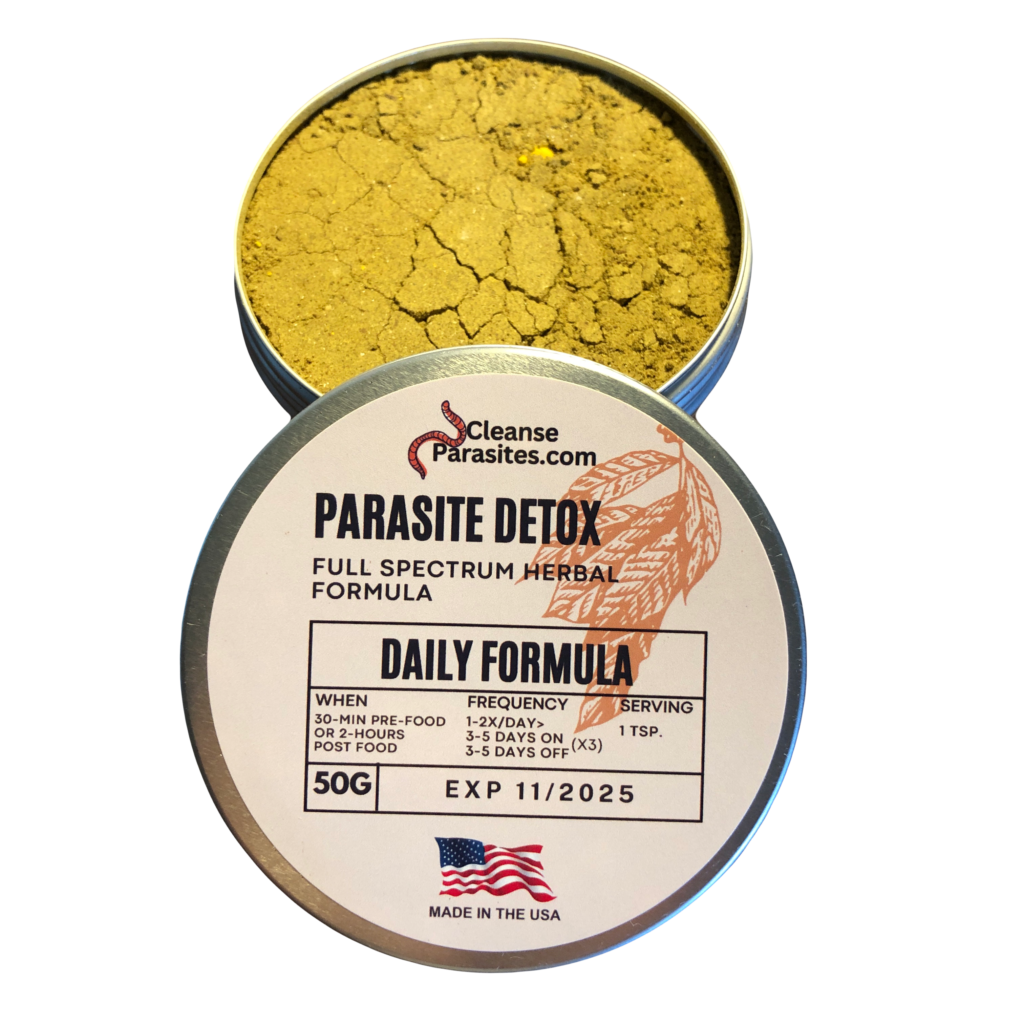
Parasite cleanse protocols often combine wormwood (Artemisia absinthium), black walnut hull (Juglans nigra), and clove (Syzygium aromaticum) as broad-spectrum antimicrobial botanicals. While these herbs have traditional use, their concurrent use with anticoagulants such as warfarin raises safety concerns due to potential pharmacokinetic and pharmacodynamic interactions.
Warfarin has a narrow therapeutic index and is highly susceptible to interactions with foods, herbs, and dietary supplements that affect vitamin K status, cytochrome P450 metabolism (especially CYP2C9), or platelet function. Systematic reviews document numerous herbal products that can increase bleeding risk or reduce anticoagulant efficacy, though data on specific parasite-cleanse botanicals remain limited [1][2].
Key Takeaways
- Warfarin has a narrow therapeutic index and interacts with numerous herbs via CYP2C9 modulation, vitamin K antagonism, and additive antiplatelet effects.
- Clove (eugenol) has the strongest mechanistic evidence for potential warfarin interaction among common parasite cleanse herbs, showing CYP2C9 inhibition and platelet inhibition in vitro.
- Wormwood and black walnut hull lack clinical case reports of warfarin interaction, but absence of evidence is not evidence of safety given their bioactive constituents.
- Binders like diatomaceous earth and Mimosa pudica seed pose low systemic interaction risk but should be dosed separately from warfarin to avoid absorption interference.
- Patients on any anticoagulant should disclose all herbal use to their clinician and expect enhanced monitoring if parasite cleanse herbs are used.
Warfarin's Narrow Therapeutic Window and Herbal Interaction Mechanisms
Warfarin exerts its anticoagulant effect by inhibiting vitamin K epoxide reductase, reducing synthesis of vitamin K-dependent clotting factors (II, VII, IX, X). Small changes in warfarin clearance, vitamin K intake, or clotting factor synthesis can shift the International Normalized Ratio (INR) outside the therapeutic range, increasing risk of thrombosis or hemorrhage [2].
Herbs and supplements can interact via multiple mechanisms: induction or inhibition of CYP2C9 (the primary warfarin-metabolizing enzyme), displacement from plasma protein binding, additive anticoagulant or antiplatelet effects, and alteration of vitamin K availability. A 2021 systematic review identified 78 herbs, foods, and dietary supplements reported to interact with warfarin, emphasizing that absence of evidence is not evidence of safety [1].

Earlier reviews similarly highlighted that many patients do not disclose herbal use to clinicians, and that interaction potential is often underestimated because herbal products are regulated as foods rather than drugs [3][4].
Wormwood (Artemisia absinthium): Theoretical Risks and Evidence Gaps
Wormwood contains thujone, a monoterpene ketone with neurotoxic potential at high doses, along with sesquiterpene lactones and flavonoids. While thujone’s primary concern is CNS toxicity, some Artemisia species have demonstrated CYP enzyme modulation in vitro. However, the 2021 systematic review of warfarin-herb interactions does not list wormwood among herbs with clinical case reports of INR alteration [1].
The absence of published case reports does not equate to safety. Sesquiterpene lactones in related Asteraceae species have shown antiplatelet activity in preclinical models, and any herb affecting hepatic metabolism could theoretically alter warfarin clearance. Clinicians should treat wormwood as a potential interaction risk until controlled data exist [2].
Black Walnut Hull (Juglans nigra): Juglone, Tannins, and Coagulation Considerations
Black walnut hull is rich in juglone (5-hydroxy-1,4-naphthoquinone), tannins, and flavonoids. Juglone has demonstrated redox cycling and enzyme inhibition properties in vitro, but human pharmacokinetic data are lacking. The 2021 systematic review does not identify black walnut as a herb with documented warfarin interaction [1].
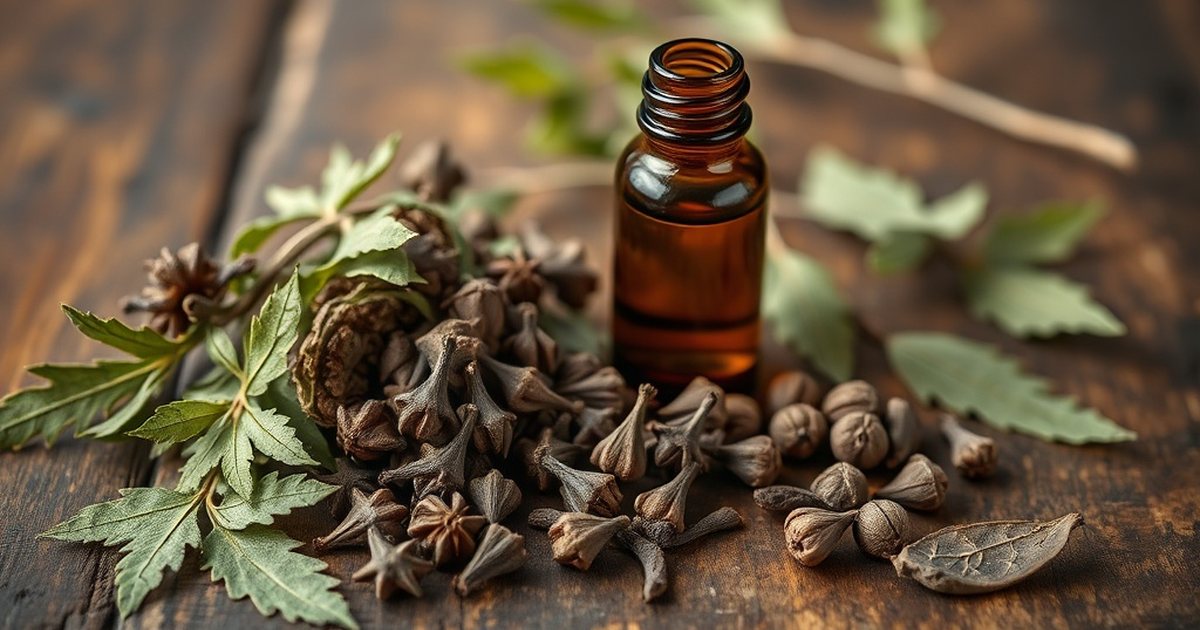
Tannins can bind proteins and potentially affect absorption of co-administered drugs, though clinical significance with warfarin is unknown. Given warfarin’s sensitivity, any supplement with enzyme-inhibiting constituents warrants caution. The 2006 expert review notes that naphthoquinone-containing plants theoretically could affect vitamin K metabolism, but this remains speculative for black walnut [2].

Clove (Syzygium aromaticum): Eugenol, CYP Inhibition, and Antiplatelet Effects
Clove’s primary bioactive is eugenol (4-allyl-2-methoxyphenol), which constitutes 70-90% of clove essential oil. Eugenol has demonstrated reversible inhibition of CYP2C9 and CYP3A4 in human liver microsomes, the former being the principal warfarin-metabolizing enzyme [1].
Additionally, eugenol exhibits dose-dependent inhibition of platelet aggregation and thromboxane B2 formation in vitro, suggesting potential additive anticoagulant effects. While the 2021 systematic review does not cite clinical case reports specifically linking clove to INR changes, the mechanistic data warrant clinical vigilance [1][2].
A 2002 review on herbal-analgesic interactions noted that eugenol-containing oils can potentiate bleeding risk when combined with anticoagulants, based on pharmacodynamic synergy rather than pharmacokinetic alteration alone [5].
Binders and Adjuncts: Diatomaceous Earth and Mimosa Pudica Seed
Parasite cleanse protocols often include binders such as food-grade diatomaceous earth (amorphous silica) or Mimosa pudica seed powder to purportedly adsorb toxins and parasites. Diatomaceous earth is poorly absorbed and unlikely to cause systemic pharmacokinetic interactions, but its high silica content could theoretically affect gastric pH or transit time, potentially altering warfarin absorption [3].

Mimosa pudica contains alkaloids, flavonoids, and tannins; no human interaction studies with warfarin exist. As with any fiber-rich supplement, separation of dosing by at least 2 hours from warfarin is a prudent precaution to minimize absorption interference [2].
Patient Disclosure, Monitoring, and Direct Oral Anticoagulant Considerations
Surveys consistently show that 20-70% of patients on anticoagulants use herbal or dietary supplements without informing their prescriber [1][6]. A 2023 study of apixaban users found that many sought information about over-the-counter product interactions from internet sources rather than healthcare providers, highlighting a communication gap [6].
For patients on warfarin who insist on using parasite cleanse herbs, enhanced INR monitoring (e.g., weekly during initiation and after any dose change) is recommended. For those on direct oral anticoagulants (DOACs) like apixaban, rivaroxaban, or dabigatran, routine coagulation monitoring is not available, making interaction detection more difficult. The same CYP and P-glycoprotein pathways affect DOAC metabolism, so theoretical risks persist [6][1].
🛒 Where to Buy Parasite Cleanse Protocol
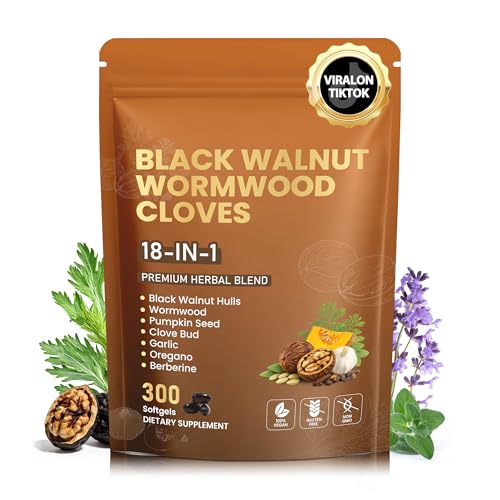
- CleanseParasites Herbal Parasite Cleanse Powder Editor’s Pick
The flagship product for this hub’s own protocol content — wormwood, black walnut hull, cloves, and more. - CleanseParasites Full Detox Bundle (all products) Editor’s Pick
The complete 11-week protocol bundle: parasite cleanse, metals binder, superfood, and more in one order. - Global Healing Paratrex I
oil-based liquid, 1 ml, 2x daily — Current MicroSomal formula is a pumpkin-seed and pomegranate-seed oil blend with essential oils; it no longer contains wormwood, clove or black walnut - Amazing Herbs Premium Black Walnut-Wormwood Complex
capsules, 2 capsules daily — Budget-friendly combination capsule pairing black walnut hull and wormwood, a common starter product - NOW Foods Wormwood
capsules, 1 capsule, 2x daily — Single-herb wormwood capsule from a widely trusted supplement manufacturer, good for readers wanting to build their own stack - Herb Pharm Black Walnut
liquid, 0.5-1 mL, 3x daily — Alcohol-based liquid extract from a respected small-batch herbal manufacturer, common alternative to capsule form
As an Amazon Associate we earn from qualifying purchases. Quality varies widely — always choose a product with a published third-party test (COA) before buying.
A Note on the Evidence
This article summarizes mechanistic and observational evidence from systematic reviews; it does not constitute medical advice. Parasite cleanse herbs are not FDA-evaluated for safety or efficacy in parasitic infections. Anyone on anticoagulants, pregnant or nursing, or with a diagnosed parasitic infection must consult a licensed healthcare provider before using these products.
Frequently Asked Questions
Can I take a parasite cleanse while on warfarin if I monitor my INR more frequently?
Enhanced INR monitoring (e.g., weekly) can detect interaction-related shifts earlier, but it does not prevent the interaction. Some herbs may cause unpredictable INR fluctuations that are difficult to manage even with frequent testing. Discuss risks with your prescribing clinician before starting [1][2].
Is clove the highest-risk herb in parasite cleanses for warfarin users?
Among the three core herbs, clove has the most direct mechanistic evidence: eugenol inhibits CYP2C9 (warfarin’s main metabolic pathway) and demonstrates antiplatelet activity in vitro. Wormwood and black walnut lack similar pharmacokinetic data but are not proven safe [1][5].
Do binders like diatomaceous earth or Mimosa pudica seed interact with warfarin?
These agents act locally in the gut and have minimal systemic absorption. The primary theoretical concern is physical binding or altered gastric transit affecting warfarin absorption. Separating doses by 2+ hours mitigates this low risk [3][2].

Are direct oral anticoagulants (apixaban, rivaroxaban) safer with these herbs than warfarin?
DOACs also undergo CYP3A4 and P-glycoprotein metabolism, which some herbal constituents can modulate. Without routine coagulation monitoring, clinically significant interactions may go undetected longer. The 2023 apixaban study underscores that patients often underestimate OTC product risks [6][1].
What should I tell my doctor if I've already started a parasite cleanse on warfarin?
Disclose all products, doses, and timing immediately. Request an INR check within days, not weeks. Bring product labels to your appointment. Do not stop warfarin or the herbs abruptly without medical guidance, as both actions carry risks [1][2].
Are there any parasite cleanse herbs proven safe with warfarin?
No herbal parasite cleanse regimen has been prospectively studied for safety with warfarin. ‘Natural’ does not mean ‘no interaction.’ The 2021 systematic review emphasizes that most herbal-warfarin combinations lack controlled safety data [1].
References
- Tan CSS et al. Warfarin and food, herbal or dietary supplement interactions: A systematic review. British journal of clinical pharmacology (2021). PMID 32478963
- Nutescu EA et al. Warfarin and its interactions with foods, herbs and other dietary supplements. Expert opinion on drug safety (2006). PMID 16610971
- Smolinske SC et al. Dietary supplement-drug interactions. Journal of the American Medical Women's Association (1972) (1999). PMID 10531760
- Parolia A et al. Herbal history. British dental journal (2010). PMID 20966981
- Abebe W et al. Herbal medication: potential for adverse interactions with analgesic drugs. Journal of clinical pharmacy and therapeutics (2002). PMID 12472978
- Magee M et al. Over-the-Counter Product-Apixaban Interactions: Patient Perspectives on Information-Seeking. Annals of family medicine (2023). PMID 36972532
These statements have not been evaluated by the Food and Drug Administration. This information is not intended to diagnose, treat, cure, or prevent any disease. Content is for informational purposes only and is not medical advice; consult a qualified healthcare provider before starting any supplement. As an Amazon Associate we earn from qualifying purchases.