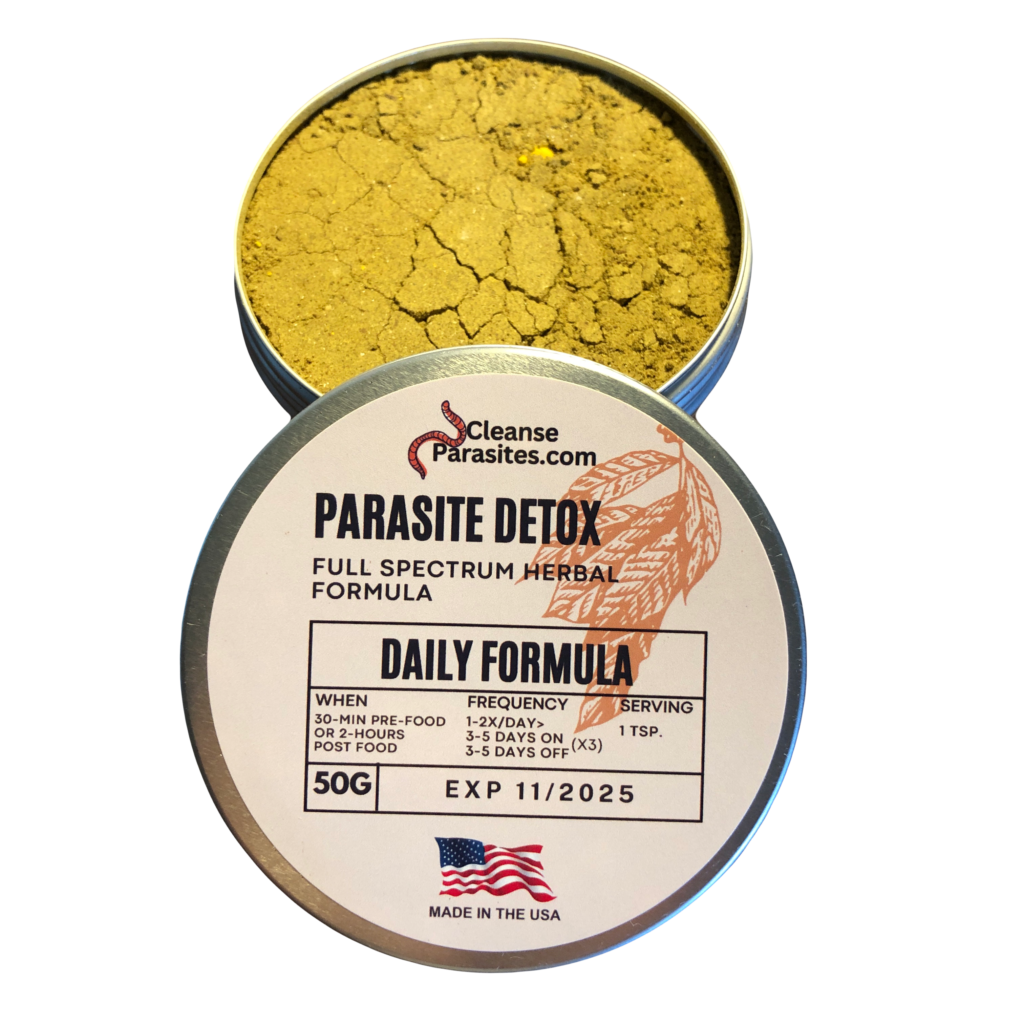
Antiparasitic herbs like wormwood, black walnut hull, and clove show up in parasite cleanse protocols with confident language about killing parasites and clearing infections. That confidence usually rests on centuries of traditional use rather than controlled human trials. Those are not the same kind of evidence, and conflating them is where most of the overpromising in this space comes from.
This article separates the two threads honestly: what traditional and ethnobotanical records document about anthelmintic (worm-killing) and antiparasitic plants, and what the clinical research literature actually supports. The short version is that traditional use is real, widespread, and worth taking seriously as a starting point for research, but it is not proof of efficacy, safety, or dosing in humans.
Key Takeaways
- Traditional use documentation and clinical proof of efficacy are two different kinds of evidence, and most antiparasitic herbs have far more of the former than the latter.
- Ethnobotanical reviews across Brazil, Africa, and Benin consistently show a gap between how widely a plant is used traditionally and how much pharmacological confirmation exists for it [1] [2] [3].
- Some individual plants (Impatiens balsamina, Swertia chirayita, Garcinia gummi-gutta, Ximenia caffra, Leptadenia pyrotechnica) have meaningfully more phytochemical and pharmacological data than others, but this is still mostly preclinical [4] [5] [6] [7] [8].
- Systematic reviews on antimalarial and antidiarrheal herbal medicine were explicitly written to map evidence gaps that still exist, not to confirm efficacy [9] [10] [11].
- Real-world product quality and distribution issues add a further layer of uncertainty on top of the underlying research gap [12].
What "Traditional Use" Actually Means
When researchers document that a plant is “traditionally used” as an anthelmintic, they are usually recording that a community reports using it for that purpose, often passed down through generations, not that a laboratory has confirmed it works. Ethnobotanical reviews of native Brazilian medicinal plants used as anthelmintic agents catalog dozens of species with this kind of use, but the review itself notes that pharmacological confirmation lags far behind the breadth of traditional application [1].

The same pattern holds across continents. A scoping review of African medicinal plants with anthelmintic properties against zoonotic helminths found many species with long traditional records but highly uneven levels of scientific follow-up, some plants have supporting laboratory data, others have essentially none beyond community reporting [2]. A review of gastrointestinal anthelmintic plants used on small ruminants in Benin similarly found that traditional use was well documented, but the scientific results confirming efficacy varied widely from plant to plant, with some showing measurable activity and others simply unstudied [3].
This gap matters because “traditionally used for parasites” gets repeated as if it were a settled scientific finding. In the actual literature, it is more often a research lead than a conclusion.
Individual Plants: A Spectrum, Not a Uniform Story
Some individual plants with traditional antiparasitic or antimicrobial reputations do have a body of phytochemistry and pharmacology behind them, even if human clinical trials are still limited. Impatiens balsamina, used traditionally in several regions, has an updated ethnobotanical and pharmacological review documenting specific compounds and preliminary activity data, alongside its long traditional history [4]. Leptadenia pyrotechnica has similarly been reviewed for both its ethnobotanical record and documented biological activities [8].
Other plants sit further along the evidence spectrum. Garcinia gummi-gutta has been reviewed for its phytochemical constituents and pharmacological applications beyond its traditional culinary and medicinal roles [6]. Swertia chirayita has a comprehensive review covering traditional uses, phytochemistry, quality assessment, and pharmacology together, an unusually complete picture for a traditional botanical [5]. Ximenia caffra has been synthesized and reviewed for its medicinal potential across sub-Saharan Africa, again pairing ethnobotanical reporting with what pharmacological data exists [7].

The honest takeaway from this set of reviews is that some traditionally used plants have meaningfully more supporting data than others, and even the better-studied ones are mostly at the level of isolated compound activity or preclinical pharmacology, not confirmed clinical outcomes in people with diagnosed parasitic infections.
Where the Evidence Gap Is Explicit: Malaria and Diarrheal Disease
Parasitic and infectious disease research outside the gut parasite space shows the same pattern, sometimes more starkly. A systematic review protocol on antimalarial herbal medicines used across malaria-affected regions was written specifically because the existing evidence had never been mapped systematically, the authors set out to build an “evidence and gap map” precisely because nobody had rigorously assessed which traditional antimalarial herbs actually work [9]. A systematic review of traditional medicinal plants used for malaria treatment in Ethiopia similarly aimed to identify which plants had trend-worthy research support versus which were used purely on tradition [10].
On the amoebicidal and giardicidal side, a review of plants from Mexican flora used traditionally for diarrhoea identified species with documented activity against amoebic and giardial organisms specifically, along with their phytochemical constituents [11]. This is closer to direct antiparasitic relevance than most anthelmintic ethnobotany, but it is still largely laboratory and phytochemical data rather than clinical trial evidence in humans with confirmed infections.

Taken together, these reviews exist because the field itself recognizes the gap. Researchers are still building the maps that would tell us which traditional antiparasitic herbs have real support and which don’t.
Access and Quality Add Another Layer of Uncertainty
Even where a traditional or herbal remedy has research support, real-world use introduces variables that lab studies don’t capture. A study on antimicrobial medication distribution in community dispensaries in Accra, Ghana documented challenges in how medicines actually reach and are dispensed to patients, quality control, sourcing, and distribution gaps that affect whether any product, herbal or pharmaceutical, delivers what the label claims [12]. This is a reminder that supplement quality, sourcing, and standardization are separate problems from whether a plant compound has activity in a test tube.
What This Means for Parasite Cleanse Protocols Specifically
Common parasite cleanse ingredients like wormwood, black walnut hull, and clove sit within this same broader pattern of traditional antiparasitic and anthelmintic botanicals: long histories of use, uneven and often preliminary scientific follow-up, and very little in the way of controlled human trials confirming that a time-boxed herbal protocol clears an intestinal parasite load in the way the marketing implies. The ethnobotanical and review literature summarized above shows the same shape everywhere it’s been formally examined, wide traditional use, some laboratory or preclinical support for some plants, and a persistent, acknowledged gap before that support says something applies to humans in real time with real dosing.
None of this means traditional plants can’t have real biological activity, several of the reviews cited above document specific compounds and mechanisms. It means that “used for centuries” and “clinically proven” are different claims, and a cleanse protocol that blurs them is asking you to take a research hypothesis on faith.
🛒 Where to Buy Parasite Cleanse Protocol
- CleanseParasites Herbal Parasite Cleanse Powder Editor’s Pick
The flagship product for this hub’s own protocol content — wormwood, black walnut hull, cloves, and more. - CleanseParasites Full Detox Bundle (all products) Editor’s Pick
The complete 11-week protocol bundle: parasite cleanse, metals binder, superfood, and more in one order. - Global Healing Paratrex I
oil-based liquid, 1 ml, 2x daily — Current MicroSomal formula is a pumpkin-seed and pomegranate-seed oil blend with essential oils; it no longer contains wormwood, clove or black walnut - Amazing Herbs Premium Black Walnut-Wormwood Complex
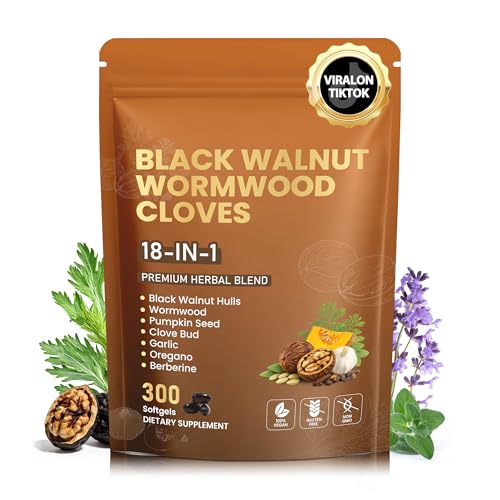
capsules, 2 capsules daily — Budget-friendly combination capsule pairing black walnut hull and wormwood, a common starter product - NOW Foods Wormwood
capsules, 1 capsule, 2x daily — Single-herb wormwood capsule from a widely trusted supplement manufacturer, good for readers wanting to build their own stack - Herb Pharm Black Walnut
liquid, 0.5-1 mL, 3x daily — Alcohol-based liquid extract from a respected small-batch herbal manufacturer, common alternative to capsule form
As an Amazon Associate we earn from qualifying purchases. Quality varies widely — always choose a product with a published third-party test (COA) before buying.
A Note on the Evidence
This article summarizes ethnobotanical and preclinical review literature, not clinical trial evidence of efficacy for any specific parasite cleanse protocol, and these statements have not been evaluated by the FDA. Anyone with a suspected parasitic infection should get a lab-confirmed diagnosis and talk to a healthcare provider before using antiparasitic herbs, especially if pregnant, nursing, caring for a child, or taking medication.

Frequently Asked Questions
Does traditional use mean an antiparasitic herb actually works?
Not on its own. Traditional use documents that a plant has been used for a purpose across generations, but ethnobotanical reviews repeatedly note that pharmacological confirmation lags behind traditional application [1] [2].
Are wormwood, black walnut, and clove specifically proven to clear parasites in humans?
The broader category of traditional anthelmintic and antiparasitic botanicals they belong to shows wide traditional use but limited confirmed human clinical trial data, based on the pattern seen consistently across ethnobotanical and systematic reviews [3] [9].
Which traditional antiparasitic plants have the most research support?
Plants like Swertia chirayita and Garcinia gummi-gutta have comprehensive reviews covering both traditional use and pharmacology, putting them further along the evidence spectrum than plants with ethnobotanical reporting alone [5] [6].
Why do researchers keep writing review protocols instead of giving a clear answer?
Because the evidence base itself is fragmented and uneven; a systematic review protocol for antimalarial herbal medicine was created specifically to build an evidence and gap map that didn’t previously exist [9].

Do any traditional plants have specific activity against parasites like amoebas or giardia?
Some do. A review of Mexican flora identified plants with documented amoebicidal and giardicidal activity along with their phytochemical constituents, which is more directly relevant than general anthelmintic ethnobotany [11].
Does herbal product quality affect whether these plants "work" in practice?
Yes. Distribution and quality control challenges documented in community dispensaries show that access to a consistent, well-sourced product is a separate problem from whether the underlying plant compound has activity [12].
References
- Kuhn Agnes KN et al. Ethnobotanical knowledge on native Brazilian medicinal plants traditionally used as anthelmintic agents – A review. Experimental parasitology (2023). PMID 37044282
- Megnigueu EM et al. African medicinal plants with anthelmintic properties against selected zoonotic helminths: a scoping review. Helminthologia (2025). PMID 41777285
- Challaton KP et al. Gastrointestinal anthelmintic plants used on small ruminants in Benin: Traditional use and scientific results – Review. Veterinary parasitology, regional studies and reports (2024). PMID 38644039
- Qian H et al. Impatiens balsamina: An updated review on the ethnobotanical uses, phytochemistry, and pharmacological activity. Journal of ethnopharmacology (2023). PMID 36436713
- Swati K et al. Swertia chirayita: A comprehensive review on traditional uses, phytochemistry, quality assessment and pharmacology. Journal of ethnopharmacology (2023). PMID 36113678
- Anilkumar AT et al. Garcinia gummi-gutta: Phytochemicals and pharmacological applications. BioFactors (Oxford, England) (2023). PMID 36785888
- Maroyi A et al. Ximenia caffra Sond. (Ximeniaceae) in sub-Saharan Africa: A synthesis and review of its medicinal potential. Journal of ethnopharmacology (2016). PMID 26944235
- Idrees S et al. ETHNOBOTANICAL AND BIOLOGICAL ACTIVITIES OF Leptadenia pyrotechnica (Forssk.) Decne.: A REVIEW. African journal of traditional, complementary, and alternative medicines : AJTCAM (2016). PMID 28852724
- Ocan M et al. Efficacy of antimalarial herbal medicines used by communities in malaria affected regions globally: a protocol for systematic review and evidence and gap map. BMJ open (2023). PMID 37419642
- Alebie G et al. Systematic review on traditional medicinal plants used for the treatment of malaria in Ethiopia: trends and perspectives. Malaria journal (2017). PMID 28764723
- Calzada F et al. Plants used for the treatment of diarrhoea from Mexican flora with amoebicidal and giadicidal activity, and their phytochemical constituents. Journal of ethnopharmacology (2020). PMID 32084551
- Greene HC et al. Challenges in the distribution of antimicrobial medications in community dispensaries in Accra, Ghana. PloS one (2024). PMID 38809832
These statements have not been evaluated by the Food and Drug Administration. This information is not intended to diagnose, treat, cure, or prevent any disease. Content is for informational purposes only and is not medical advice; consult a qualified healthcare provider before starting any supplement. As an Amazon Associate we earn from qualifying purchases.