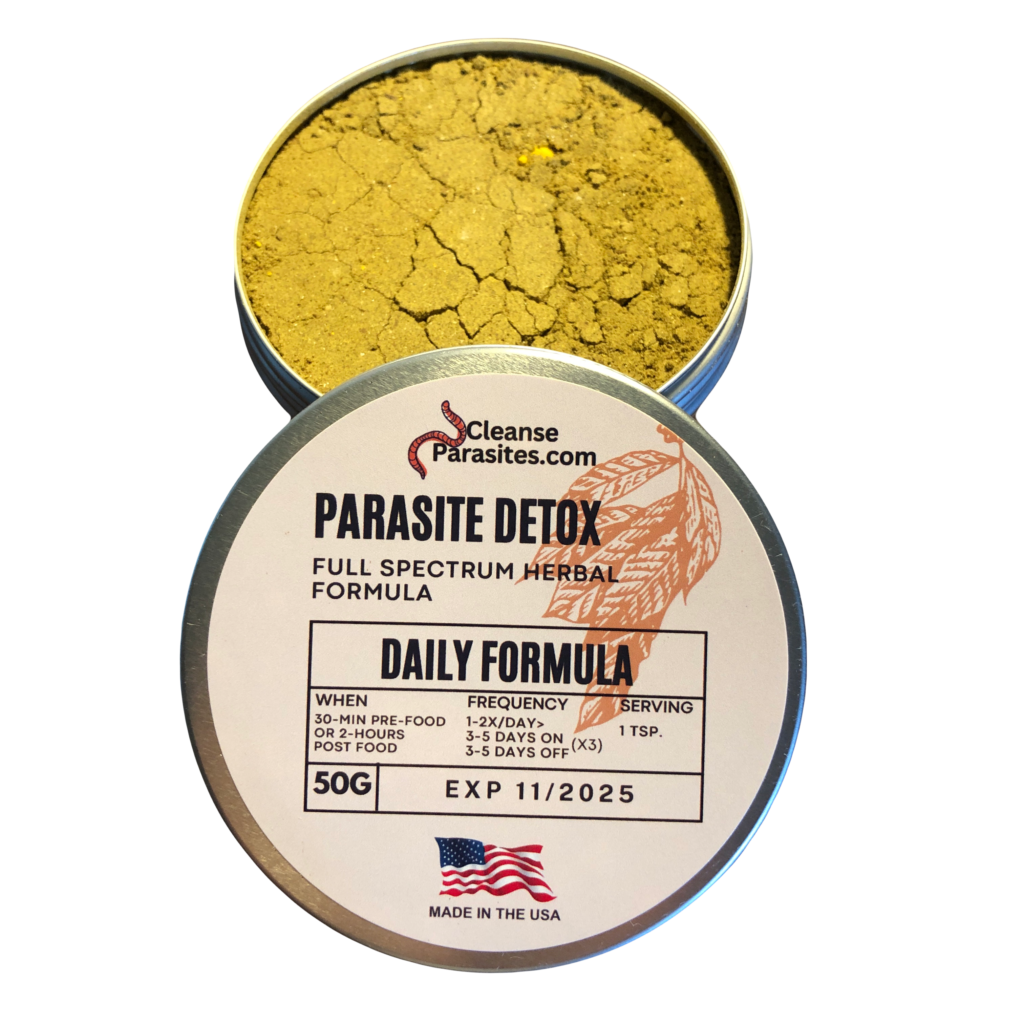
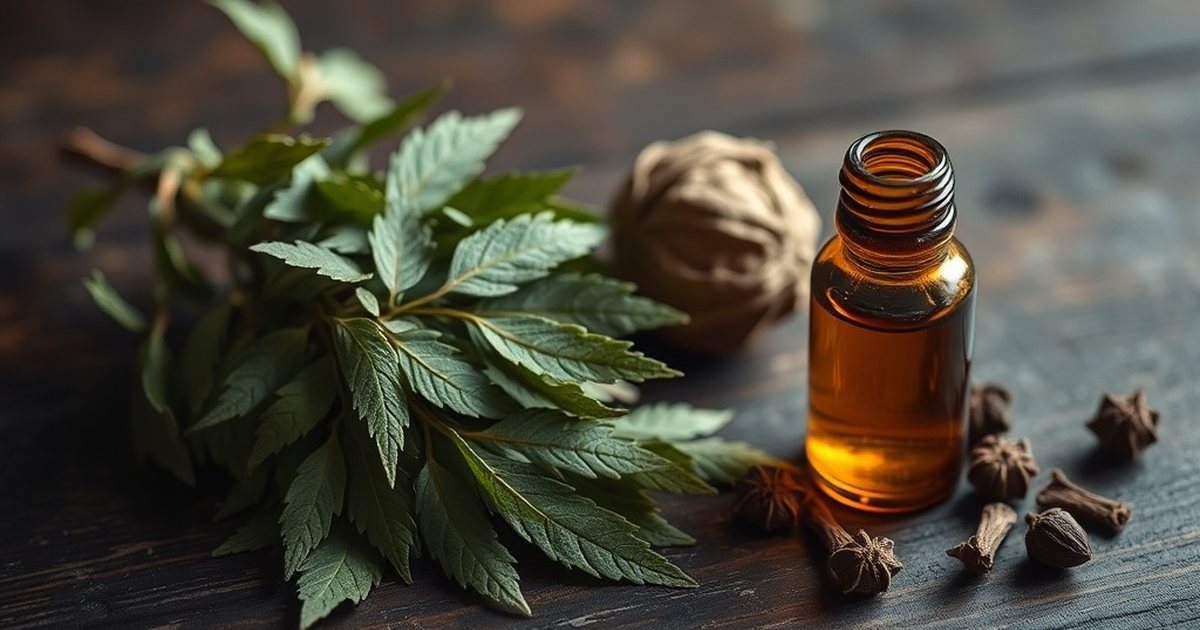
A parasite cleanse protocol is a time-boxed regimen of antiparasitic and antimicrobial herbs, commonly wormwood, black walnut hull, and clove, sometimes paired with binders like diatomaceous earth or mimosa pudica seed, taken with the goal of reducing intestinal parasite load. Because these herbs are broadly antimicrobial rather than parasite-specific, a common question that follows is whether they disturb the resident gut bacteria along the way, and if so, whether probiotics afterward help put things back together.
There is no research that directly tests probiotics taken after an herbal parasite cleanse in humans. What does exist is a body of research on how the gut microbiome responds to antimicrobial disruption more broadly (mostly from antibiotic studies), and a separate body of research on specific probiotic strains and their effects on gut health, barrier function, and diarrhea prevention. This article lays out what that adjacent research shows, and where the gaps are, so you can make a reasoned decision rather than a hopeful one.
Key Takeaways
- No study has directly tested probiotics after an herbal parasite cleanse; the closest evidence is from antibiotic-disruption and general gut-health research.
- Generic probiotics did not speed, and in one study actually delayed, full gut microbiome reconstitution after antibiotic disruption compared to no intervention [1].
- Saccharomyces boulardii has the most direct supporting evidence for use during/after antimicrobial disruption, including reduced antibiotic-associated diarrhea risk and gut barrier support [2] [3] [4].
- Probiotics have a solid, separate evidence base for general gut and immune health support in active, healthy adults [5] [6].
- These statements have not been evaluated by the FDA; parasite cleanse herbs are not intended to diagnose, treat, cure, or prevent any disease.
Why the question comes up at all
Antiparasitic herbs are not selective for parasites. Compounds like berberine, thymol (from clove), and the naphthoquinones in black walnut hull have documented antimicrobial activity against a range of organisms, which is part of why they’re used this way in the first place. The working assumption behind ‘take probiotics after’ advice is that this broad antimicrobial pressure temporarily thins out or reshuffles the resident bacterial population, similar to what a course of antibiotics does, and that reintroducing live organisms afterward speeds recovery.

That assumption is plausible on its face, but it hasn’t been tested directly for herbal antiparasitic protocols. The strongest available proxy is the antibiotic literature, since antibiotics are the best-studied case of intentional, broad-spectrum microbial disruption followed by recovery. It’s a reasonable stand-in, but it is a stand-in, not direct evidence about wormwood, black walnut, or clove specifically.
What the gut disruption and recovery research actually shows
The most directly relevant study cited in this article looked at how the gut mucosal microbiome reconstitutes after antibiotic-induced disruption in humans. It found that giving standard off-the-shelf probiotics after the disruption actually impaired and delayed reconstitution of the native mucosal microbiome, compared to no intervention at all. Autologous fecal microbiota transplant (using the person’s own pre-disruption stool, banked in advance) restored the microbiome faster and more completely [1]. This is a meaningful nuance: the generic idea that ‘any probiotic speeds recovery’ is not well supported, at least for reconstituting a fully diverse, resident microbiome after broad disruption.
Separately, there’s research on the intestinal tight junction barrier, the seal between gut lining cells that keeps bacteria and their byproducts where they belong. Some probiotic strains and their metabolites appear to support and reinforce this barrier function [4]. That’s a different (and narrower) claim than ‘restores your microbiome to its prior state’, it’s about gut lining integrity, not full ecological reconstitution.
Animal-model work adds a bit more texture. A canine gut microbiome and metabolome review describes how gastrointestinal disease states shift bacterial composition and metabolite output [7], and a more recent in vitro canine gut model found that a postbiotic derived from Lactobacillus helveticus plus live Saccharomyces boulardii helped restore gut microbiota after an antibiotic disturbance [8]. These are dog-model and in vitro findings, useful for understanding mechanism, but they don’t establish what happens in a human gut after an herbal antiparasitic course.

Saccharomyces boulardii: the most-studied strain for 'after a disruption'
Of the probiotic organisms studied for use around antimicrobial disruption, Saccharomyces boulardii (a yeast, not a bacterium) has the most direct evidence. A Cochrane systematic review found probiotics, with S. boulardii among the better-studied strains, reduced the risk of antibiotic-associated diarrhea in children [2], and an older review found a similar protective effect for antibiotic-associated diarrhea across probiotic strains generally [9].
A narrative review of S. boulardii CNCM I-745 specifically highlights properties that make it distinct from bacterial probiotics: as a yeast, it isn’t killed off by antibiotics (or, plausibly, by antimicrobial herbs), it doesn’t permanently colonize the gut, and it’s been studied for supporting gut barrier function and reducing pathogen-associated diarrhea [3]. There’s also preliminary evidence that S. boulardii can improve markers of gut-dysbiosis-associated cognitive decline in an animal model [10], which speaks to the gut-brain axis interest around this strain but is not evidence of benefit specific to a post-parasite-cleanse scenario.
The practical read: if a probiotic is going to be used in the window after a course of antimicrobial herbs, S. boulardii has more direct supporting evidence for ‘used during/after antimicrobial disruption’ than most bacterial strains, though again, this evidence comes from antibiotic-diarrhea contexts, not parasite-cleanse contexts specifically.

Probiotics for general gut health: what's established versus what's extrapolated
Outside the disruption-and-recovery question, there’s a reasonably solid evidence base for probiotics supporting gut health and performance in active, healthy populations. The International Society of Sports Nutrition’s position stand concludes certain probiotic strains can benefit gastrointestinal health, immune function, and possibly performance in athletes [5], and reviews of the ‘athletic gut microbiota’ describe how training, diet, and probiotic use interact with gut bacterial composition [6] [11]. A more recent narrative review looks at probiotics and the gut microbiome specifically in combat sports, covering performance, recovery, and health pathways [12].
This athlete-focused research is worth knowing about if your interest in ‘rebuilding gut flora’ is really about general gut and immune support rather than reversing a specific disruption event. But it’s a different question than what a parasite cleanse does to the microbiome, and it shouldn’t be read as evidence that probiotics repair post-cleanse dysbiosis. It’s general supportive evidence for probiotic use in healthy people, not targeted recovery evidence.
Where this leaves the practical decision
Put together, the evidence supports three narrower, more honest claims than the common marketing pitch: (1) broad antimicrobial disruption of the gut, at least in the antibiotic model, is not straightforwardly fixed by generic probiotics, and may even be slowed by them compared to no intervention [1]; (2) certain strains, S. boulardii in particular, have decent evidence for reducing diarrhea risk during and after antimicrobial disruption and supporting gut barrier function [2] [9] [3] [4]; and (3) probiotics have a broader, separate evidence base for supporting gut and immune health in active, healthy people generally [5] [6] [11] [12].
None of this is a substitute for the fact that no published trial has tested probiotics after an herbal antiparasitic protocol. The closest published work pairs a probiotic with a prescription antiparasitic drug rather than with a herbal cleanse. Anyone making decisions here is extrapolating from antibiotic-recovery and general-health research, not acting on direct trial evidence.
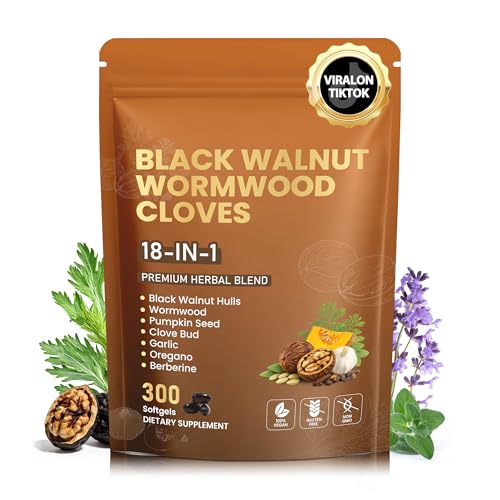
🛒 Where to Buy Parasite Cleanse Protocol
- CleanseParasites Herbal Parasite Cleanse Powder Editor’s Pick
The flagship product for this hub’s own protocol content — wormwood, black walnut hull, cloves, and more. - CleanseParasites Full Detox Bundle (all products) Editor’s Pick
The complete 11-week protocol bundle: parasite cleanse, metals binder, superfood, and more in one order. - Global Healing Paratrex I
oil-based liquid, 1 ml, 2x daily — Current MicroSomal formula is a pumpkin-seed and pomegranate-seed oil blend with essential oils; it no longer contains wormwood, clove or black walnut - Amazing Herbs Premium Black Walnut-Wormwood Complex
capsules, 2 capsules daily — Budget-friendly combination capsule pairing black walnut hull and wormwood, a common starter product - NOW Foods Wormwood
capsules, 1 capsule, 2x daily — Single-herb wormwood capsule from a widely trusted supplement manufacturer, good for readers wanting to build their own stack - Herb Pharm Black Walnut
liquid, 0.5-1 mL, 3x daily — Alcohol-based liquid extract from a respected small-batch herbal manufacturer, common alternative to capsule form
As an Amazon Associate we earn from qualifying purchases. Quality varies widely — always choose a product with a published third-party test (COA) before buying.
A Note on the Evidence
The evidence here is drawn from antibiotic-disruption studies, athlete populations, and animal/in vitro models, not trials of probiotics after herbal parasite cleanses specifically, so treat these conclusions as reasoned extrapolation rather than direct proof. This is informational content, not medical advice; these statements have not been evaluated by the FDA, these products are not intended to diagnose, treat, cure, or prevent any disease, and anyone pregnant, nursing, on medication, or treating a child should consult a healthcare provider first.

Frequently Asked Questions
Do I need to take probiotics after a parasite cleanse?
There’s no direct research answering this specific question. The nearest evidence, from antibiotic disruption studies, suggests generic probiotics don’t reliably speed full microbiome recovery and may even slow it in some cases [1], though certain strains show more targeted benefits for gut symptoms and barrier function [4].
Which probiotic strain has the best evidence for use after antimicrobial disruption?
Saccharomyces boulardii has the most direct supporting evidence among the strains reviewed here, including reduced antibiotic-associated diarrhea in a Cochrane review [2] and gut barrier support [3] [4]. It’s a yeast rather than a bacterium, which matters for why it survives antimicrobial pressure that would kill bacterial probiotics.
Can probiotics fully restore my gut flora to how it was before?
The best available human evidence on this question, from an antibiotic-disruption study, found autologous fecal microbiota transplant restored the native microbiome faster and more completely than standard probiotics did [1]. Full ecological restoration is a high bar that generic probiotics haven’t been shown to reliably meet.
Is this research specific to parasite cleanses?
No. None of the cited evidence tested probiotics after an herbal antiparasitic protocol. It comes from antibiotic-disruption studies, athlete gut microbiome research, and animal/in vitro models, and is being used here as the closest available analog, not as direct proof.

Do probiotics help with gut health in general, separate from any cleanse?
Yes, there is decent evidence for probiotic support of gut and immune health in active, healthy populations, including a position stand from the International Society of Sports Nutrition [5] and reviews of gut microbiota in athletes [6] [11].
Should I talk to a doctor before combining a parasite cleanse with probiotics?
Yes, especially if you are pregnant or nursing, have a diagnosed GI condition, are on medication, or are considering this for a child. This article is informational, not medical advice, and a lab-confirmed diagnosis and medical guidance should come first for any suspected parasitic infection.
References
- Suez J et al. Post-Antibiotic Gut Mucosal Microbiome Reconstitution Is Impaired by Probiotics and Improved by Autologous FMT. Cell (2018). PMID 30193113
- Guo Q et al. Probiotics for the prevention of pediatric antibiotic-associated diarrhea. The Cochrane database of systematic reviews (2019). PMID 31039287
- Gopalan S et al. Unique Properties of Yeast Probiotic Saccharomyces boulardii CNCM I-745: A Narrative Review. Cureus (2023). PMID 37927652
- Ferris MM et al. Probiotics and the intestinal tight junction barrier function. Frontiers in cell and developmental biology (2025). PMID 41403703
- Jäger R et al. International Society of Sports Nutrition Position Stand: Probiotics. Journal of the International Society of Sports Nutrition (2019). PMID 31864419
- Mohr AE et al. The athletic gut microbiota. Journal of the International Society of Sports Nutrition (2020). PMID 32398103
- Pilla R et al. The Role of the Canine Gut Microbiome and Metabolome in Health and Gastrointestinal Disease. Frontiers in veterinary science (2019). PMID 31993446
- Deschamps C et al. Lactobacillus helveticus-derived postbiotic and live Saccharomyces boulardii restore gut microbiota after antibiotic disturbance in an in vitro canine gut model. Beneficial microbes (2025). PMID 40716759
- Doron SI et al. Probiotics for prevention of antibiotic-associated diarrhea. Journal of clinical gastroenterology (2008). PMID 18542041
- Roy Sarkar S et al. Saccharomyces boulardii ameliorates gut dysbiosis associated cognitive decline. Physiology & behavior (2021). PMID 33811908
- Marttinen M et al. Gut Microbiota, Probiotics and Physical Performance in Athletes and Physically Active Individuals. Nutrients (2020). PMID 32992765
- Hemmatinafar M et al. Probiotics and the Gut Microbiome in Combat Sports: A Narrative Review of Performance, Recovery, and Health Pathways. Probiotics and antimicrobial proteins (2026). PMID 42262444
These statements have not been evaluated by the Food and Drug Administration. This information is not intended to diagnose, treat, cure, or prevent any disease. Content is for informational purposes only and is not medical advice; consult a qualified healthcare provider before starting any supplement. As an Amazon Associate we earn from qualifying purchases.