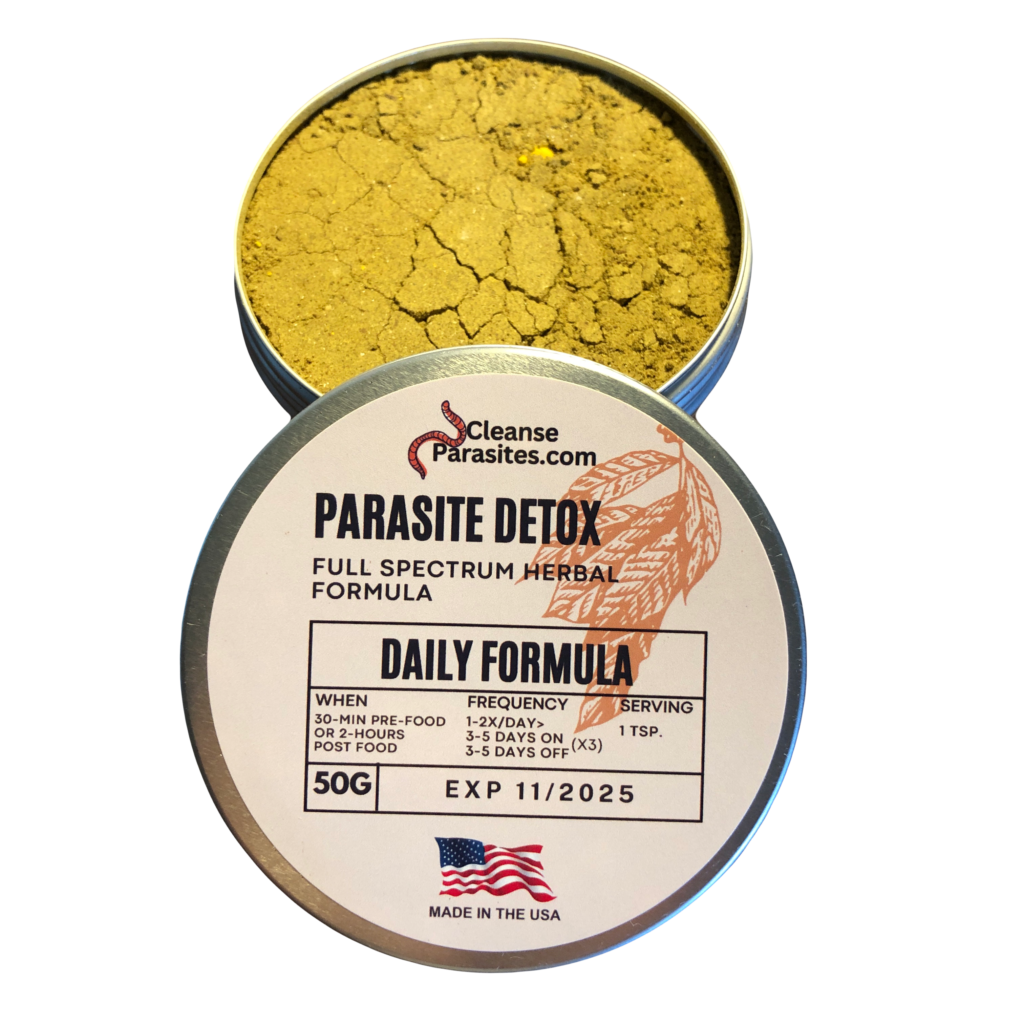
Parasite cleanse products are frequently marketed with an add-on promise: that the same wormwood-black-walnut-clove protocol, sometimes paired with a binder like diatomaceous earth or mimosa pudica seed, will also pull heavy metals like lead, mercury, or arsenic out of your body. It’s an appealing idea because it turns a niche protocol into an all-purpose detox. But antiparasitic herbs and heavy metal chelators are not the same category of substance, and conflating them is where a lot of the marketing gets ahead of the science.
This article separates the two claims. First, what a parasite cleanse is actually designed to do, and what its herbs and binders can plausibly affect. Second, what real heavy metal chelation looks like in clinical and toxicology research, and why that bar is much higher than ‘binds to things in a test tube.’ The goal is to give you an honest read on where the overlap is real, where it’s assumed, and where it’s marketing.
Key Takeaways
- Parasite cleanse herbs (wormwood, black walnut, clove) are formulated for antiparasitic and antimicrobial action, not metal binding.
- Clinical heavy metal chelation is metal-specific and used for diagnosed overload or poisoning, under medical supervision [1] [2].
- Materials that bind metals in soil, industrial, or diagnostic contexts do not automatically bind metals the same way inside a human gut [3] [4].
- No evidence in this review shows that diatomaceous earth or mimosa pudica seed, as used in cleanse products, measurably lowers human heavy metal levels.
- If heavy metal exposure is a real concern, it needs its own diagnostic workup and, if warranted, medically supervised treatment, not an assumption baked into an unrelated cleanse.
What a Parasite Cleanse Protocol Is Actually Built to Do
A standard parasite cleanse combines a small set of herbs, usually wormwood, black walnut hull, and clove, taken over a fixed window of weeks. The proposed mechanism is antiparasitic and antimicrobial: disrupting the membranes and reproductive cycles of intestinal parasites so the body can clear them. Binders such as diatomaceous earth or mimosa pudica seed are often added on the theory that they trap parasite debris and toxins in the gut so they’re eliminated in stool rather than reabsorbed.

None of that mechanism is inherently about metals. The herbs target parasite biology, not metal ions circulating in blood or stored in tissue. Any heavy-metal-detox claim attached to this protocol is a separate, additional claim that needs its own evidence, not something that follows automatically from ‘it cleanses the gut.’
What Real Heavy Metal Chelation Actually Requires
Clinical chelation is a specific, well-defined pharmacological process: a compound binds a target metal ion tightly enough, and selectively enough, to pull it out of tissue and carry it out of the body, usually via urine or bile. This is used for genuine metal overload and poisoning, not general wellness. Deferiprone, for example, is an iron chelator developed for iron-overload conditions like thalassemia, where it binds excess iron and is excreted [1]. Tetrathiomolybdate works on copper metabolism specifically, and has been studied for regulating copper handling in Wilson disease, a condition of pathological copper accumulation [5].
Chelation research has also been explored for indirect cardiovascular benefits tied to metal-driven oxidative damage in diabetes, again a targeted clinical application, not a general-purpose cleanse [6]. And when metal poisoning does occur, clinical toxicology guidance is explicit that chelation is a treatment for specific, diagnosed heavy metal poisonings, using specific agents matched to specific metals, under medical supervision, not a DIY protocol [2].

The throughline across all of this research: real chelation is metal-specific, dose-specific, and used for a confirmed exposure or a diagnosed overload state. It is not a property that transfers to a supplement just because the supplement contains binding or ‘detox’ language.
Why 'Binding' in a Lab Doesn't Mean 'Detoxing' in a Body
Some of the confusion comes from real chemistry: certain natural and engineered materials genuinely do bind metal ions. Microbes produce chalkophores, molecules that scavenge copper the same way iron-scavenging siderophores work, which is a legitimate area of biochemistry [7]. Heparin-derived disaccharides have been shown to bind zinc under laboratory conditions [4]. Synthetic zeolites are used to immobilize heavy metals in contaminated soil, keeping them from leaching into groundwater [3]. And engineered oral sorbents, like zirconium cyclosilicate, are approved specifically to bind excess potassium in the gut before it’s absorbed [8].
These examples show that binding chemistry is real and useful, in soil remediation, in industrial materials science, and in narrowly targeted oral sorbents developed and tested for one specific ion. What they don’t show is that diatomaceous earth or mimosa pudica seed, taken as part of a parasite cleanse, behaves the same way toward lead, mercury, or arsenic in a human gut. A material’s ability to bind an ion in soil or in a lab assay says nothing about whether an unrelated supplement, taken for an unrelated purpose, achieves clinically meaningful metal removal in people.

The Research Gap Between Metal Chemistry and Consumer Cleanse Products
A lot of current metal-binding research is happening in fields that have nothing to do with supplements: materials science, environmental remediation, and diagnostic sensing. Scientists are building bimetallic nanoplatforms to interfere with cancer cell communication [9], dual single-atom nanozymes to detect antibiotic residue [10], bimetallic nanoparticle biosensors to detect marine biotoxins [11], and nanostructured immunosensors to detect a retinol-binding protein biomarker [12]. These are sophisticated, metal-adjacent technologies, but they are detection and materials-engineering tools, not evidence about oral herbal cleanses.
The pattern worth noticing is that ‘heavy metal’ and ‘chelation’ show up constantly in serious research, just almost never in a form that resembles a parasite cleanse capsule. That mismatch is the core problem with the marketing claim: it borrows the credibility of legitimate metal-binding science while skipping the actual step of testing the specific product on the specific outcome.
What Would Actually Need to Be Shown
To honestly support a heavy-metal-detox claim for a parasite cleanse product, you’d want to see the specific formulation tested in humans, with blood or urine metal levels measured before and after, compared to a placebo group, and ideally replicated. That is the same evidence bar clinical chelators like deferiprone and tetrathiomolybdate were held to before being used for metal-related conditions [1] [5]. None of the evidence in this article meets that bar for wormwood, black walnut, clove, diatomaceous earth, or mimosa pudica seed. The mechanism-level plausibility, gut binders can trap some things, is not the same as demonstrated metal clearance.
🛒 Where to Buy Parasite Cleanse Protocol
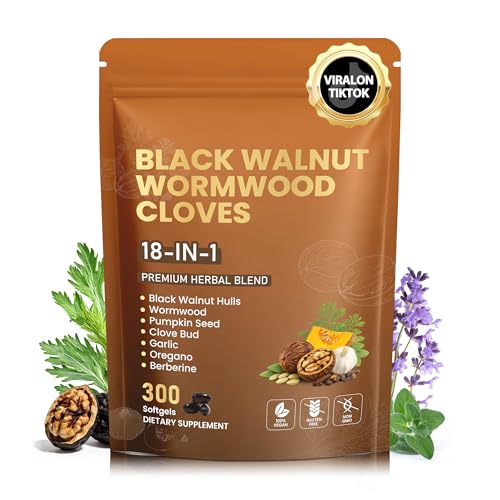
- CleanseParasites Herbal Parasite Cleanse Powder Editor’s Pick
The flagship product for this hub’s own protocol content — wormwood, black walnut hull, cloves, and more. - CleanseParasites Full Detox Bundle (all products) Editor’s Pick
The complete 11-week protocol bundle: parasite cleanse, metals binder, superfood, and more in one order. - Global Healing Paratrex I
oil-based liquid, 1 ml, 2x daily — Current MicroSomal formula is a pumpkin-seed and pomegranate-seed oil blend with essential oils; it no longer contains wormwood, clove or black walnut - Amazing Herbs Premium Black Walnut-Wormwood Complex
capsules, 2 capsules daily — Budget-friendly combination capsule pairing black walnut hull and wormwood, a common starter product - NOW Foods Wormwood
capsules, 1 capsule, 2x daily — Single-herb wormwood capsule from a widely trusted supplement manufacturer, good for readers wanting to build their own stack - Herb Pharm Black Walnut
liquid, 0.5-1 mL, 3x daily — Alcohol-based liquid extract from a respected small-batch herbal manufacturer, common alternative to capsule form
As an Amazon Associate we earn from qualifying purchases. Quality varies widely — always choose a product with a published third-party test (COA) before buying.
A Note on the Evidence
This article is informational, not medical advice, and these statements have not been evaluated by the FDA; these products are not intended to diagnose, treat, cure, or prevent any disease. If you suspect heavy metal exposure or have a diagnosed parasitic infection, talk to a healthcare provider, especially if you are pregnant, nursing, caring for a child, or taking medication, since parasite cleanse herbs and unsupervised chelation-style products are not a substitute for lab-confirmed diagnosis and appropriate treatment.
Frequently Asked Questions
Do parasite cleanse herbs chelate heavy metals?
No direct evidence supports this. Wormwood, black walnut, and clove are studied for antiparasitic activity, while actual metal chelators like deferiprone and tetrathiomolybdate are distinct, metal-specific compounds developed and tested for that purpose [1] [5].

Do binders like diatomaceous earth remove heavy metals from the body?
There’s no clinical evidence in this review showing that. Related binding chemistry exists in other contexts, such as zeolites immobilizing metals in soil, but that doesn’t establish the same effect for a gut-taken supplement in humans [3].
What does real heavy metal chelation look like?
It’s a targeted medical treatment using a specific chelating agent matched to a specific metal and a confirmed overload or poisoning, monitored via blood or urine testing [2].
Is there any legitimate science behind natural metal-binding molecules?
Yes. Microbial chalkophores and heparin disaccharides are documented to bind copper and zinc respectively in biochemical research, but this is basic science on specific molecules, not proof that a cleanse supplement replicates it in the body [7] [4].

Should I use a parasite cleanse if I'm worried about heavy metal exposure?
Heavy metal exposure is its own medical question that deserves its own testing and, if confirmed, its own evidence-based treatment. Treating it as a side effect of a parasite cleanse isn’t supported by the evidence here.
Are oral sorbents like the ones used for potassium relevant to heavy metals?
They demonstrate that engineered oral sorbents can be built and validated for a specific ion, like zirconium cyclosilicate for potassium, but that’s a purpose-built pharmaceutical, not evidence that a cleanse-product binder does the same for lead or mercury [8].
References
- Piga A et al. Deferiprone. Annals of the New York Academy of Sciences (2010). PMID 20712776
- Smith SW et al. The role of chelation in the treatment of other metal poisonings. Journal of medical toxicology : official journal of the American College of Medical Toxicology (2013). PMID 24113858
- Oste LA et al. Metal immobilization in soils using synthetic zeolites. Journal of environmental quality (2002). PMID 12026084
- Whitfield DM et al. Heavy metal binding to heparin disaccharides. II. First evidence for zinc chelation. Biopolymers (1992). PMID 1643265
- Kirk FT et al. Effects of tetrathiomolybdate on copper metabolism in healthy volunteers and in patients with Wilson disease. Journal of hepatology (2024). PMID 38081365
- Calderon Moreno R et al. Potential Role of Metal Chelation to Prevent the Cardiovascular Complications of Diabetes. The Journal of clinical endocrinology and metabolism (2019). PMID 30869793
- Kenney GE et al. Chalkophores. Annual review of biochemistry (2018). PMID 29668305
- Ash SR et al. Zirconium cyclosilicate: An oral sorbent for potassium, four decades in the making. Artificial organs (2022). PMID 35438199
- Zhang S et al. Bimetallic Nanoplatforms for Prostate Cancer Treatment by Interfering Cellular Communication. Journal of the American Chemical Society (2024). PMID 39082227
- Wen W et al. A Fe/Zn Dual Single-Atom Nanozyme with High Peroxidase Activities for Detection of Penicillin G. Analytical chemistry (2024). PMID 39570177
- Raju CV et al. Highly sensitive electrochemical peptide-based biosensor for marine biotoxin detection using a bimetallic platinum and ruthenium nanoparticle-tethered metal-organic framework modified electrode. Food chemistry (2023). PMID 37423105
- Gong W et al. A dual-quenched ECL immunosensor for ultrasensitive detection of retinol binding protein 4 based on luminol@AuPt/ZIF-67 and MnO(2)@CNTs. Journal of nanobiotechnology (2021). PMID 34496877
These statements have not been evaluated by the Food and Drug Administration. This information is not intended to diagnose, treat, cure, or prevent any disease. Content is for informational purposes only and is not medical advice; consult a qualified healthcare provider before starting any supplement. As an Amazon Associate we earn from qualifying purchases.