When people hear “intestinal parasite,” they often picture a single generic worm. In reality, the term covers several distinct organisms with different life cycles, symptoms, and transmission routes, ranging from single-celled protozoa to multi-foot-long tapeworms. Knowing which is which matters because the diagnostic test, the treatment, and the exposure risk are different for each one.
This guide walks through the intestinal parasites most commonly reported in humans worldwide: protozoa like Giardia and Entamoeba, and helminths (worms) like roundworms, hookworms, whipworms, pinworms, and tapeworms. It’s meant as an orientation, not a diagnostic tool. Confirming an actual infection requires a stool test or other lab work ordered by a healthcare provider.
Key Takeaways
- “Intestinal parasite” covers several distinct organisms, protozoa like Giardia and Entamoeba, and worms like roundworms, hookworms, whipworms, pinworms, and tapeworms, each with its own transmission route.
- Transmission routes differ: some spread through contaminated water or food, some through soil contact with skin (hookworm), and some through person-to-person contact (pinworm).
- Symptoms range from none at all to significant issues like anemia (hookworm), perianal itching (pinworm), or dysentery (Entamoeba).
- Diagnosis requires a lab test, typically stool microscopy, antigen testing, or PCR, not symptoms alone.
- Sanitation, food handling, and hygiene practices are the primary prevention tools across nearly all of these parasites.
Protozoa: single-celled parasites
Protozoan parasites are microscopic single-celled organisms, distinct from worms in both biology and how they’re detected. The two most commonly discussed in the context of human gut infections are Giardia duodenalis (also called Giardia lamblia or Giardia intestinalis) and Entamoeba histolytica.
Giardia spreads through contaminated water or food, or direct contact with an infected person’s stool, and is a frequent cause of traveler’s diarrhea and outbreaks linked to untreated water sources like lakes or wells [1] [2]. Entamoeba histolytica causes amoebiasis, which ranges from no symptoms at all to severe dysentery, and in rare cases the parasite can spread beyond the gut [3]. Both are diagnosed via stool antigen tests, PCR, or microscopy, since symptoms alone can’t distinguish them from other causes of diarrhea [4].
Roundworms (Ascaris lumbricoides)
Ascaris lumbricoides is the most common intestinal roundworm infecting humans globally [5]. It spreads through ingestion of soil or food contaminated with eggs from infected human feces, which is why it’s most prevalent in areas with inadequate sanitation infrastructure [5] [6].

After ingestion, larvae hatch, migrate through the lungs, and mature into adult worms in the small intestine, where they can grow to over a foot long [6]. Light infections often cause no symptoms; heavier worm burdens can cause abdominal pain, nutritional problems, or in rare cases intestinal blockage [7]. Diagnosis is by identifying eggs in a stool sample under microscopy.
Hookworms (Necator americanus and Ancylostoma duodenale)
Hookworms are unusual among intestinal parasites in that they typically enter the body through the skin, most often bare feet walking on contaminated soil, rather than through the mouth [6]. Once inside, larvae migrate to the lungs and eventually the small intestine, where adult worms attach to the intestinal wall and feed on blood [8].
Chronic hookworm infection is a leading cause of iron-deficiency anemia in regions where it’s endemic, because of ongoing blood loss at the site of attachment [8] [9]. Diagnosis relies on identifying eggs in stool. Preventive measures like wearing shoes and improving sanitation infrastructure are the primary public-health tools against it.
Whipworm (Trichuris trichiura)
Trichuris trichiura, the human whipworm, is named for its whip-like shape, with a thin anterior end that burrows into the lining of the large intestine [10]. Like Ascaris, it spreads via ingestion of eggs from soil contaminated by human feces.
Light infections are often asymptomatic. Heavier infections can cause abdominal pain, diarrhea, and in children, chronic infection has been associated with growth and cognitive effects due to the nutritional burden [7] [10]. Diagnosis is by stool microscopy identifying the parasite’s distinctive barrel-shaped eggs.

Pinworm (Enterobius vermicularis)
Pinworm is the most common worm infection in many higher-income countries, particularly among school-age children [11], because it spreads easily through direct contact, contaminated hands, bedding, and surfaces in households and classrooms.
The hallmark symptom is perianal itching, especially at night, when female worms migrate out to lay eggs. Diagnosis doesn’t rely on a standard stool sample; instead, a clinician typically uses transparent tape pressed against the perianal skin in the morning, then examined under a microscope for eggs [12].
Tapeworms (Taenia species)
Tapeworm infections in humans are usually caused by Taenia saginata (beef tapeworm) or Taenia solium (pork tapeworm), acquired by eating undercooked meat containing larval cysts [13]. Adult tapeworms attach to the small intestine and can grow to considerable lengths, shedding segments (proglottids) that pass in stool.
Most tapeworm infections cause mild or no symptoms, though some people notice passing worm segments, mild abdominal discomfort, or weight changes. Taenia solium carries an additional, more serious risk: if eggs (rather than larval cysts) are ingested, they can migrate outside the gut and form cysts in tissue, including the brain, a condition called neurocysticercosis, which is why proper meat handling and sanitation matter [14]. Diagnosis is by identifying eggs or proglottids in stool.

🛒 Where to Buy Parasite Cleanse Protocol
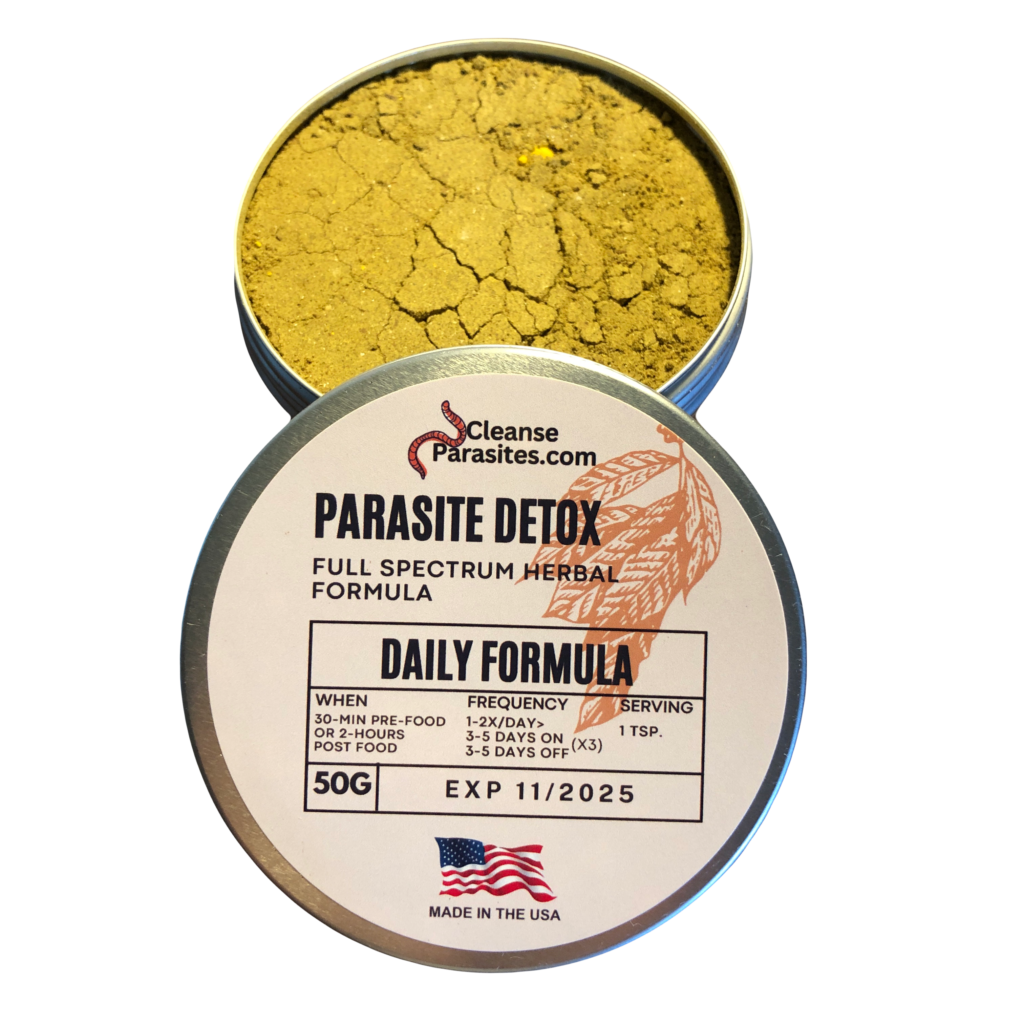
- CleanseParasites Herbal Parasite Cleanse Powder Editor’s Pick
The flagship product for this hub’s own protocol content — wormwood, black walnut hull, cloves, and more. - CleanseParasites Full Detox Bundle (all products) Editor’s Pick
The complete 11-week protocol bundle: parasite cleanse, metals binder, superfood, and more in one order. - Global Healing Paratrex I
oil-based liquid, 1 ml, 2x daily — Current MicroSomal formula is a pumpkin-seed and pomegranate-seed oil blend with essential oils; it no longer contains wormwood, clove or black walnut - Amazing Herbs Premium Black Walnut-Wormwood Complex
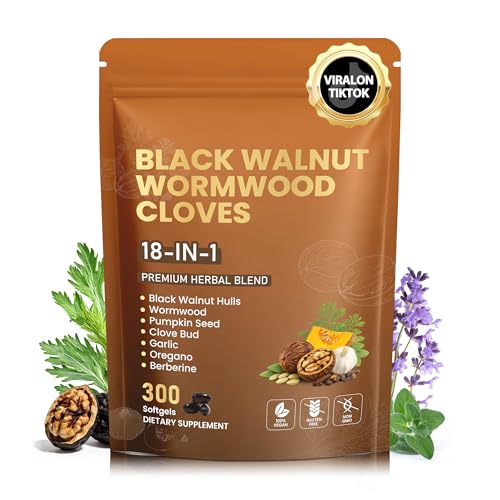
capsules, 2 capsules daily — Budget-friendly combination capsule pairing black walnut hull and wormwood, a common starter product - NOW Foods Wormwood
capsules, 1 capsule, 2x daily — Single-herb wormwood capsule from a widely trusted supplement manufacturer, good for readers wanting to build their own stack - Herb Pharm Black Walnut
liquid, 0.5-1 mL, 3x daily — Alcohol-based liquid extract from a respected small-batch herbal manufacturer, common alternative to capsule form
As an Amazon Associate we earn from qualifying purchases. Quality varies widely — always choose a product with a published third-party test (COA) before buying.
A Note on the Evidence
This article is informational, not medical advice, and these statements have not been evaluated by the FDA; no product is intended to diagnose, treat, cure, or prevent any disease. If you suspect a parasitic infection, or are pregnant, nursing, caring for a child, or taking medication, talk to a healthcare provider and get lab-confirmed diagnosis before starting any treatment, herbal or otherwise.
Frequently Asked Questions
Can you have an intestinal parasite with no symptoms?
Yes. Light infections with roundworms, whipworms, or protozoa like Entamoeba histolytica frequently cause no noticeable symptoms at all, which is part of why lab testing rather than symptom-watching is the reliable way to confirm an infection.

How are intestinal parasites usually diagnosed?
The standard approach is a stool sample examined for eggs, cysts, or antigens, sometimes with PCR testing for added sensitivity. Pinworm is the exception, diagnosed with a tape test against the skin around the anus rather than a stool sample.
Are all intestinal parasites treated the same way?
No. Treatment is specific to the parasite identified, different classes of antiparasitic medication work against protozoa versus different worm species, which is why an accurate diagnosis matters before starting any treatment.
Is tap water a common source of these infections?
Untreated or contaminated water is a well-documented source of Giardia in particular, especially from natural water sources like lakes, rivers, or wells that haven’t been properly filtered or treated.
Can undercooked meat give you a tapeworm?
Yes. Taenia saginata and Taenia solium are acquired specifically by eating undercooked beef or pork containing larval cysts, which is why thorough cooking is a core prevention measure.
Do herbal parasite cleanses treat these infections?
Herbal protocols using ingredients like wormwood, black walnut hull, and clove are sold as general antiparasitic or antimicrobial support, with a proposed mechanism of disrupting parasite membranes and reproductive cycles. They are not a substitute for lab-confirmed diagnosis or prescribed antiparasitic medication when an infection is confirmed.
References
- Leung AKC et al. Giardiasis: An Overview. Recent Pat Inflamm Allergy Drug Discov (2019). PMID 31210116
- Baldursson S et al. Waterborne transmission of protozoan parasites: review of worldwide outbreaks – an update 2004-2010. Water Res (2011). PMID 22048017
- Shirley DT et al. A Review of the Global Burden, New Diagnostics, and Current Therapeutics for Amebiasis. Open Forum Infect Dis (2018). PMID 30046644
- van Lieshout L et al. Newer diagnostic approaches to intestinal protozoa. Curr Opin Infect Dis (2010). PMID 20683263
- Dold C et al. Ascaris and ascariasis. Microbes Infect (2011). PMID 20934531
- Sarinas PS et al. Ascariasis and hookworm. Semin Respir Infect (1997). PMID 9195678
- Campbell SJ et al. Complexities and Perplexities: A Critical Appraisal of the Evidence for Soil-Transmitted Helminth Infection-Related Morbidity. PLoS Negl Trop Dis (2016). PMID 27196100
- Loukas A et al. Hookworm infection. Nat Rev Dis Primers (2016). PMID 27929101
- Stoltzfus RJ et al. Hookworm control as a strategy to prevent iron deficiency. Nutr Rev (1997). PMID 9279058
- Stephenson LS et al. The public health significance of Trichuris trichiura. Parasitology (2000). PMID 11386693
- Leung AKC et al. Pinworm (Enterobius Vermicularis) Infestation: An Updated Review. Curr Pediatr Rev (2025). PMID 38288810
- Wendt S et al. The Diagnosis and Treatment of Pinworm Infection. Dtsch Arztebl Int (2019). PMID 31064642
- Gómez-Morales MA et al. Present status of laboratory diagnosis of human taeniosis/cysticercosis in Europe. Eur J Clin Microbiol Infect Dis (2017). PMID 28669015
- Garcia HH et al. Taenia solium Cysticercosis and Its Impact in Neurological Disease. Clin Microbiol Rev (2020). PMID 32461308
These statements have not been evaluated by the Food and Drug Administration. This information is not intended to diagnose, treat, cure, or prevent any disease. Content is for informational purposes only and is not medical advice; consult a qualified healthcare provider before starting any supplement. As an Amazon Associate we earn from qualifying purchases.