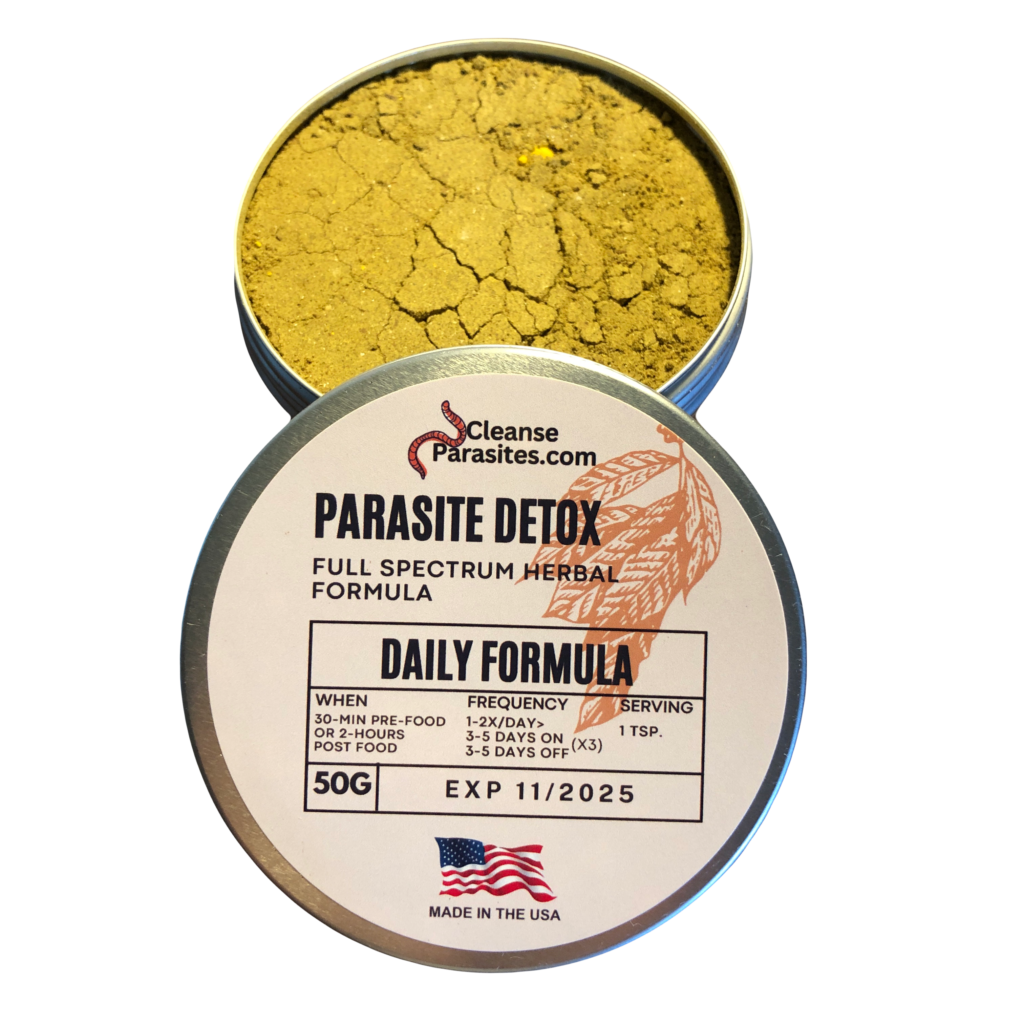
Clove (Syzygium aromaticum) shows up in nearly every parasite cleanse formula, usually paired with wormwood and black walnut hull under the logic that wormwood and black walnut handle adult worms while clove handles the eggs. That claim traces back to a real body of research on clove oil and its main compound, eugenol, as an ovicidal (egg-killing) agent. The research is real. It’s just not research on humans or human intestinal parasites.
Almost all of the ovicidal data on clove comes from entomology and veterinary parasitology: ticks, mosquitoes, lice, and agricultural pests. That’s a legitimate and useful body of science, but it’s a different question than ‘does clove kill parasite eggs in the human gut.’ This article lays out exactly what’s been studied, what species were involved, and where the extrapolation to human parasite cleansing gets shaky.
Key Takeaways
- Clove’s ovicidal (egg-killing) research base is real, but it’s almost entirely from entomology and veterinary parasitology, ticks, mosquitoes, lice, whiteflies, and agricultural pests, not human intestinal parasites.
- The strongest human-relevant anthelmintic finding for eugenol is against Trichinella spiralis larvae and adults, not eggs [1].
- No published study tests clove or eugenol against the eggs of common human intestinal parasites (Ascaris, pinworm, hookworm, etc.).
- Contact-based ovicidal activity on an insect egg does not establish that an ingested capsule reaches comparable concentrations at a parasite egg inside the human gut.
- Formulation and delivery matter for whether an essential oil compound reaches its intended target at an effective dose [2].
What 'ovicidal' actually means in this research
Ovicidal activity refers to a substance’s ability to kill eggs before they hatch, as distinct from larvicidal (killing larvae) or adulticidal (killing adult organisms) activity. Researchers studying essential oils on arthropods routinely test all three endpoints, because a compound that kills adults but not eggs leaves a re-infestation problem behind.
Clove bud oil and its dominant constituent eugenol have been tested for ovicidal activity primarily against ticks and insects. In one study, essential oils including clove-derived compounds were evaluated for larvicidal, ovicidal, and repellent activity against Rhipicephalus (Boophilus) annulatus, a cattle tick [3]. Another study looked at phenylpropanoids and a ketone identified in Syzygium aromaticum (clove) bud against the fungus gnat Bradysia procera, evaluating both ovicidal and larvicidal effects and proposing a mode of action [4].

Clove against ticks and disease vectors
Beyond the cattle tick study above, clove bud-derived bioactive molecules have also been tested against Hyalomma scupense, another tick species, where researchers measured toxicity, repellency, and anti-cholinesterase activity as part of a broader search for ecological pest control alternatives [5]. Anti-cholinesterase activity is a nervous-system mechanism, relevant to insects and arachnids, that has nothing to do with how a helminth egg’s shell might respond to a compound in the gut.
Essential oils, including clove-associated ones, have similarly been tested for oviposition-deterrent and ovicidal activity against mosquito species that transmit dengue, malaria, and other diseases: Aedes aegypti, Anopheles dirus, and Culex quinquefasciatus [6]. This line of work sits squarely in vector control and agricultural entomology, not human antiparasitic medicine.
Clove oil against lice and other pests near human use
The closest this research gets to human application is a study on head lice (Pediculus humanus capitis), which evaluated the chemical composition and efficacy of several plant oils, including clove-related compounds, against lice in vitro [7]. Head lice are ectoparasites living on skin and hair, an entirely different biological compartment and exposure route than an ingested herbal capsule reaching intestinal parasite eggs.


Clove-derived essential oils have also shown insecticidal and behavioral effects on Bemisia tabaci, the whitefly, a crop pest studied for agricultural pest management [8]. These findings are consistent with clove compounds having broad-spectrum activity against arthropod eggs and juvenile stages, but consistency across pest species is not the same as a demonstrated effect on the eggs of human intestinal parasites like Ascaris or Enterobius.
Where eugenol's anthelmintic research actually points to humans (or lab models of them)
The one study cited in this article that moves into classic parasitology territory is on eugenol, clove’s principal active compound, against Trichinella spiralis, a foodborne parasite that causes trichinellosis in humans and animals. That study found eugenol had anthelmintic activity against both the muscle larvae and adult stages of T. spiralis [1]. This is meaningful: it’s a compound-level anthelmintic finding, not an insect-pest finding, and it targets larvae and adults specifically, not eggs.
Separately, eugenol and clove oil have been studied for their effects on muscle contraction, using the silkworm (Bombyx mori) as a model organism to understand mechanism [9]. This kind of mechanistic work helps explain how eugenol might disrupt neuromuscular function in some organisms, but it was not conducted on parasite eggs or on the human gastrointestinal tract.
The honest gap: delivery, dose, and the human gut
Every ovicidal finding above comes from direct application, an oil bath, a spray, or an in vitro exposure, onto an egg, larva, or insect. None of it tells us what happens when eugenol or clove oil is swallowed as a capsule or tincture, absorbed and metabolized through the digestive tract, and reaches an intestinal parasite egg (if one is even present) at whatever concentration survives that journey. Pharmacokinetics matter: a compound that reliably kills tick eggs on contact may never reach a comparable concentration inside the human gut lumen.

There is also delivery-science work showing that essential oils, including psoralen carried in hydrogel-thickened nanoemulsions, require specific formulation strategies to achieve stable, effective topical permeation [2]. That study is about topical delivery of a different compound, but it illustrates a broader point that applies here too, getting a plant compound to actually work as intended, at the site intended, is a nontrivial pharmaceutical problem, not something automatic just because a compound shows activity in a petri dish or on a tick.
🛒 Where to Buy Parasite Cleanse Protocol
- CleanseParasites Herbal Parasite Cleanse Powder Editor’s Pick
The flagship product for this hub’s own protocol content — wormwood, black walnut hull, cloves, and more. - CleanseParasites Full Detox Bundle (all products) Editor’s Pick
The complete 11-week protocol bundle: parasite cleanse, metals binder, superfood, and more in one order. - Global Healing Paratrex I
oil-based liquid, 1 ml, 2x daily — Current MicroSomal formula is a pumpkin-seed and pomegranate-seed oil blend with essential oils; it no longer contains wormwood, clove or black walnut - Amazing Herbs Premium Black Walnut-Wormwood Complex
capsules, 2 capsules daily — Budget-friendly combination capsule pairing black walnut hull and wormwood, a common starter product - NOW Foods Wormwood
capsules, 1 capsule, 2x daily — Single-herb wormwood capsule from a widely trusted supplement manufacturer, good for readers wanting to build their own stack - Herb Pharm Black Walnut
liquid, 0.5-1 mL, 3x daily — Alcohol-based liquid extract from a respected small-batch herbal manufacturer, common alternative to capsule form
As an Amazon Associate we earn from qualifying purchases. Quality varies widely — always choose a product with a published third-party test (COA) before buying.
A Note on the Evidence
This research is drawn almost entirely from insect, tick, and animal-model studies, not human clinical trials, so it cannot confirm that clove or eugenol kills parasite eggs in the human gut. These statements have not been evaluated by the FDA, parasite cleanse herbs are not intended to diagnose, treat, cure, or prevent any disease, and anyone with a suspected parasitic infection, or who is pregnant, nursing, on medication, or considering this for a child, should talk to a healthcare provider and pursue lab-confirmed diagnosis rather than relying on a cleanse alone.
Frequently Asked Questions
Does clove actually kill parasite eggs?
Clove oil and eugenol have documented ovicidal activity against insect and tick eggs in laboratory and field studies [3][4][6]. Whether that translates to killing human intestinal parasite eggs after oral ingestion has not been directly studied.
Why is clove included in parasite cleanse formulas specifically for eggs?
The inclusion is based on extrapolating findings from tick, mosquito, and insect ovicidal studies plus eugenol’s anthelmintic activity against Trichinella spiralis larvae and adults [1], not from direct research on human parasite eggs.
Is there any human clinical trial data on clove and parasite eggs?
No human clinical trial has tested clove or eugenol against intestinal parasite eggs. The closest human-relevant study is an in vitro test against head lice [7], which is a different parasite entirely (an external ectoparasite, not an intestinal helminth).

What is eugenol and why does it matter?
Eugenol is the principal bioactive compound in clove oil. It has shown anthelmintic effects against Trichinella spiralis [1] and neuromuscular effects studied in a silkworm model [9], suggesting a plausible but not yet human-confirmed mechanism.
Does this research mean clove is useless for parasite concerns?
It means the ovicidal evidence is real but comes from a different context (arthropod pests) than intestinal parasite eggs in humans. The anthelmintic larvae/adult data against Trichinella is more directly relevant but still limited to one parasite species [1].
Should I rely on clove alone if I suspect a parasitic infection?
No. None of this research supports clove as a standalone treatment for a diagnosed human parasitic infection. A lab-confirmed diagnosis and medical guidance are the appropriate next step.
References
- ElGhannam M et al. Eugenol; Effective Anthelmintic Compound against Foodborne Parasite Trichinella spiralis Muscle Larvae and Adult. Pathogens (Basel, Switzerland) (2023). PMID 36678475
- Barradas TN et al. Hydrogel-thickened nanoemulsions based on essential oils for topical delivery of psoralen: Permeation and stability studies. European journal of pharmaceutics and biopharmaceutics : official journal of Arbeitsgemeinschaft fur Pharmazeutische Verfahrenstechnik e.V (2017). PMID 27867112
- Tabari MA et al. Larvicidal, ovicidal, and repellent activity of selected essential oils on the Rhipicephalus (Boophilus) annulatus (Acari: Ixodidae). Veterinary parasitology (2025). PMID 40288067
- Hong TK et al. Ovicidal and larvicidal activity and possible mode of action of phenylpropanoids and ketone identified in Syzygium aromaticum bud against Bradysia procera. Pesticide biochemistry and physiology (2018). PMID 29482729
- Alimi D et al. Toxicity, repellency, and anti-cholinesterase activities of bioactive molecules from clove buds Syzygium aromaticum L. as an ecological alternative in the search for control Hyalomma scupense (Acari: Ixodidae). Heliyon (2023). PMID 37600394
- Siriporn P et al. The effects of herbal essential oils on the oviposition-deterrent and ovicidal activities of Aedes aegypti (Linn.), Anopheles dirus (Peyton and Harrison) and Culex quinquefasciatus (Say). Tropical biomedicine (2012). PMID 22543614
- Yones DA et al. Chemical composition and efficacy of some selected plant oils against Pediculus humanus capitis in vitro. Parasitology research (2016). PMID 27112758
- Bomfim JPA et al. Insecticidal and behavioral effects of essential oils on Bemisia tabaci MEAM1 (Hemiptera: Aleyrodidae). Journal of economic entomology (2025). PMID 40635641
- Kheawfu K et al. Influence of clove oil and eugenol on muscle contraction of silkworm (Bombyx mori). Drug discoveries & therapeutics (2017). PMID 28458297
These statements have not been evaluated by the Food and Drug Administration. This information is not intended to diagnose, treat, cure, or prevent any disease. Content is for informational purposes only and is not medical advice; consult a qualified healthcare provider before starting any supplement. As an Amazon Associate we earn from qualifying purchases.