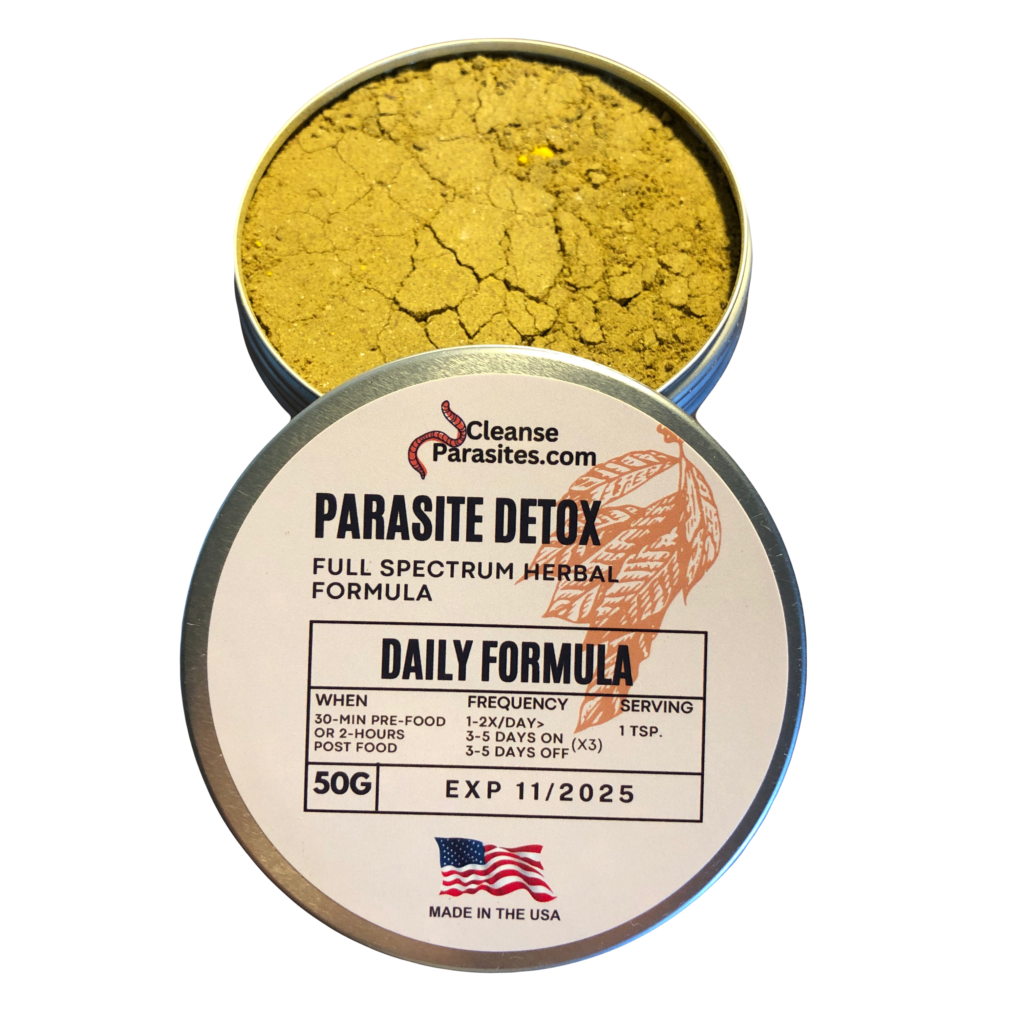
Parasite cleanse protocols rarely happen in isolation. Most people who start one are already taking a multivitamin, a probiotic, fish oil, or a prescription medication, and the question of what is safe to combine matters as much as the cleanse itself. The honest starting point is that the great majority of these specific combinations have never been studied in humans. What follows separates the handful that genuinely have evidence behind them from the much larger group where the advice you will read online, including some of the advice below, is precaution rather than data.
What the Interaction Evidence Actually Covers
Herb-drug interaction research is heavily concentrated on a small number of drugs with narrow therapeutic windows, and warfarin dominates it. A systematic review across five databases identified 149 articles describing 78 different herbs, foods or dietary supplements reported to interact with warfarin; of those, 45 (57.7%) potentiated its effect and 23 (29.5%) inhibited it[1]. That imbalance is the single most useful fact on this page: risk is not spread evenly across everything you might take, it clusters around anticoagulants, immunosuppressants, and drugs cleared by specific liver enzymes[2][3][4].
Almost nothing in that literature is about wormwood, black walnut hull or clove taken alongside a multivitamin. Absence of published interaction reports for a combination is not the same as evidence that the combination is safe, and for herbs this poorly studied in humans it usually just means nobody has looked.
Generally Lower-Risk Combinations
Basic multivitamins, vitamin D and most standalone minerals at typical label doses are not flagged in the interaction literature as problem combinations with common antiparasitic herbs. That is a statement about the absence of reports, not a clearance. If you take one of these, the realistic concern is not a dangerous interaction but the ordinary one of stacking several new things at once and losing the ability to tell what caused a symptom.
Combinations That Deserve More Caution
Blood thinners and antiplatelet medication
This is the one caution on the page with direct mechanistic evidence behind it, and the herb responsible is usually clove. Two antiplatelet compounds, eugenol and acetyl eugenol, have been isolated from clove; they inhibit platelet aggregation induced by arachidonate, adrenaline and collagen, acting partly by suppressing platelet thromboxane formation[5]. Clove oil inhibits human platelet aggregation triggered by arachidonic acid and platelet-activating factor at low micromolar concentrations, and protected rabbits against induced thrombosis in vivo[6]; more recent work has re-confirmed eugenol’s effect on human platelet activation[7]. Clove appears in a large share of multi-herb cleanse formulas. If you take warfarin, a direct oral anticoagulant, or daily aspirin, this is the combination to raise with a pharmacist before you start rather than after[1][2]. Bleeding events have also been reported when warfarin is combined with other common supplement herbs including garlic and ginkgo[4].
Binders: activated charcoal and clay
Activated charcoal genuinely does reduce the absorption of things swallowed near it, and the effect is strongly time-dependent. In volunteer data pooled for a clinical toxicology position paper, at least 50 g of activated charcoal reduced absorption by a mean of 47.3% when given 30 minutes after a dose, 40.1% at 60 minutes, and roughly 17 to 21% at two and three hours[9]. Adsorbents bind broadly rather than selectively: across 16 charcoals and resins, maximum binding capacity varied roughly thirty-fold, and adsorbent co-administration measurably inhibited enteral drug absorption[10]. Extending that to herbal compounds is a reasonable inference from the mechanism, though it has not been measured directly for cleanse herbs.
Bentonite and similar clays are a different matter, and the common claim needs correcting. The frequently repeated advice that bentonite clay binds up and neutralises your cleanse herbs has no human evidence behind it that a search of the published literature turns up. What pharmaceutical research does exist on smectite clays such as montmorillonite is largely concerned with using them as drug-delivery matrices to improve oral bioavailability, which points the other way. Spacing clay away from your herbs is a cheap precaution, but it is a precaution extrapolated from charcoal, not a documented interaction.
Wormwood and anything sedating
Wormwood’s concern is not a pharmacokinetic interaction but an additive one. Thujone, its principal compound of concern, inhibits the GABA-A receptor and produces excitation and convulsions in animals in a dose-dependent way, with neurotoxicity the principal toxic outcome in both acute and chronic studies; the doses required in humans remain uncertain[8]. Combining a thujone-containing product with sedatives, alcohol, or anything with central nervous system activity is a conversation for a clinician rather than an assumption, and anyone with a seizure history should not be improvising here at all.
Black walnut hull
Black walnut sits in most traditional cleanse triads and has essentially no human interaction data. The published work on juglone, its characteristic compound, is plant science, soil chemistry and cell-culture toxicology rather than clinical pharmacology. Treat it as unstudied rather than as cleared.

Prescription Medications Are the Bigger Concern
The consequential interactions involve prescription drugs rather than other supplements, and the mechanism is usually competition over the liver enzymes and transporters that clear them. St John’s wort is the canonical demonstration of how large that effect can be: it altered the pharmacokinetics of digoxin, tacrolimus, indinavir, warfarin, alprazolam, simvastatin and oral contraceptives, and an interaction with cyclosporine caused acute rejection in two heart transplant patients[11]. Nobody claims wormwood does this. The point is that a botanical can meaningfully change a drug’s blood level, so “it is only a herb” is not a safety argument.
Immunosuppressants deserve their own line. Tacrolimus has a narrow therapeutic index, is cleared by CYP3A4 and CYP3A5 along with P-glycoprotein, and its blood levels already vary substantially between and within patients, which is exactly the profile that makes an added botanical risky[12]. If you take an immunosuppressant, an anticoagulant, an antiepileptic, or any drug whose dose was titrated to a blood level, a multi-herb cleanse is a decision for your prescriber.
What About Probiotics?
The standard advice is to take probiotics several hours apart from antimicrobial herbs, on the reasoning that the herbs will kill the organisms you just swallowed. It is plausible, and following it costs nothing. It is also, as far as the published literature goes, unsupported: repeated searches for clinical evidence on probiotic timing relative to antimicrobial botanicals return nothing, and the widely-cited version of this advice concerns antibiotics rather than herbs. Treat the several-hour gap as a sensible default, not as a finding.
A Practical Way to Sequence Supplements
Given the above, a defensible routine is: take the cleanse herbs at a consistent time; keep binders such as activated charcoal at least two to three hours away, which is where the measured adsorption effect has fallen off substantially[9]; put probiotics in a different part of the day; and do not introduce several unfamiliar supplements in the same week you start a cleanse. That last point is the one that actually protects you, because it is what makes a reaction attributable to something.

Signs That Mean Stop and Ask Someone
Herbal and dietary supplement liver injury is uncommon but real, with prospective estimates of roughly one to three cases per 100,000 people per year, and it carries a recognisable signature: a predominantly hepatocellular pattern with markedly elevated transaminases, a female predominance, and a greater risk of death or transplant than many conventional drug injuries[13]. Yellowing of the eyes or skin, dark urine, pain under the right ribs, unusual bruising or bleeding, or persistent nausea and fatigue are reasons to stop the product and seek medical assessment, not to push through a supposed die-off phase.
The Bottom Line
Most everyday supplements can sit alongside a parasite cleanse with basic spacing. The genuine cautions are narrower, and better evidenced, than the internet’s general anxiety suggests: anticoagulant and antiplatelet medication, where clove has real mechanistic data behind the concern[5][6][7]; drugs with narrow therapeutic windows cleared by the liver[11][12]; and binders, where activated charcoal has measured effects and clay does not[9][10]. If you take a prescription medication regularly, that one conversation with a pharmacist is worth more than every sequencing rule on this page.
A Note on the Evidence
The interaction claims on this page that carry citations are drawn from human pharmacology and clinical toxicology literature, but almost none of that literature studied a commercial parasite cleanse product. The clove antiplatelet data is compound-level and largely in vitro and animal; the charcoal figures come from poisoning management rather than supplement use. Two pieces of widely repeated advice, that clay binders neutralise cleanse herbs and that probiotic timing matters against botanicals, are identified above as lacking supporting evidence rather than quietly repeated. This information is educational and is not medical advice, and it does not replace a review of your own medication list by a pharmacist or physician.
References
- Tan CSS et al. Warfarin and food, herbal or dietary supplement interactions: A systematic review. Br J Clin Pharmacol (2021). PMID 32478963
- Hazra S et al. Safety Issues of Herb-Warfarin Interactions. Curr Drug Metab (2024). PMID 38465436
- Nutescu EA et al. Warfarin and its interactions with foods, herbs and other dietary supplements. Expert Opin Drug Saf (2006). PMID 16610971
- Fugh-Berman A. Herb-drug interactions. Lancet (2000). PMID 10675182
- Srivastava KC, Malhotra N. Antiplatelet principles from a food spice clove (Syzygium aromaticum L). Prostaglandins Leukot Essent Fatty Acids (1993). PMID 8321872
- Saeed SA, Gilani AH. Antithrombotic activity of clove oil. J Pak Med Assoc (1994). PMID 8078176
- Chang Y et al. Eugenol: A Potential Modulator of Human Platelet Activation and Mouse Mesenteric Vascular Thrombosis. Biomedicines (2024). PMID 39200154
- Pelkonen O, Abass K, Wiesner J. Thujone and thujone-containing herbal medicinal and botanical products: toxicological assessment. Regul Toxicol Pharmacol (2013). PMID 23201408
- Chyka PA et al. Position paper: Single-dose activated charcoal. Clin Toxicol (Phila) (2005). PMID 15822758
- Van de Graaff WB et al. Adsorbent and cathartic inhibition of enteral drug absorption. J Pharmacol Exp Ther (1982). PMID 7086679
- Nicolussi S et al. Clinical relevance of St. John’s wort drug interactions revisited. Br J Pharmacol (2020). PMID 31742659
- Abushammala I et al. Tacrolimus and herbs interactions: a review. Pharmazie (2021). PMID 34620272
- Andrade RJ et al. Hepatic Damage by Natural Remedies. Semin Liver Dis (2018). PMID 29471563
These statements have not been evaluated by the Food and Drug Administration. This information is not intended to diagnose, treat, cure, or prevent any disease. Content is for informational purposes only and is not medical advice; consult a qualified healthcare provider before starting any supplement. As an Amazon Associate we earn from qualifying purchases.